Etruscan cities of the dead at Cerveteri and Tarquinia
This is the right property for visitors seeking Etruscan evidence through cemeteries rather than surviving city centres. Its two component parts, Banditaccia at Cerveteri and Monterozzi at Tarquinia, represent burial practices from the ninth to the first century BC and document the achievements of a culture that developed an urban civilization in pre-Roman Italy. Their importance lies in the comparison between two different funerary environments.
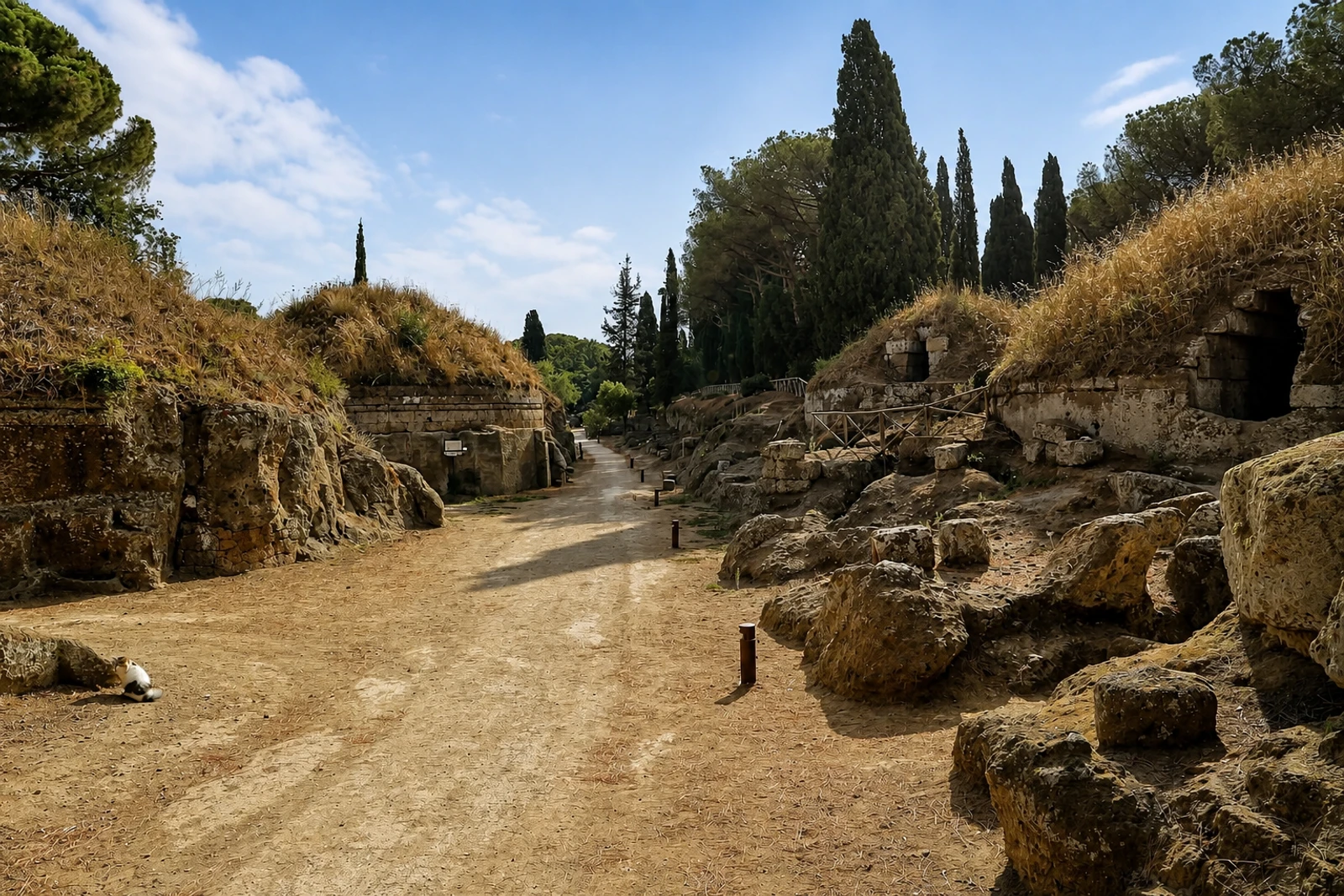
Banditaccia is distinguished by its city-like plan: streets, small squares and neighbourhoods organise thousands of tombs as a reproduction of the city of the living. Trenches, tumuli and rock-cut tombs shaped like huts or houses preserve architectural detail, including the only surviving evidence of Etruscan residential architecture. This makes Cerveteri especially valuable for understanding planning and domestic forms through a funerary setting rather than through a standing town.
Tarquinia’s Monterozzi offers a different focus. Its 6,000 rock-cut graves include 200 painted tombs, with the earliest dating from the seventh century BC. The wall paintings show aspects of daily life, death and religious belief, and provide major evidence of pre-Roman classic artwork in the Mediterranean. Do not treat the two sites as interchangeable: Cerveteri is the property’s clearest expression of funerary urbanism, while Tarquinia is defined by its painted chambers and their visual record of Etruscan culture.