The Flow Country: a living blanket bog landscape
The Flow Country is Scotland’s newest property in this selection, inscribed in 2024 as a natural site under criterion (ix). It is a serial property of seven discrete but adjacent areas in the Highland Region, together covering nearly 190,000 hectares. Its importance is ecological rather than architectural: this is a vast, actively accumulating blanket bog landscape formed through persistent precipitation-fed waterlogging over 9,000 years.
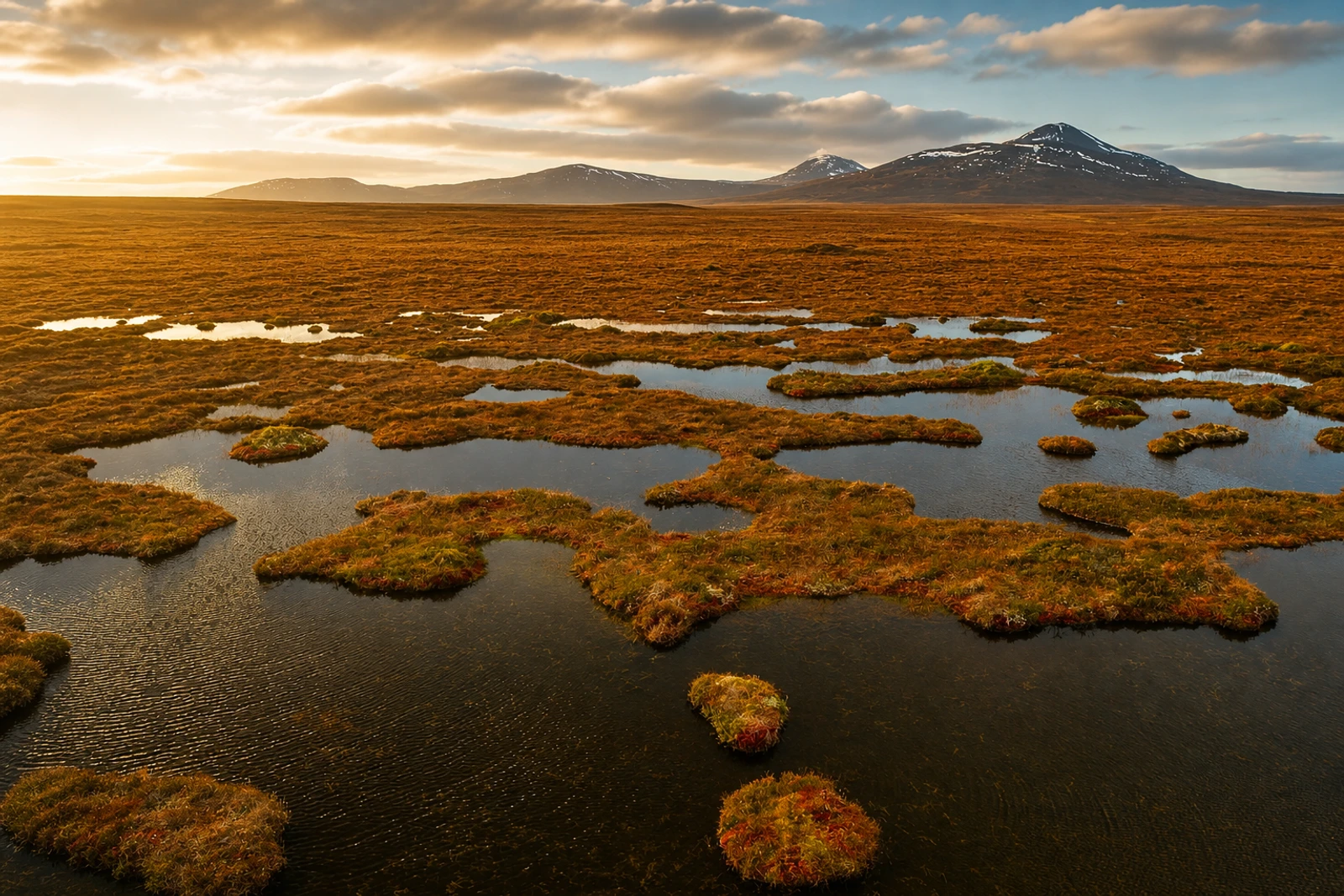
Notice the detail in what can look like open emptiness. Pools, hummocks, ridges, fens and changing surface patterns express the interaction of climate, altitude, geology and landform. Peat thickness reaches over eight metres in places, and ongoing peat formation continues to sequester carbon on a very large scale. Between 29 and 34 peat-forming Sphagnum species support microorganisms adapted to cold, acidic, low-oxygen and nutrient-poor conditions. The property also supports a distinctive bird assemblage combining arctic-alpine, temperate and continental species.
The Flow Country differs from a conventional nature reserve visit because its UNESCO value depends on a connected hydrological and ecological system, not one scenic feature. Pollen and plant fossils preserve evidence of past flora, fauna, palaeoecology and human influence, while most of the property remains near-natural and some affected areas are undergoing restoration. Use Forsinard as the reviewed visitor anchor, follow marked access and check RSPB information and weather. Forsinard is the practical rail gateway; allow two to four hours, while remembering that seven components extend across a much larger landscape.