Pontcysyllte: a canal carried through the air
Pontcysyllte Aqueduct and Canal belongs here as an 18-kilometre waterway whose significance lies in a complete engineering idea rather than in an isolated bridge. In north-eastern Wales, the canal crosses difficult terrain without locks, demanding bold civil engineering solutions at the end of the 18th century and the beginning of the 19th. Its role in developing transport capacity connects the site directly with the Industrial Revolution.
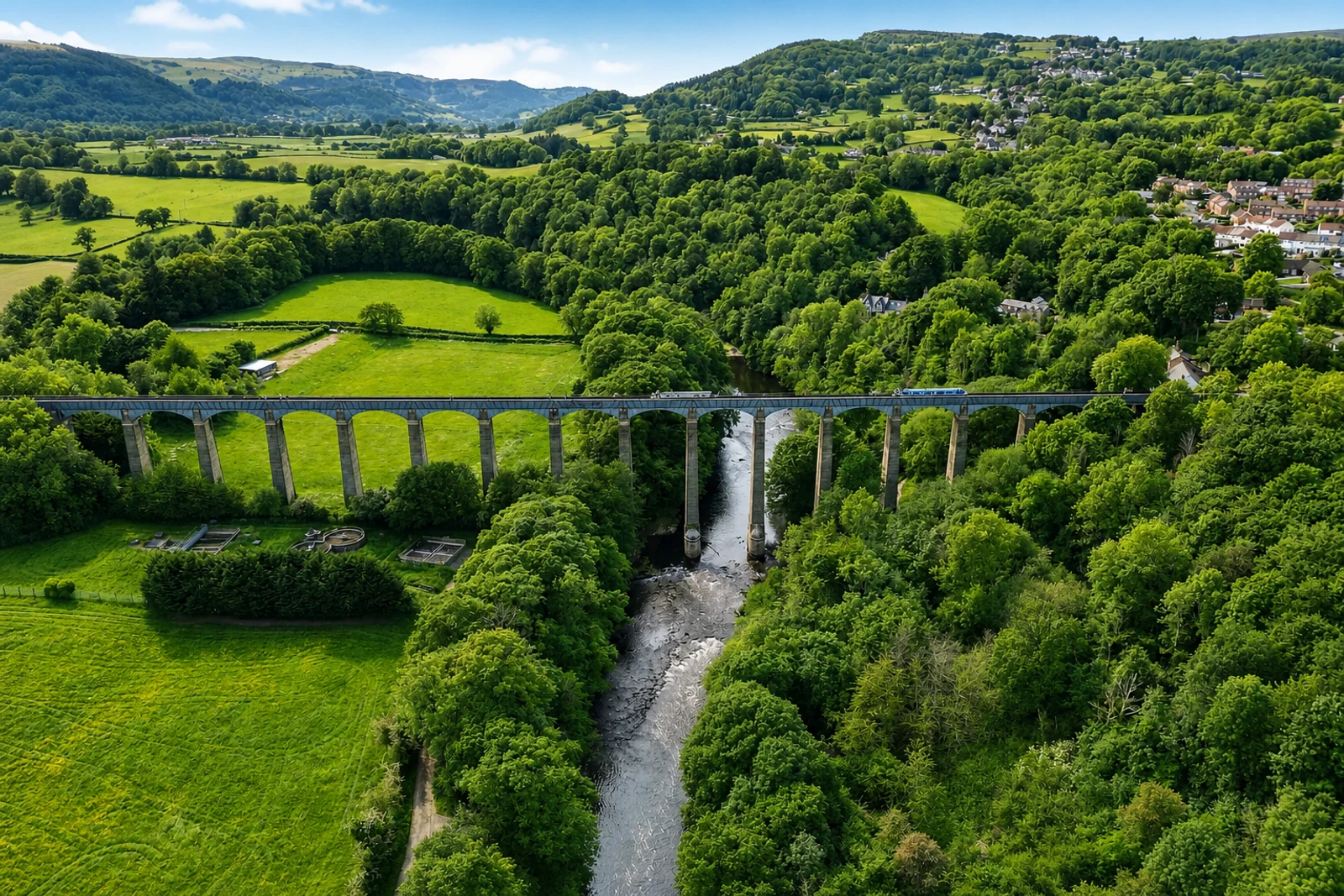
The aqueduct is the defining structure. Thomas Telford conceived it with metal arches supported by tall, slender masonry piers, using cast and wrought iron to produce a structure that is both light in its arches and monumental in its effect. That combination distinguishes Pontcysyllte from a conventional canal visit: the waterway itself, its hydraulic operation and its civil-engineering structures are the subject, not merely the surrounding scenery.
The property remains in use, and repairs to historic embankments have used modern technical solutions while conserving the waterway’s overall morphology and operation. The towpath is walkable, while boat trips require separate booking. Ruabon is the nearest practical rail gateway, followed by bus or taxi onward. Allow a half day for the reviewed visitor anchor and read the aqueduct as part of the longer canal ensemble rather than as a standalone viewpoint.