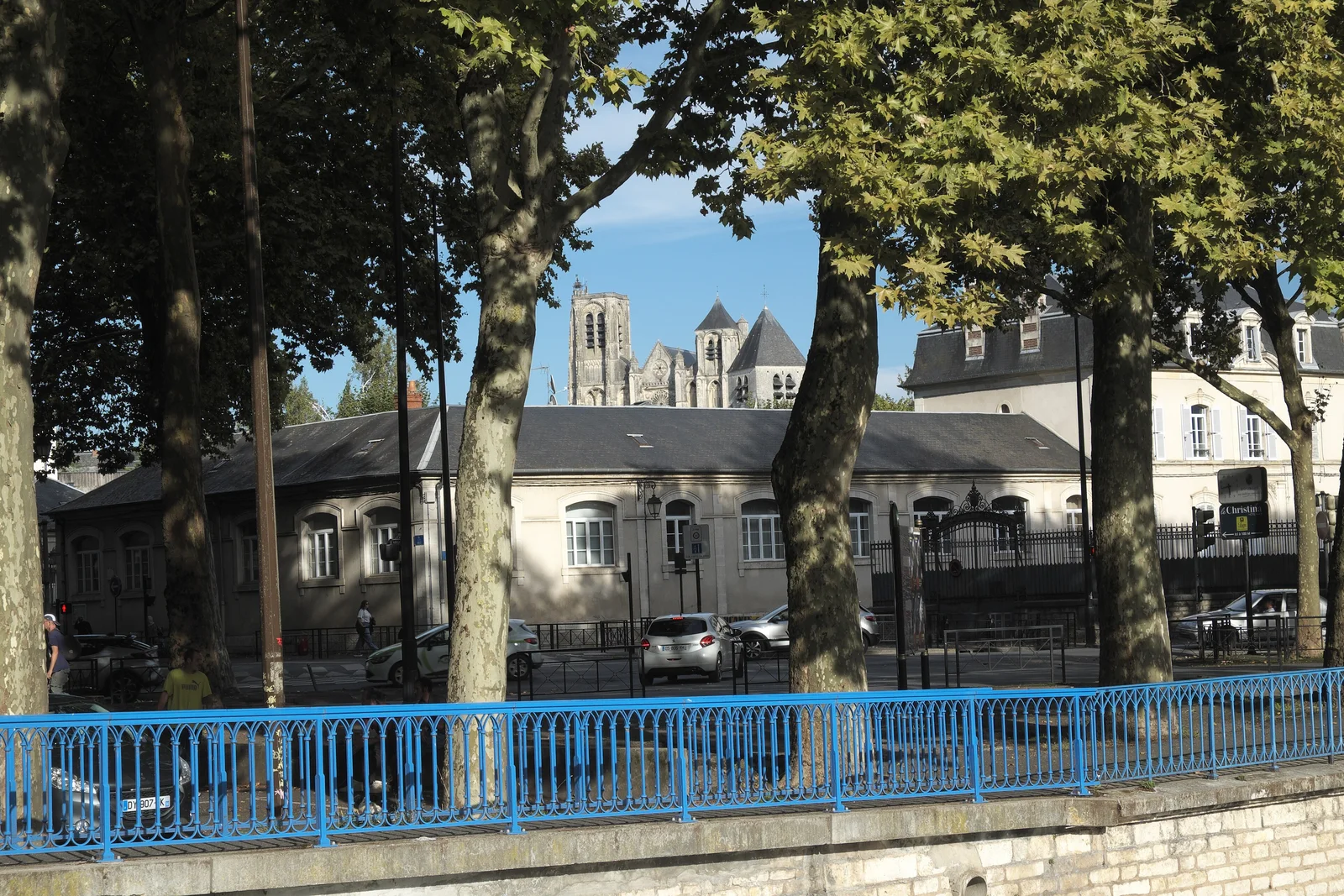
Bourges Cathedral: unified Gothic space and changing light
Bourges Cathedral is a cultural World Heritage property inscribed in 1992 under criteria (i)(iv). Built between the late 12th and late 13th centuries on a worship site used since the 3rd century, it is recognised for the unity of its design, its proportions and its importance in Gothic architecture. Its setting in the ancient Roman city of Avaricum connects the building to the early Christian history of Gaul.
Its interior differs from the more overtly three-tier emphasis at Amiens. Bourges is a basilica with five naves and chapels around the choir; double flying buttresses allow the absence of tribunes and distribute light through the nave and side aisles. The perspective of the lateral walls and the continuity of the interior space are therefore central things to notice, alongside the tympanum, the north and south doors and the sculpted rood screen.
The stained glass also prevents the cathedral from being reduced to a single medieval moment. Windows from the 14th, 15th and 16th centuries form an extended record of the art’s development, while the building’s shape and materials remain tied to its late-13th-century completion. Restoration has respected original techniques and materials. The cathedral is State property, listed as a Historic Monument since 1862, and its religious identity remains part of how the site is managed.