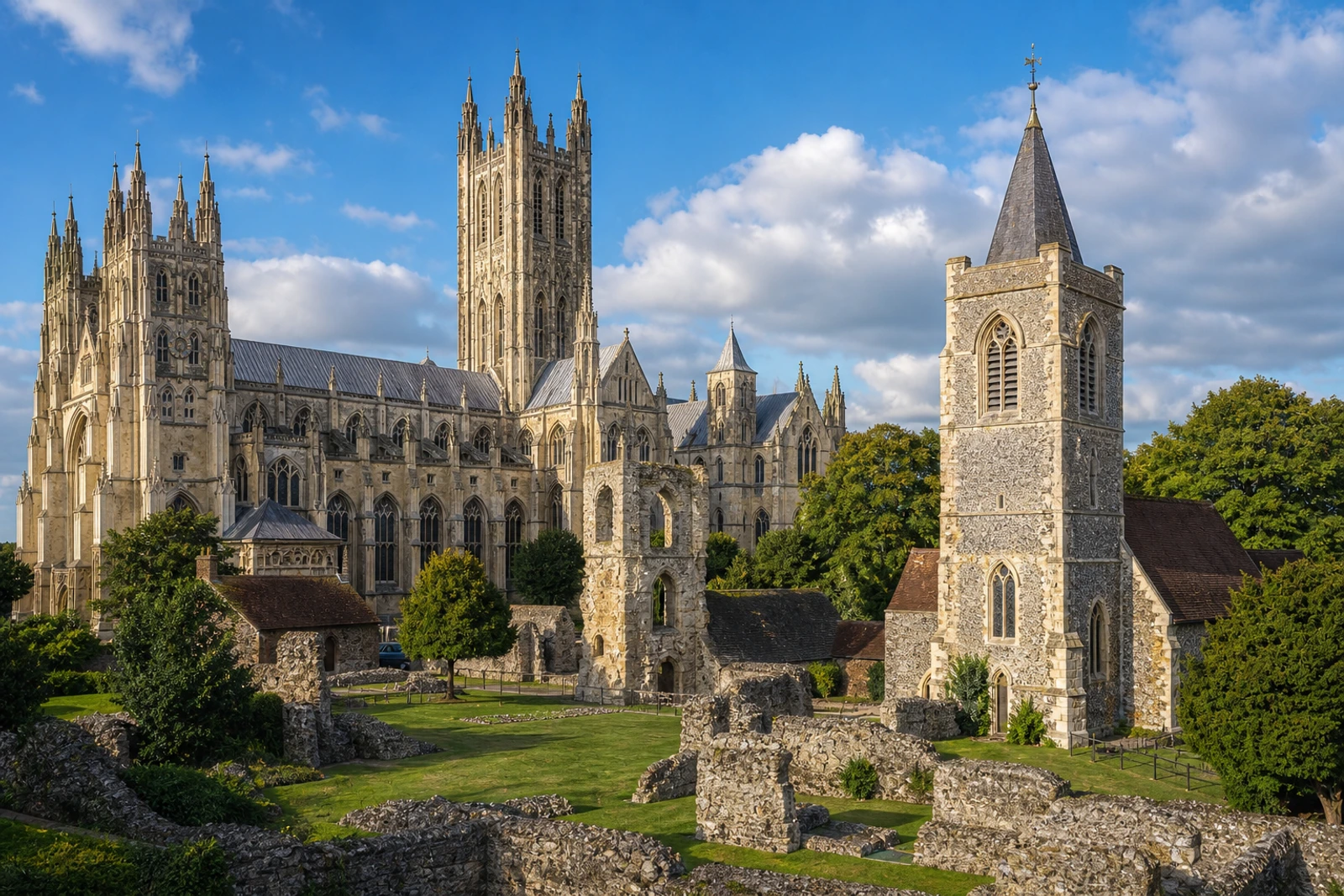
Canterbury: three places, one Christian history
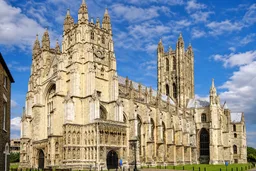
This entry is a serial UNESCO property, not three separate World Heritage sites. Canterbury Cathedral, St Augustine’s Abbey and St Martin’s Church are linked by a buffer zone and together trace milestones in the reintroduction and development of Christianity in southern Britain. St Martin’s marks the beginning of Augustine’s mission, the Abbey recalls his evangelising work and Benedictine influence, and the cathedral represents Canterbury’s long role as the seat of the spiritual head of the Church of England.
The three components also provide an architectural sequence. St Martin’s Church is described as the oldest church in England; the Abbey preserves the setting of an important monastic centre and scriptorium; and Christ Church Cathedral contains Romanesque, early Gothic and late Gothic elements. The cathedral’s east end, stained glass, choir and transepts reflect its transformation into a pilgrimage centre after Thomas Becket’s murder in 1170 and canonisation. This combination distinguishes Canterbury from a single cathedral visit.
The exact boundaries matter. The main structures are included, but visual and ceremonial links sit within the buffer zone, which is affected by a busy road and development pressures. Abbey ruins also require regular attention because of weather and erosion, while cathedral repairs continue. All three components are walkable from central Canterbury; Canterbury West is the nearest practical rail gateway. Allow half a day to a full day, and check cathedral admission and current access arrangements before visiting.