

How to choose a UNESCO day trip from London
For the simplest day out, start with Canterbury or Bath. Canterbury West is close to the historic centre, and Southeastern advertises journeys from London St Pancras of roughly 55 minutes. GWR advertises London Paddington to Bath Spa at roughly 1 hour 20 minutes. Both destinations are walkable once you arrive, although Bath generally merits a full day and Canterbury can suit anything from half a day to a full day.
Blenheim Palace is a strong middle-ground option: the rail journey takes you toward Oxford or Oxford Parkway, followed by an onward S7 bus. Stonehenge is feasible without a car but involves a Salisbury rail journey and a separately operated tour bus or other onward transfer. Ironbridge is the specialist choice, requiring travel via Telford and another bus or taxi connection. These are planning comparisons rather than fixed timetables; check current operators, connections, fares and attraction conditions before travel.
Rail time, last-mile friction and useful stay length
A short rail journey does not always mean the easiest visit. Canterbury combines a relatively direct train with a compact centre, while Bath combines a longer advertised rail run with a straightforward walk from Bath Spa. Blenheim Palace is less central because of the onward bus from Oxford or Oxford Parkway, but its 3–5-hour visit length can fit neatly into a day if connections and admission are arranged in advance.
Stonehenge and Avebury are components of one UNESCO property rather than two separate World Heritage properties. Visiting Stonehenge alone can fill a day once transfers and timed entry are considered; seeing Avebury as well is a long combined day and needs separate bus planning. Ironbridge's museums are spread through the gorge, so a full day is more realistic than a quick stop. The map shows the broad geographic pattern, but it cannot replace checking same-day transport and opening information.
Reservations and a bad-weather fallback
Prebooking matters most where entry is timed or capacity is limited. Cathedral admission is recommended in Canterbury; Roman Baths and major attractions in Bath should be prebooked; Blenheim Palace recommends advance admission; and Stonehenge timed entry is strongly recommended. Ironbridge museum passes and special tours may need booking. Allow extra flexibility for onward buses, taxis and transfer waits rather than planning every connection too tightly.
For unsettled weather, Bath is the most dependable fallback because its compact centre combines indoor attractions with short walking distances. Canterbury also works well when you want a concentrated historic visit, although Cathedral admission and access conditions should be checked. Blenheim Palace can still suit a planned visit, while Stonehenge, Avebury and the spread-out Ironbridge Gorge are more exposed to weather and transfer disruption. Recheck live rail, bus and attraction information before departure.
Quick comparison by planning fit
Choose Canterbury for the lowest-friction historic day trip: the components are all walkable from central Canterbury, and the advertised journey from London St Pancras is roughly 55 minutes. Choose Bath for a full urban day with a compact centre and a roughly 1-hour-20-minute advertised journey from London Paddington. Bath is one destination in this guide, even though its UNESCO recognition is discussed through two separate inscriptions; it should not be planned as two separate day trips.
Choose Blenheim Palace when a bus connection is acceptable and a 3–5-hour visit is enough. Choose Stonehenge and Avebury when the UNESCO landscape is the priority and you are comfortable coordinating Salisbury or Swindon rail travel with separate local transport. Choose Ironbridge when industrial heritage matters more than a simple journey. None is a universal winner: the best fit depends on tolerance for transfers, desired visit length and reservation discipline.
How the map helps
Use the interactive map to see which stations and sites cluster together and where the final transfer becomes more involved. It is especially useful for distinguishing walkable Canterbury and Bath from Blenheim Palace, Stonehenge, Avebury and Ironbridge, where the last mile needs more deliberate planning.
The mapped UNESCO property is not always a single building. Canterbury is a serial or composite property with three named components, and Stonehenge, Avebury and Associated Sites is also a serial or composite property. Plan the visit around the component or components you can realistically reach, rather than assuming every mapped place represents one compact attraction.
Places in this article
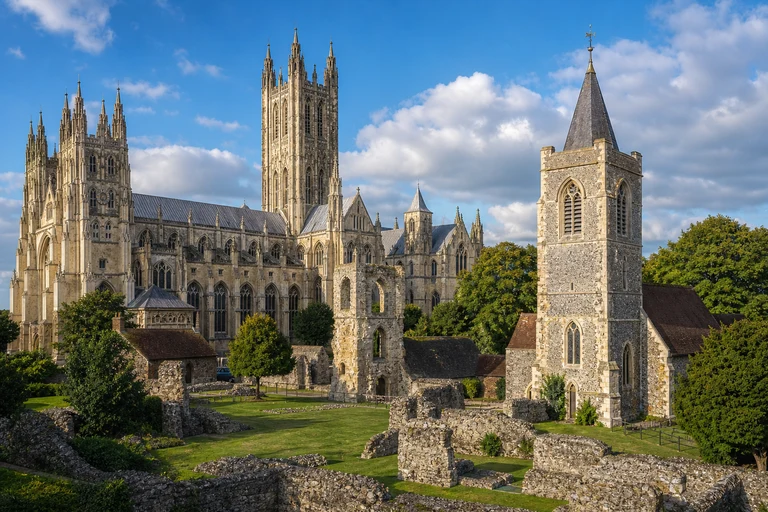
Canterbury Cathedral, St Augustine's Abbey, and St Martin's Church
This is the best low-friction choice for a first UNESCO day trip without a car. Southeastern advertises London St Pancras to Canterbury West journeys of roughly 55 minutes, and all three components—Canterbury Cathedral, St Augustine's Abbey and St Martin's Church—are walkable from central Canterbury. The visit can suit half a day or a full day, depending on how much time you give each component.
Cathedral admission is recommended, so check current admission arrangements before travelling. Treat the three named places as components of one serial or composite UNESCO property, not as three separate UNESCO destinations. Use the map to plan a compact walking route, and recheck live Southeastern services, fares and attraction information.
AI-created illustrative image; not a documentary photographAnyMappy · AI-edited from a rights-cleared reviewed reference · AI-generated editorial imageImage source

City of Bath
Bath is one of the strongest full-day choices for car-free visitors. GWR advertises London Paddington to Bath Spa at roughly 1 hour 20 minutes, and the compact city centre is easily explored on foot from the station. The City of Bath is a single UNESCO destination in this comparison; although Bath's UNESCO recognition is described through two separate inscriptions, it should not be planned as two separate day trips.
Allow a full day if you want more than a quick central walk. The Roman Baths and major attractions should be prebooked, and current admission arrangements may change. Check live GWR services, fares and attraction information before setting out, especially if you are relying on a tightly timed return to London.
AI-created illustrative image; not a documentary photographAnyMappy · AI-edited from a rights-cleared reviewed reference · AI-generated editorial imageImage source


Blenheim Palace
Blenheim Palace suits visitors who want a substantial historic property but accept a more involved last mile. Travel toward Oxford or Oxford Parkway, then use the S7 bus from Oxford Parkway or Oxford. The useful visit length is approximately 3–5 hours, making it a workable day trip when the rail and bus connections line up.
Advance admission is recommended. Check the current S7 timetable, rail connections and palace access information before travel, and leave room for delays between services. The map is useful for understanding why Blenheim Palace is not a walk-from-the-station stop, even though it remains feasible without a car.
AI-created illustrative image; not a documentary photographAnyMappy · AI-edited from a rights-cleared reviewed reference · AI-generated editorial imageImage source

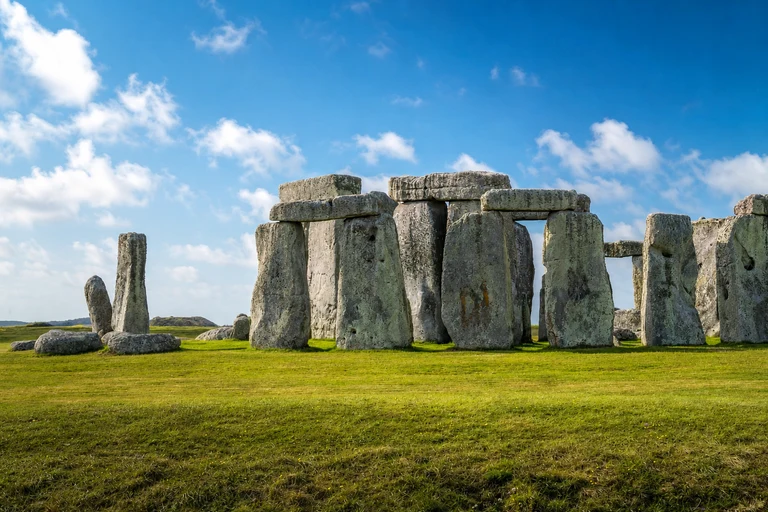
Stonehenge, Avebury and Associated Sites
This is the most planning-intensive landscape option. Stonehenge requires a rail journey to Salisbury followed by the separately operated tour bus or another onward transfer; Avebury needs separate bus planning. You can visit Stonehenge as a focused day trip, while seeing both components is a long combined day. The property is serial or composite, so these are components of one UNESCO property rather than two separate destinations.
Stonehenge timed admission is strongly recommended. Before travelling, check current rail services, the Salisbury onward connection, tour-bus arrangements and attraction information. Weather can affect an outdoor itinerary, and the map should be used to judge whether the components you want to see fit realistically into one day.
AI-created illustrative image; not a documentary photographAnyMappy · AI-edited from a rights-cleared reviewed reference · AI-generated editorial imageImage source

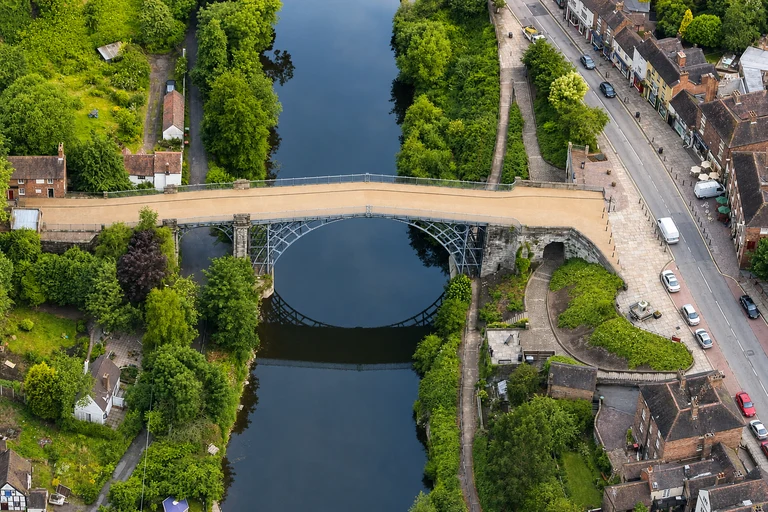
Ironbridge Gorge
Ironbridge Gorge is the specialist choice for visitors who prioritise industrial heritage over a simple London day trip. The route runs via Telford, followed by an onward bus or taxi, and the museums are spread through the gorge rather than concentrated beside one station. A full day is the realistic planning assumption.
Car-free travel is possible with planning, but the fragmented transport and dispersed museums create more last-mile friction than the other choices here. Museum passes and special tours may need booking. Check live rail, bus and taxi options, museum access and weather conditions before departure, and use the map to understand the distances between sites.
AI-created illustrative image; not a documentary photographAnyMappy · AI-edited from a rights-cleared reviewed reference · AI-generated editorial imageImage source
.JPG)
Which UNESCO day trip from London is easiest without a car?
Canterbury is the simplest overall for many visitors because Canterbury West is close to the centre and all three components of the UNESCO property are walkable from central Canterbury. Bath is also highly practical, with a compact city centre that is easily explored on foot after arriving at Bath Spa.
Can I visit Stonehenge without a car?
Yes, but it requires more planning than Canterbury or Bath. Take the rail journey to Salisbury, then use the separately operated Stonehenge tour bus or another onward transfer. Timed Stonehenge admission is strongly recommended, and Avebury requires separate bus planning.
Is Blenheim Palace a realistic day trip by public transport?
Yes. Travel toward Oxford or Oxford Parkway, then continue by the S7 bus from Oxford Parkway or Oxford. Advance admission is recommended, and the useful visit length is approximately 3–5 hours, so check the return connections before committing to the day.
Which trip is best in bad weather?
Bath is the most dependable fallback because its centre is compact and its attractions provide a strong indoor focus. Canterbury can also work well for a concentrated historic visit. Stonehenge, Avebury and the spread-out Ironbridge Gorge are more weather-sensitive because of outdoor walking and additional transfers.
How much time should I allow for Ironbridge Gorge?
Plan a full day. The journey runs via Telford with an onward bus or taxi, and the museums are spread through the gorge. Museum passes and special tours may need booking, so check current attraction and transport information before travel.