Cordouan Lighthouse: a beacon designed as a monument
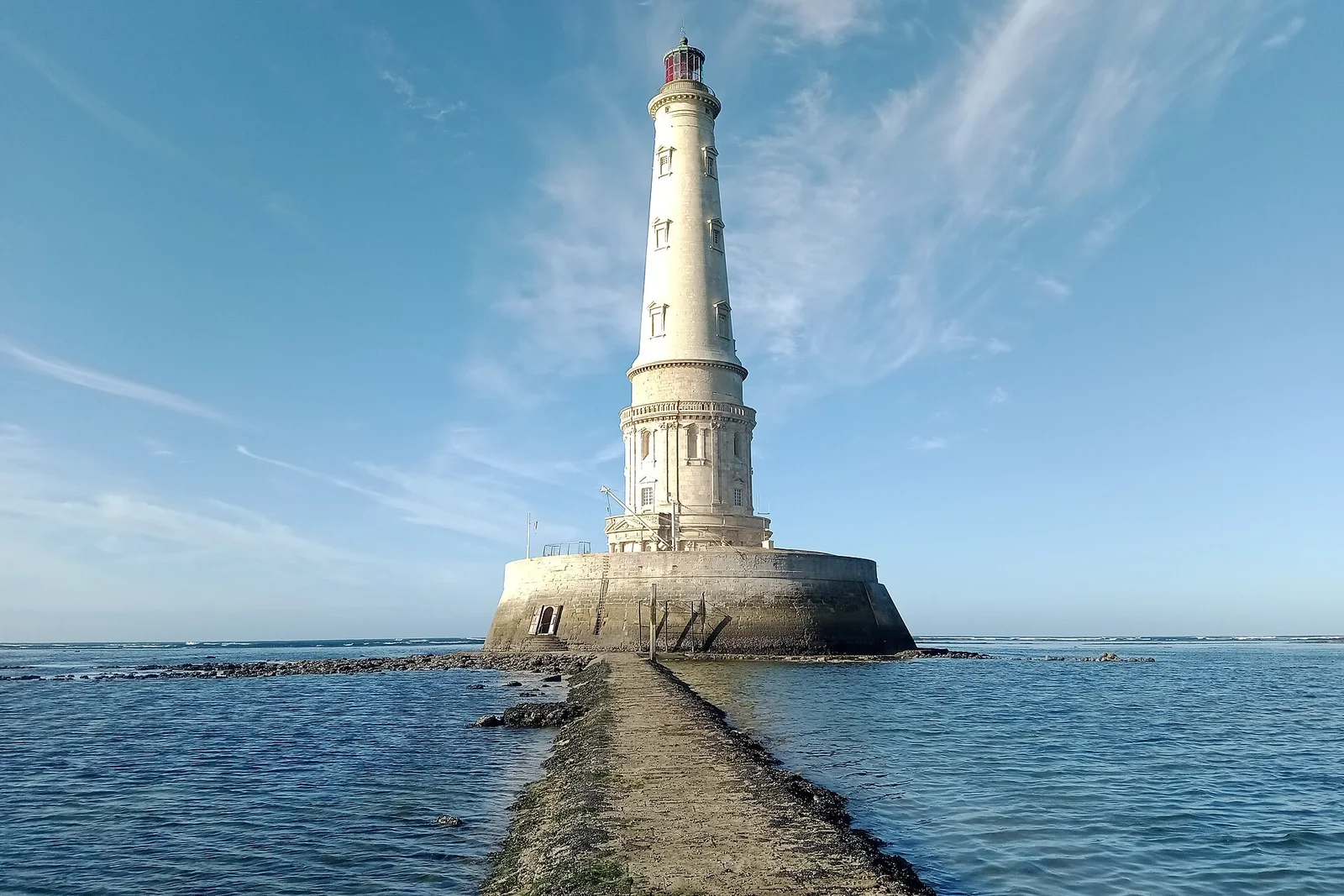
Cordouan Lighthouse belongs because it turns maritime signalling into architecture, engineering and political symbolism. It stands on a shallow rocky plateau where the Atlantic meets the Gironde Estuary, in the exposed environment that makes a beacon necessary. Built in dressed white limestone, the tower rises through eight levels to 67 metres above sea level and remains in use as a navigational light.
Its distinction from an ordinary lighthouse is deliberate monumentality. Louis de Foix began the first construction campaign in 1584, and the design included a chapel and apartments for the king as well as the signalling function. The tower’s forms draw on antiquity, Italian Renaissance Mannerism and French engineering. Joseph Teulère raised and remodelled it in 1788–1789, using late-18th-century neoclassical language while respecting the earlier conception and its symbolic principles.
Look closely at the pilasters, columns, modillions and gargoyles, and consider how the architecture responds to its setting rather than hiding its difficulty. The two construction campaigns show changing technical capacities: the later heightening and alterations to the light chamber record advances in science and lighthouse technology. Cordouan is therefore both a working safety instrument and a layered architectural statement. Its exposed marine location is also a practical boundary for planning and access.