Saint-Emilion: a vineyard territory built around production
The Jurisdiction of Saint-Emilion belongs because it is a cultural landscape organised around wine-growing rather than a town with vineyards merely nearby. In Gironde, eight communes occupy a territory of plateau, wooded areas, hillsides, concave valleys and plain, bounded by the Dordogne and the Barbanne stream. UNESCO’s cultural criteria (iii)(iv) address the survival and precise territorial organisation of intensive grape cultivation.
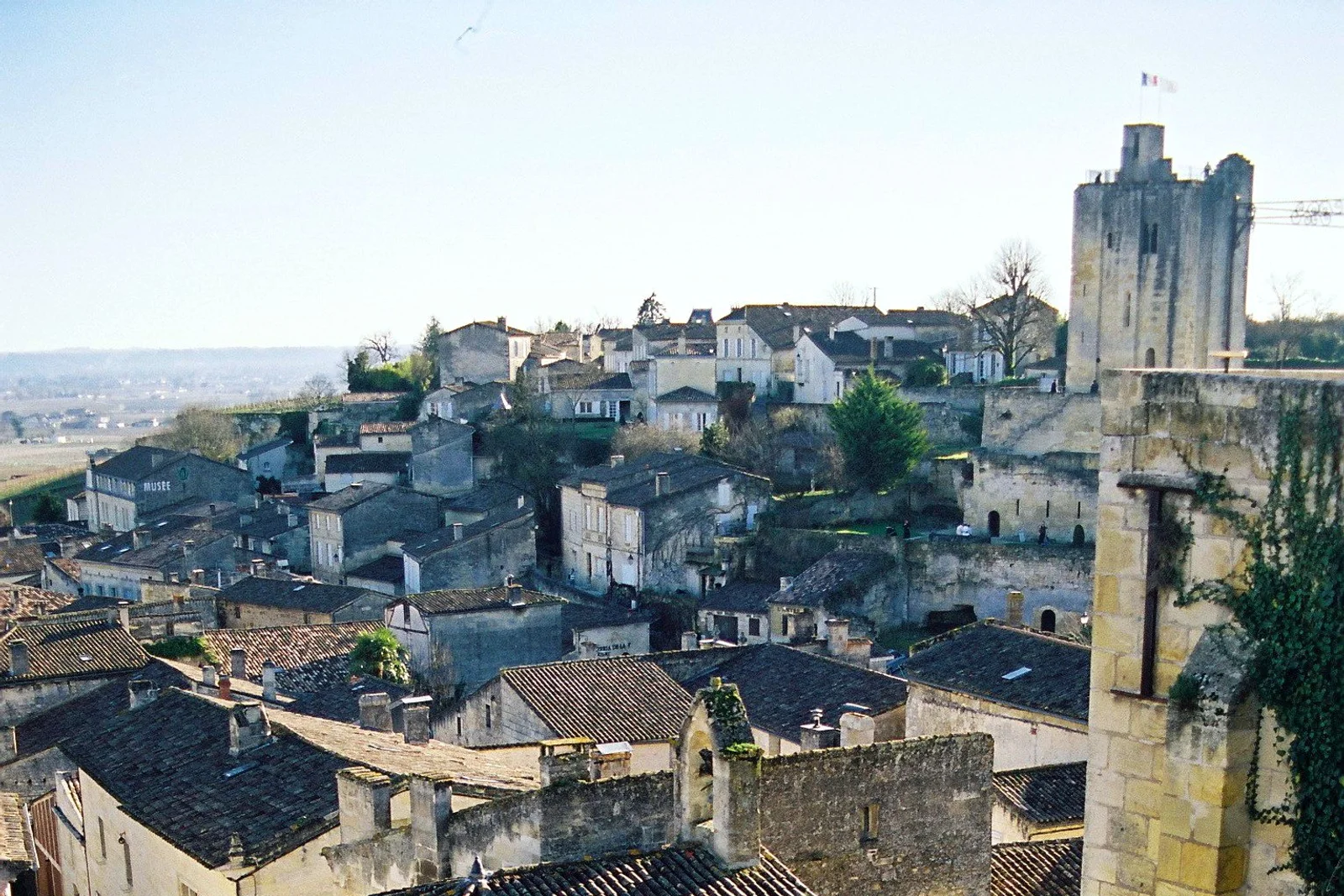
Its identity differs from a château-focused wine itinerary. The landscape includes modest early nineteenth-century stone houses grouped in hamlets for vineyard workers, large functional chais made of stone or brick and stone, and vineyard châteaux placed at the centre of their domains. The built environment follows the land’s resources and topography. Roman and medieval viticulture, together with the pilgrimage route to Santiago de Compostela, also helps explain the concentration of churches, monasteries and hospices.
In Saint-Emilion itself, the Hermitage or Grotto, Monolithic Church, medieval catacombs and Collegiate Church with its cloister cluster around the pilgrimage centre. The Château du Roi, Palais Cardinal ruins and the Pierrefitte menhir add secular and prehistoric dimensions. UNESCO inscribed the property in 1999. It remains a dynamic living territory, so the heritage is best understood as an active relationship between cultivation, settlement, stone, water and religious architecture, not as a preserved backdrop detached from use.