A transnational landscape of First World War remembrance
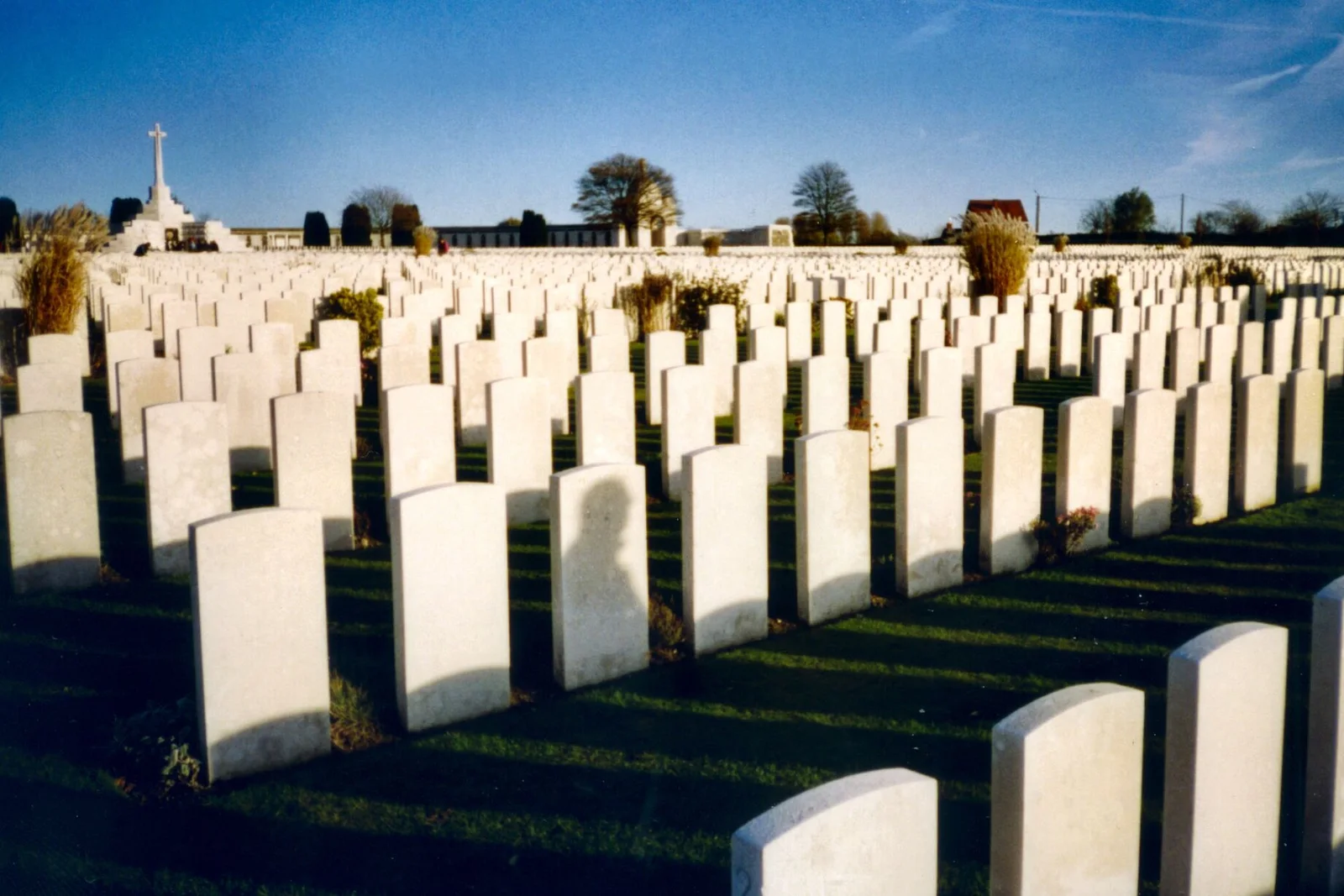
The Funerary and memory sites of the First World War (Western Front) belong here as a transboundary UNESCO property shared by France and Belgium. Its 139 component parts extend along the Western Front, from the North Sea to the Franco-Swiss border, and include cemeteries, battlefields, hospital and assembly sites, surrounding landscapes and memorials. The France-side label for this map is the French National Necropolis of Notre-Dame-de-Lorette, but the inscription is much broader than that representative record.
What links these varied places is a shared approach to mourning and recognition. Individual graves and memorials naming the missing express the principle that the dead should be identified and acknowledged as individuals, regardless of nationality, rank, culture, social class, ethnicity, religion or philosophical belief. Soldiers from more than 130 present-day countries fought or stood side by side, while civilians and labourers, including many from colonial territories, were also caught in the conflict’s consequences.
This property should not be confused with a single battlefield monument or a military cemetery of one national tradition. Its significance lies in the international architectural, artistic and landscape ensemble created across the Western Front, and in commemorations that remain a living tradition. Notice how noble materials, planting, spatial design and names shape places for meditation and tribute. The sites are visited by descendants, local communities, school groups, official delegations and individual visitors; respectful conduct is fundamental. UNESCO presents the ensemble as a place of transmission, awareness, reconciliation and reflection.