New Caledonia: reef diversity across a marine continuum
This property belongs because it brings a natural marine system into a map otherwise rich in cultural landscapes and architecture. UNESCO records six component parts across New Caledonia’s French Pacific lagoons and classifies the property as natural under criteria (vii)(ix)(x). Its significance rests on the combination of exceptional beauty, ecological processes and biological diversity, not on a single developed visitor site.
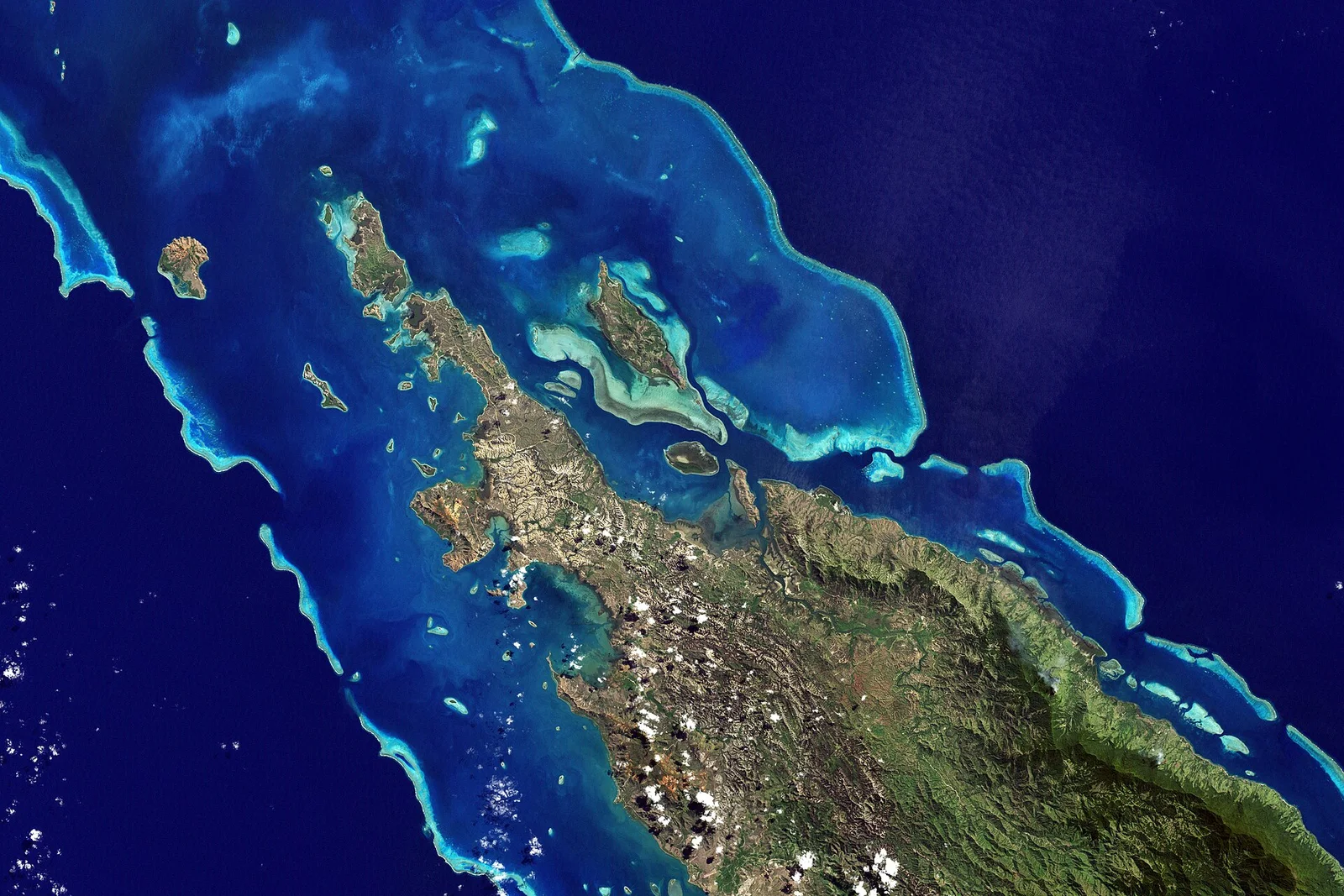
What distinguishes it from a conventional coral-reef destination is the range and connection of habitats. The property extends from mangroves and seagrasses to fringing reefs, atolls, offshore reefs and coral islands, across different oceanographic exposures including warm and cold currents. UNESCO identifies 146 reef-structure types under a global classification system. The reef complex encircles New Caledonia and includes reefs of varying age, from living formations to ancient fossil reefs.
Worth noticing is the presence of intact ecosystems with top predators, large fish and threatened marine species including turtles, whales and dugongs; UNESCO records the third-largest dugong population in the world. The property was inscribed in 2008. Its protection is an active management matter: fisheries legislation, co-management with Kanak communities, water quality, mining impacts, surveillance and future tourism all shape the conservation boundary. A map pin cannot represent the full marine scale, so interpret the record as a connected system of clusters and habitats.