Orange: Roman performance and imperial messages
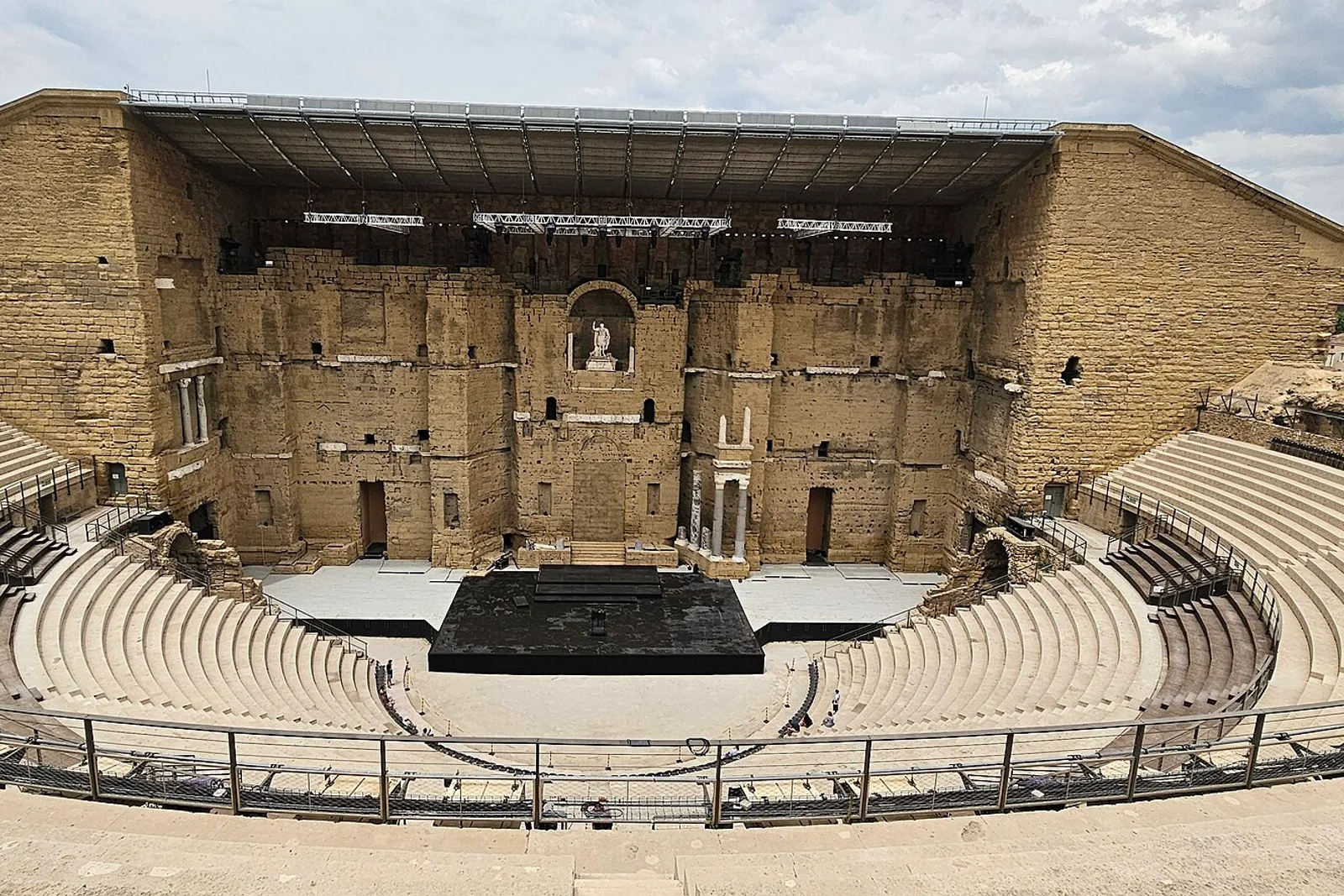
Orange belongs because two distinct monuments together show how Roman architecture and political imagery operated in a provincial city. The serial cultural property was inscribed in 1981. Its theatre, in the Rhône Valley, retains the principal components of a Latin theatre described by Vitruvius: semicircular seating, lateral access and a remarkably preserved stage wall with flanking parascenia. The 103-metre-long façade, rising 37 metres, makes the building legible as an architectural machine for public performance rather than simply an ancient ruin.
The second component is the Roman Triumphal Arch of Orange, built between 10 and 25 AD. Its reliefs bring military and imperial themes into view: Celtic weapons, bound figures, naval elements associated with Actium, and clashes between Roman and Celtic cavalry and infantry. That focus distinguishes Orange from a site concerned only with theatre design. The monuments have also passed through later uses and interventions. The theatre was closed by imperial decree in 391, later abandoned, and restoration began in 1825; the arch was transformed into a fort and restored in the 19th century. The property includes Saint-Eutrope Hill and known remains associated with the theatre, while historic-monument protection and a 500-metre buffer define the current framework.