Avignon’s papal, episcopal and riverfront ensemble
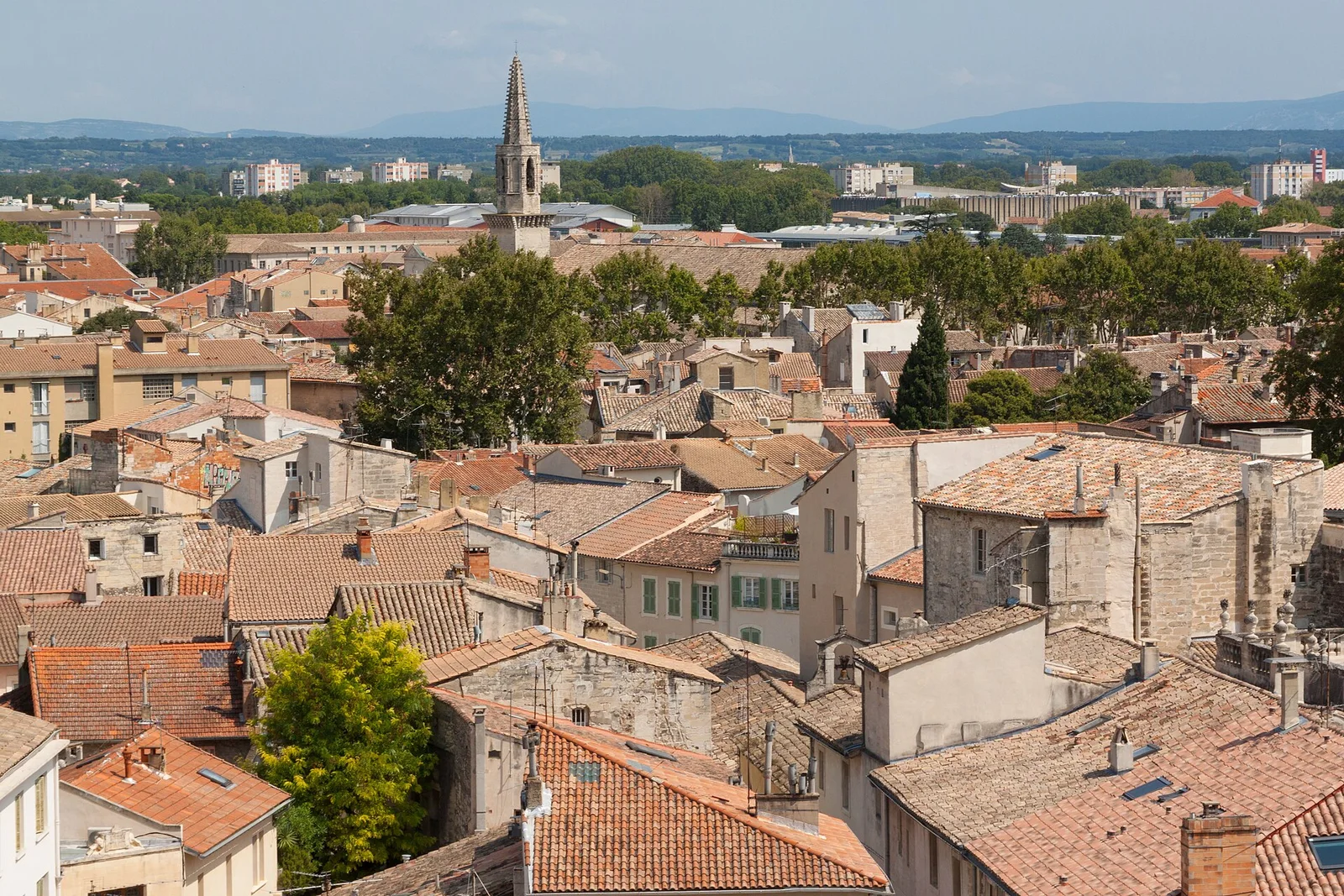
The Historic Centre of Avignon belongs because its UNESCO property gathers ecclesiastical, administrative and military architecture into a single medieval urban ensemble. In the 14th century, the city on the Rhône was the seat of the papacy. The Papal Palace dominates the city, ramparts and remains of the bridge, while the Petit Palais and the Romanesque Cathedral of Notre-Dame-des-Doms complete the group. Its significance is tied to the papacy’s presence and the circulation of artistic and architectural influence across Europe.
Avignon differs from Albi’s brick-coherent episcopal city and Carcassonne’s defensive enclosure. Here, the massive Papal Palace combines an austere fortress exterior with intricate 14th-century painted decoration inside. The Palais Vieux contains the Consistory Hall, Chapel of St John and Tinel; the Palais Neuf includes the papal chapel, while the Stag Room preserves frescoes of rustic scenes. The 52-metre Trouillas Tower and the Grande Audience, or Hall of Justice, show how residence, ceremony, administration and defence occupied one complex.
The surrounding ensemble matters just as much. Notre-Dame-des-Doms dates from 1150, the Petit Palais began in 1317 as the bishops’ residence, and the ramparts include the Tour des Chiens and Châtelet. Only four of the original 22 arches of the Saint Bénézet Bridge survive, with the Chapel of St Nicolas occupying part of the second pier. These fragments are not an accidental extra: they testify to the bridge’s history and its close relationship with the river.