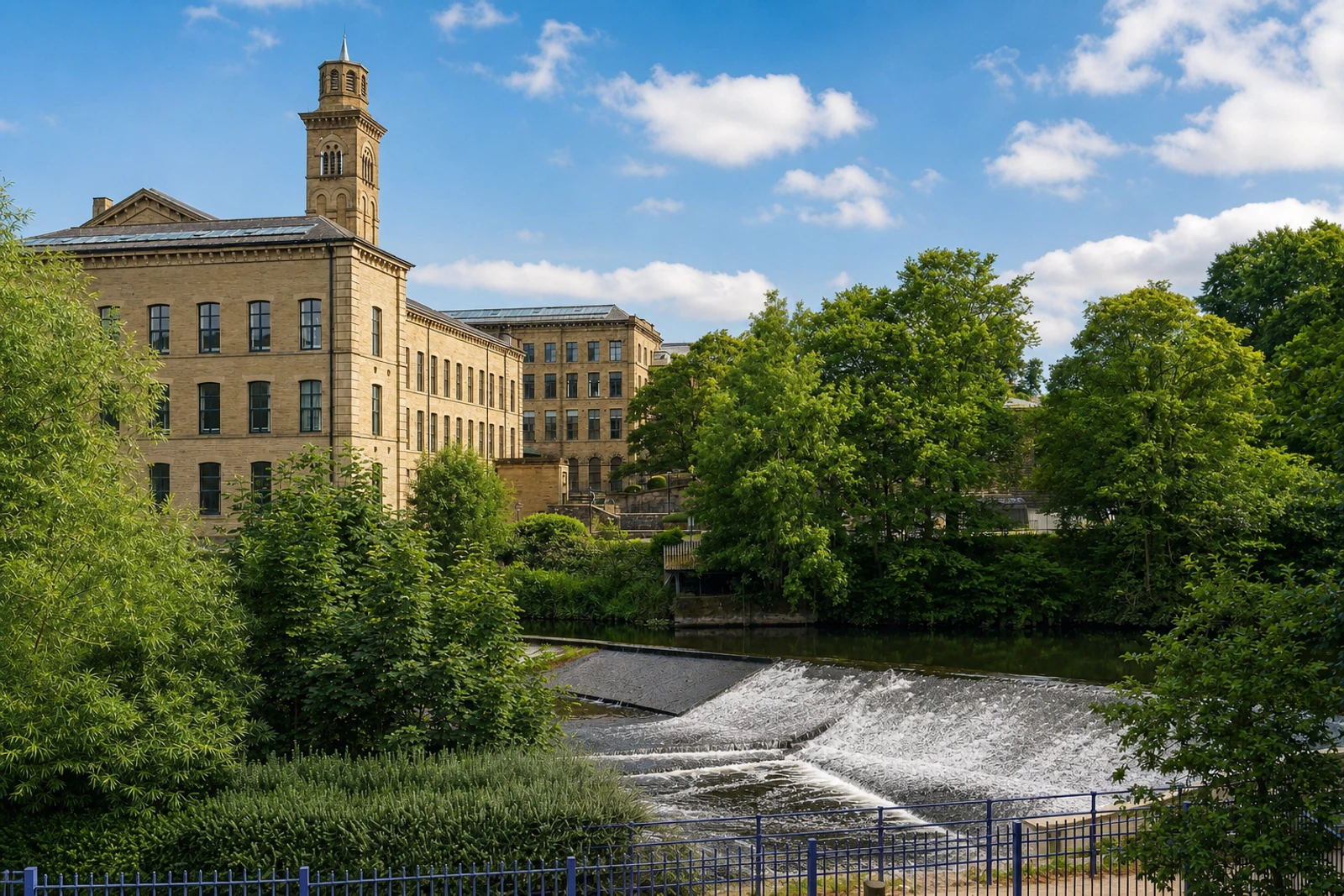
Saltaire: an industrial village planned as a whole
Saltaire belongs because its UNESCO significance is legible in the relationship between industry, housing and civic provision. Located on the River Aire in West Yorkshire, the village preserves an intact urban plan from the second half of the 19th century. Salt’s Mill and New Mill, workers’ housing, public buildings and Roberts Park form a connected settlement rather than a single industrial relic.
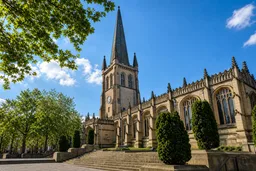
The village’s distinguishing feature is its completeness and hierarchy. The Dining Room, Congregational Church, Almshouses, Hospital, School and Institute sit alongside housing and mill buildings, expressing the philanthropic approach to industrial management and the importance of textiles to economic and social development. The plan also influenced later industrial settlements and the garden city movement, giving Saltaire a significance beyond its surviving architecture.
Saltaire should not be confused with an open-air museum detached from daily life. Sensitive rehabilitation has allowed the complex to remain a living community, although mill machinery was removed after industrial activity ceased in the mid-1980s. The station is inside the model village, making this one of the clearest rail-access properties on the map. Allow two to four hours; most streets are free, but individual venues should be checked.