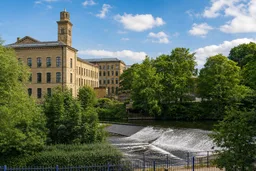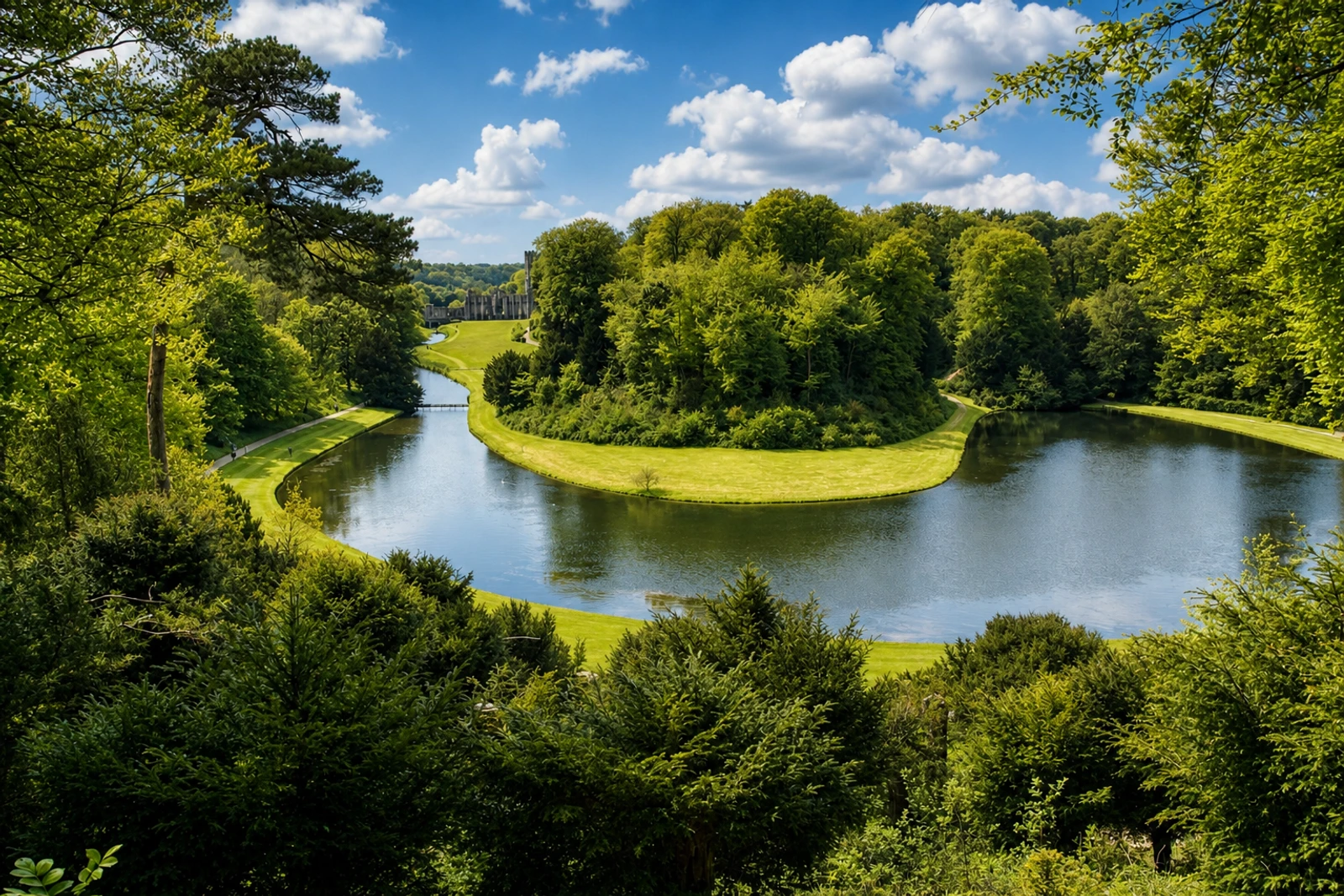
Fountains Abbey framed by an eighteenth-century water garden
Studley Royal Park including the Ruins of Fountains Abbey belongs on the map as one composite property in which ruins, water, buildings and parkland were deliberately made into a single landscape. In North Yorkshire, the 18th-century water garden and pleasure grounds surround the remains of Fountains Abbey, creating a setting that represents more than 800 years of religious, architectural and landscape ambition. UNESCO records two component parts, but the visitor experience depends on their connection.
The water garden is distinguished by its use of the River Skell and borrowed views from the surrounding countryside. Canals, ponds, cascades, lawns, hedges, statues and garden buildings follow the natural landscape rather than imposing a rigid plan upon it. The view of the abbey ruins is therefore not an accidental backdrop: it is a central part of the Aislabies’ design. Fountains Abbey also stands independently as a surviving 12th-century Cistercian house, while Fountains Hall and St Mary’s Church add Elizabethan/Jacobean and High Victorian Gothic contrasts.
The property is broader than the abbey ruins alone. Fountains Hall incorporates reclaimed abbey stone, and St Mary’s Church in the deer park was designed by William Burges in 1871. The World Heritage boundary largely follows National Trust ownership, while the buffer zone protects the wider historic estate. Plan for half to a full day, with bus or taxi onward from Harrogate or York; National Trust admission is recommended.