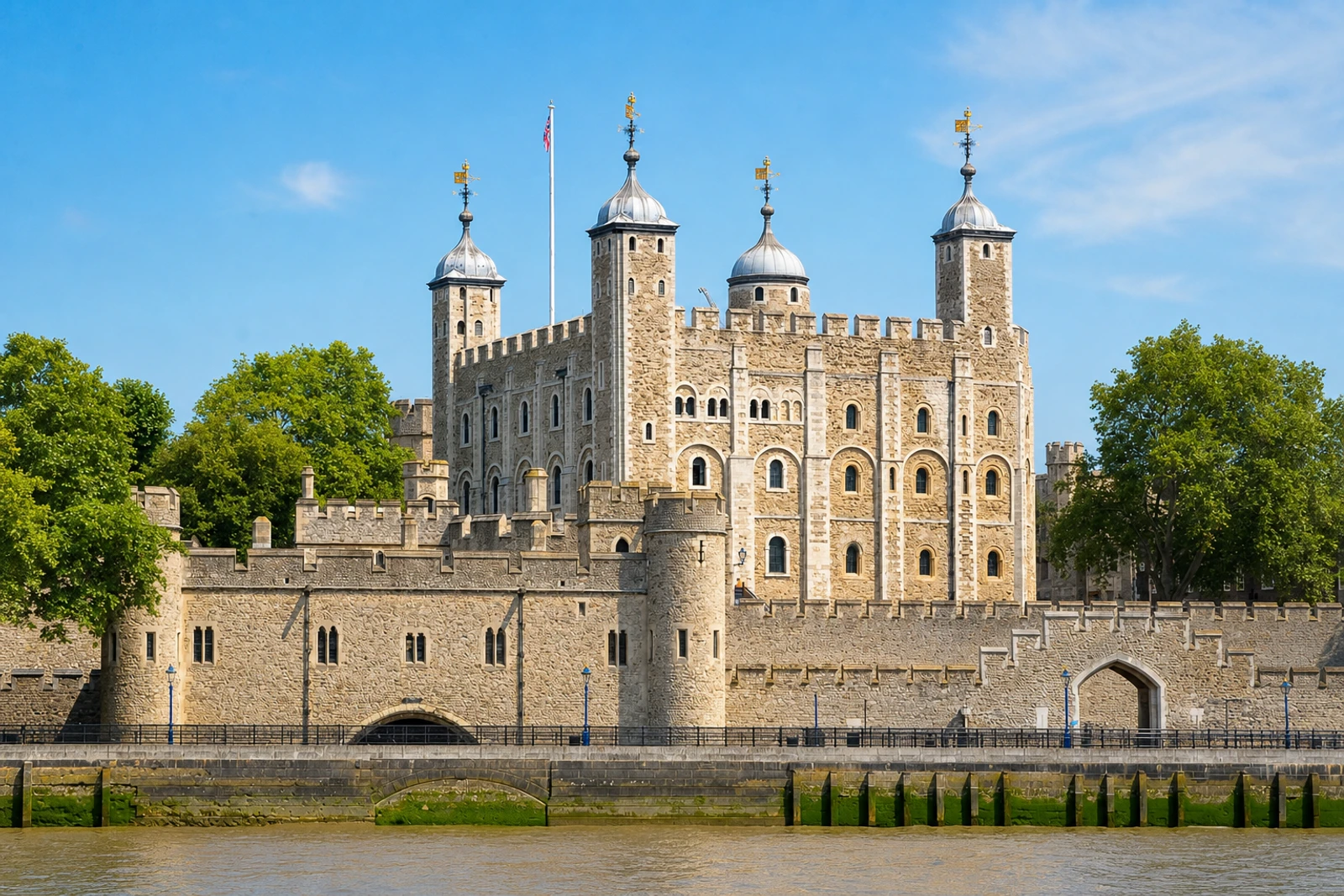
Tower of London: fortress, palace and state stronghold
The Tower of London is the map’s most concentrated World Heritage property: an ensemble of royal buildings organised around the White Tower on the River Thames. Inscribed in 1988 as a cultural property under criteria (ii) and (iv), it belongs here for its combined military, royal and institutional significance. William the Conqueror established the White Tower in 1066 as a fortress and gateway to the capital, placing it at a strategic bend in the Thames.
Look beyond the familiar image of a castle. The White Tower is a major example of Norman military architecture, while later additions under Henry III and Edward I developed the unusual idea of a palace within a fortress. The complex continued evolving from the eleventh to the sixteenth centuries, leaving surviving palace buildings that offer a rare glimpse of medieval royal life inside defensive walls. Its relationship with London is equally important: the Tower protected the City while also helping the monarchy control it, and its continuing use supported roles in defence, record-keeping and coinage.
The Crown Jewels, held at the Tower since the seventeenth century, connect the present visitor experience with its earlier role as a royal repository. The site also carries associations with major events, including the execution of three English queens. This is not a dispersed landscape like Northwest Wales or the Dorset coast; the key task is to read layers within one fortified complex. Tower Hill and Tower Gateway are the practical gateways, at least three hours is suggested, and timed admission is recommended.