

How to use this 10-day route
This itinerary is designed as a London arrival and Edinburgh departure, which avoids returning south after reaching Scotland. The map is most useful for seeing where the route naturally clusters: Westminster, the Tower of London, Greenwich, and Kew are all London-based; Bath and Stonehenge form the southwest section; Durham and Edinburgh anchor the northbound finish.
The schedule counts arrival and departure days explicitly. It prioritizes high-value visits over property maximization, so York is included as a practical overnight or rest stop rather than presented as a UNESCO site. Detailed rail schedules and advance-ticket availability can change, so recheck National Rail and attraction information close to the travel date.
The 10-day itinerary
Days 1–2 — London: Arrive in London and base yourself somewhere with convenient Tube or rail access. Use the first two days for Westminster, the Tower of London, Maritime Greenwich, and the Royal Botanic Gardens, Kew. These are car-free visits, but they are spread across the city, so grouping them by area will make the days more manageable. Allow a half day for Westminster, at least three hours for the Tower, half to a full day for Greenwich, and three to five hours for Kew.
Day 3 — Kew to Bath: Visit Kew if it did not fit comfortably on the London days, then travel onward to Bath and stay there. Bath is compact and walkable from Bath Spa station. Day 4 — Bath: Give the city a full day, separating the City of Bath inscription from the Bath component of The Great Spa Towns of Europe rather than treating them as one UNESCO property. Prebook the Roman Baths and other major attractions as needed.
Day 5 — Stonehenge via Salisbury: Travel from Bath toward Salisbury and arrange the final connection to Stonehenge in advance. Stonehenge is feasible without a car, but the Salisbury last-mile connection and timed entry need to align. Avebury belongs to the same serial UNESCO property but requires separate bus planning; do not assume it fits automatically into this day.
Day 6 — Rail north, with York as a break: Use York as a useful non-UNESCO overnight or transit base while moving north. This deliberately creates a rest and luggage-reset point instead of forcing another major sightseeing day. Day 7 — Durham: Travel onward to Durham, visit Durham Castle and Cathedral, and allow for the steep but walkable route from the station to the peninsula. Days 8–9 — Edinburgh: Base yourself near Edinburgh Waverley and explore the Old and New Towns of Edinburgh over two days, with time for steep streets and attraction reservations. Day 10 — The Forth Bridge and departure: Travel to a public viewpoint at North Queensferry or another suitable shore location, then return toward Edinburgh for your departure if flight timing allows. If the flight is early, spend the final night close to your departure point or omit this stop.
Rail planning, luggage, and reservations
The route is car-free, but car-free does not mean transfer-free. London’s properties use Tube, DLR, rail, walking, or a Thames boat; Bath is straightforward on foot; Durham involves a steep approach; and the Forth Bridge has rail-accessible viewpoints with walking on both shores. Stonehenge is the exception that deserves a separate transport check, because the Salisbury-to-site connection is part of the visit rather than a minor detail.
Keep luggage light enough for station transfers and short walks, particularly on the Bath-to-northbound and Edinburgh legs. Reserve Parliament tours, Westminster Abbey, the Tower of London, Kew, the Roman Baths, Stonehenge, and any Edinburgh attractions that require timed or advance admission. Public viewpoints for the Forth Bridge do not require a reservation. Recheck live rail schedules, operator information, attraction hours, ticket rules, and access arrangements before departure.
Where an extra night improves the trip
The tightest part of the itinerary is the southwest transition. Add a night in Bath if you want a slower visit to both Bath inscriptions, or if you want to include Avebury with Stonehenge rather than treating Avebury as a separate possibility. This reduces the risk that a delayed or poorly timed last-mile connection turns Stonehenge into a rushed visit.
An extra night also works well in Edinburgh if you want more time for the Old and New Towns or a less compressed departure day. Alternatively, add a night in York to make the northbound journey more restorative. The best choice depends on flight timing, attraction priorities, and the rail schedule available for your dates.
What this itinerary is—and is not—counting
UNESCO lists 35 properties under the United Kingdom State Party. Thirty-one are located in England, Scotland, Wales and Northern Ireland, while the other four are in British Overseas Territories. This itinerary covers ten required UNESCO IDs, but those IDs do not all represent the same kind of property structure.
Bath appears twice because the city contains the UK component of The Great Spa Towns of Europe as well as the separate City of Bath inscription. The Great Spa Towns of Europe is a transboundary serial property whose other ten spa towns are outside the UK. Stonehenge, Avebury and Associated Sites is also serial, so seeing Stonehenge does not mean every component has been visited.
Places in this article
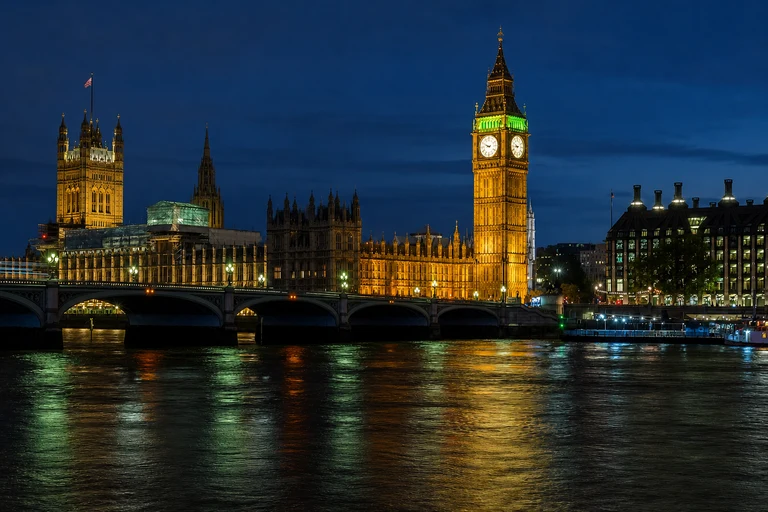
Palace of Westminster and Westminster Abbey including Saint Margaret’s Church
This Westminster property is the opening anchor for the London section and fits naturally on Day 1 or Day 2. Westminster station provides Tube access, with the main sights explored on foot; allow about half a day within the broader London plan.
Parliament tours and Westminster Abbey should be prebooked. Check current tour, entry, security, and access information before visiting, particularly if your arrival day leaves limited flexibility.
AI-created illustrative image; not a documentary photographAnyMappy · AI-edited from a rights-cleared reviewed reference · AI-generated editorial imageImage source
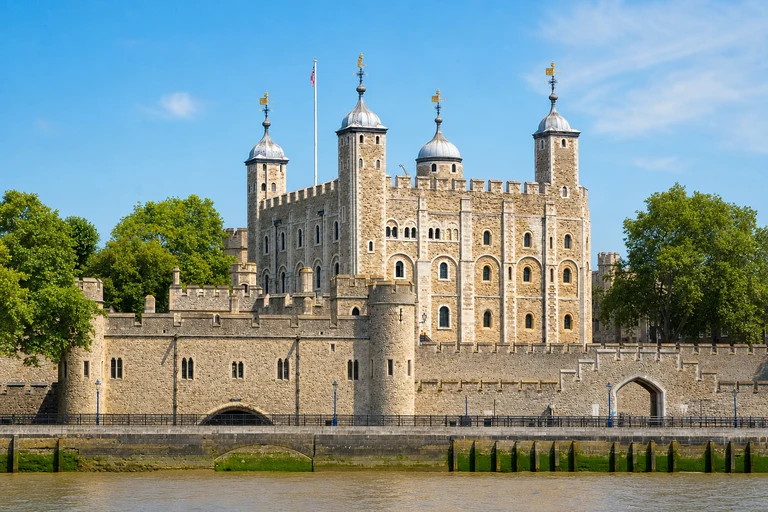
Tower of London
The Tower of London adds a distinct riverside and fortress stop to the London cluster. It works well as a separate half-day visit from Westminster, using Tower Hill or Tower Gateway and allowing at least three hours for the property.
Timed admission is recommended. Recheck current admission arrangements and attraction information, and leave enough transfer time if combining the Tower with another London visit.
AI-created illustrative image; not a documentary photographAnyMappy · AI-edited from a rights-cleared reviewed reference · AI-generated editorial imageImage source

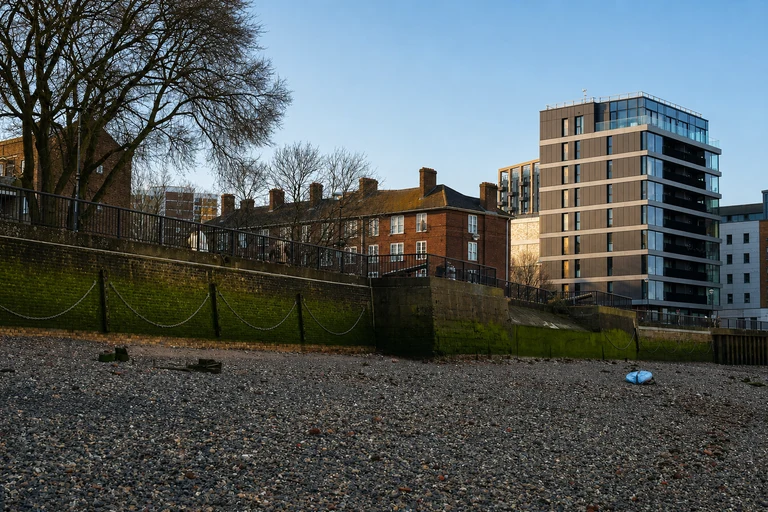
Maritime Greenwich
Maritime Greenwich gives the London portion a compact riverside-and-hill destination rather than another central-city stop. Reach it by DLR, rail, or Thames boat, then plan for a half to full day among the cluster of sites.
Paid museum attractions may need separate bookings. Check current opening, ticket, and access information, and do not assume every attraction in Greenwich uses the same admission arrangement.
AI-created illustrative image; not a documentary photographAnyMappy · AI-edited from a rights-cleared reviewed reference · AI-generated editorial imageImage source
.jpg)
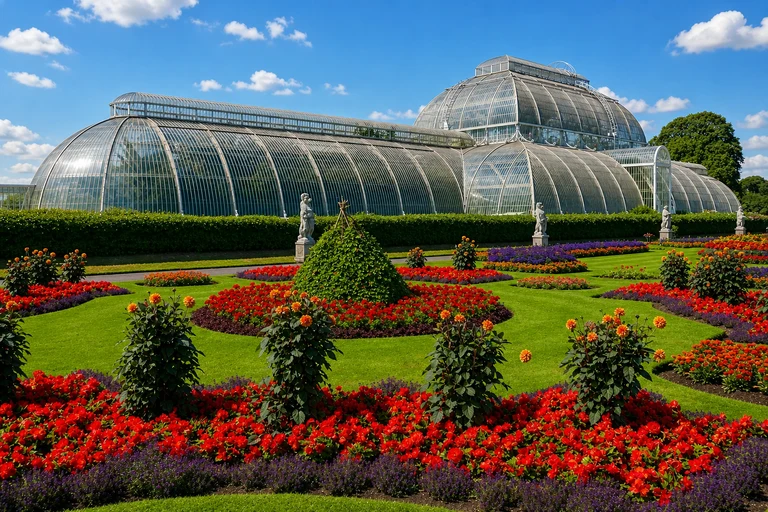
Royal Botanic Gardens, Kew
Kew is the route’s western London stop and is specifically placed on Day 3 before continuing toward Bath. It is car-free via London Overground or the District line, followed by a short walk; allow three to five hours.
An advance garden ticket is recommended. Recheck current entry rules, opening information, and the most suitable station access before fixing the day’s onward rail plans.
AI-created illustrative image; not a documentary photographAnyMappy · AI-edited from a rights-cleared reviewed reference · AI-generated editorial imageImage source

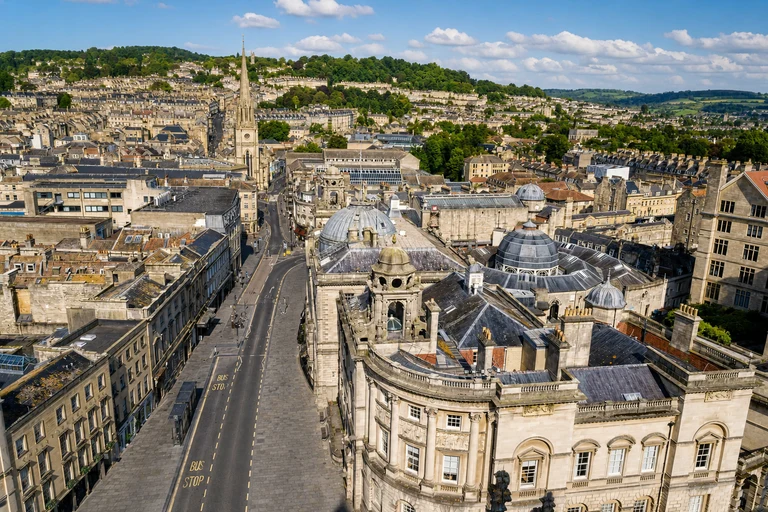
City of Bath
City of Bath is the main Bath stop on Days 3–4 and rewards a full day in the compact city center. Bath Spa is the nearest station, and the central areas can be explored on foot without a car.
The Roman Baths and major attractions should be prebooked where required. Check current opening, reservation, and access information, especially if arriving from Kew on the same day.
AI-created illustrative image; not a documentary photographAnyMappy · AI-edited from a rights-cleared reviewed reference · AI-generated editorial imageImage source

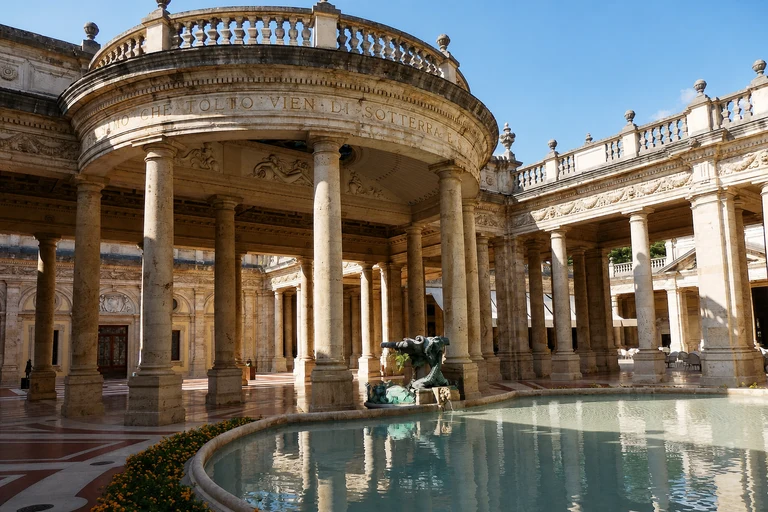
The Great Spa Towns of Europe
Bath is the UK component of this separate transboundary serial inscription, so it belongs on the Bath day but should not be merged with City of Bath for counting purposes. The property’s other ten spa towns are outside the UK.
Book Roman Baths admission and spa experiences separately as needed. Verify current attraction arrangements before travel; visiting Bath does not represent a visit to the other components of the serial property.
AI-created illustrative image; not a documentary photographAnyMappy · AI-edited from a rights-cleared reviewed photograph · AI-edited non-documentary editorial thumbnailImage source

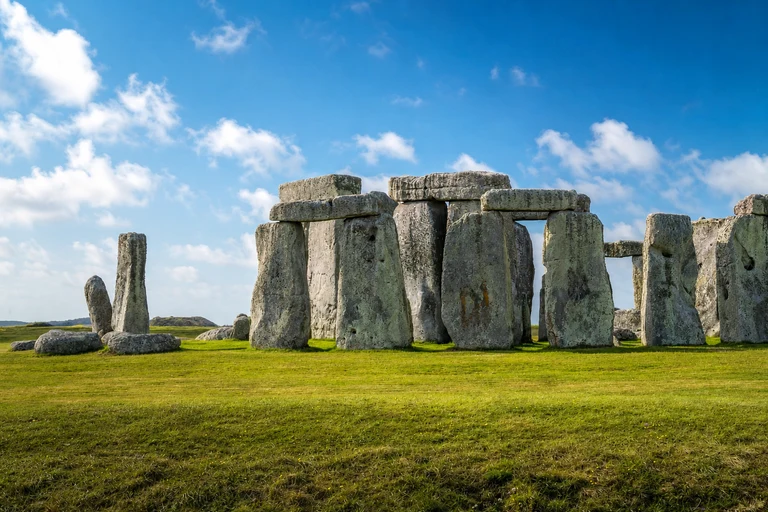
Stonehenge, Avebury and Associated Sites
This serial property fits on Day 5 as a planned southwest excursion from the Bath area, with Salisbury serving as the rail approach for Stonehenge. A car is not essential, but the final connection from Salisbury must be arranged rather than left to chance.
Stonehenge timed entry is strongly recommended. Avebury requires separate bus planning and may need an additional night or a longer day; recheck current directions, transport connections, admission rules, and site information.
AI-created illustrative image; not a documentary photographAnyMappy · AI-edited from a rights-cleared reviewed reference · AI-generated editorial imageImage source

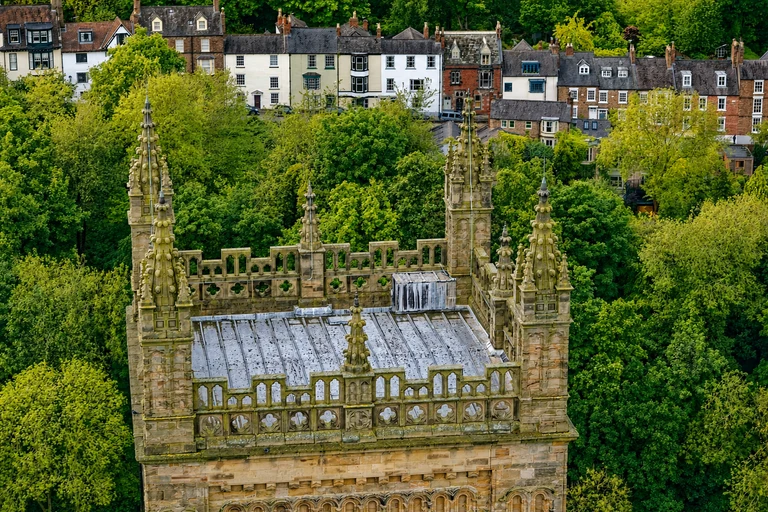
Durham Castle and Cathedral
Durham is the first focused UNESCO stop after the York northbound break and gives Day 7 a manageable, single-city visit. Durham station is the rail access point, followed by a steep but walkable route to the peninsula; allow three to five hours.
Check cathedral and castle tour availability before setting the day’s schedule. Current access arrangements may affect how much of the property can be seen on a short stop.
AI-created illustrative image; not a documentary photographAnyMappy · AI-edited from a rights-cleared reviewed reference · AI-generated editorial imageImage source

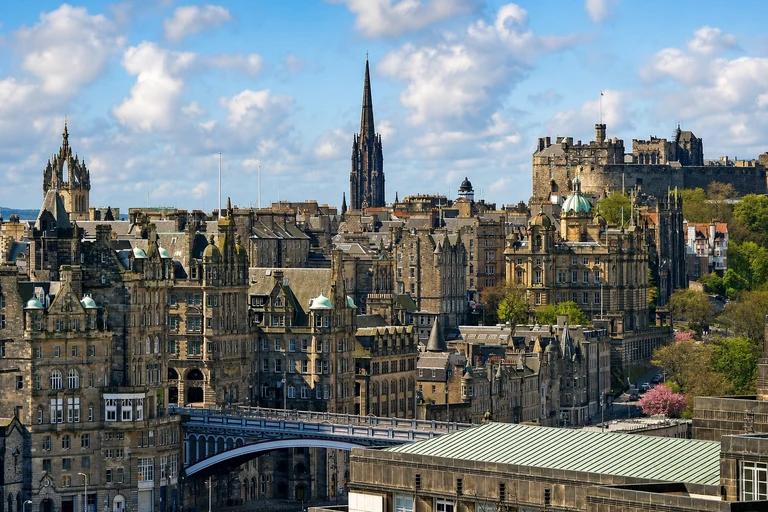
Old and New Towns of Edinburgh
The Old and New Towns of Edinburgh form the main base for Days 8–9 and the practical departure city for Day 10. Edinburgh Waverley is the nearest station, and the central area is walkable, though steep streets make a slower pace and light luggage worthwhile.
Book major attractions during peak periods and recheck current opening and access information. Keeping two nights here gives the route flexibility before the Forth Bridge visit and departure.
AI-created illustrative image; not a documentary photographAnyMappy · AI-edited from a rights-cleared reviewed reference · AI-generated editorial imageImage source

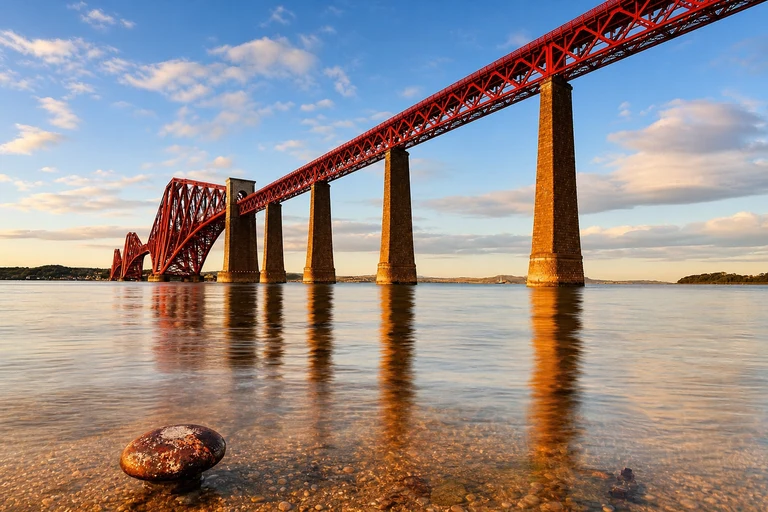
The Forth Bridge
The Forth Bridge is the final stop, placed on Day 10 because public rail-accessible viewpoints can be reached from North Queensferry or Dalmeny before returning toward Edinburgh. Allow two to three hours, subject to your flight timing and local connections.
No reservation is needed for the public viewpoints. Check live rail information, walking access, weather, and flight timing before committing to this departure-day visit; omit it if the schedule is tight.
AI-created illustrative image; not a documentary photographAnyMappy · AI-edited from a rights-cleared reviewed reference · AI-generated editorial imageImage source

Can this UK UNESCO itinerary be done without renting a car?
Yes, the route is planned around rail, Tube, DLR, walking, and local connections. Stonehenge is the main qualification: arrange the Salisbury last-mile connection and timed entry in advance. Avebury needs separate bus planning.
Why does the itinerary include York?
York is a useful northbound overnight or transit break, but it is not a UNESCO World Heritage property in this itinerary. It provides a practical rest point between the southwest and Durham.
Are the two Bath entries two separate UNESCO properties?
Yes. City of Bath is a separate inscription, while Bath is the UK component of the transboundary serial property The Great Spa Towns of Europe. They should be counted and described separately.
Should I reserve attractions before traveling?
Advance planning is recommended for Parliament tours, Westminster Abbey, the Tower of London, Kew, the Roman Baths, Stonehenge, and major Edinburgh attractions. Stonehenge timed entry is especially important. Check current reservation rules and opening information before your trip.
How should I book the rail legs?
Check live schedules and advance-ticket availability through current rail information before booking. Detailed UK rail schedules can be finalized closer to the travel date, and no fare or timetable should be treated as evergreen.
Can I visit the Forth Bridge on departure day?
Possibly, if your flight timing allows a visit to a public viewpoint at North Queensferry or on another shore followed by travel toward Edinburgh. For an early flight, skip the stop or stay closer to your departure point the previous night.