
.jpg)
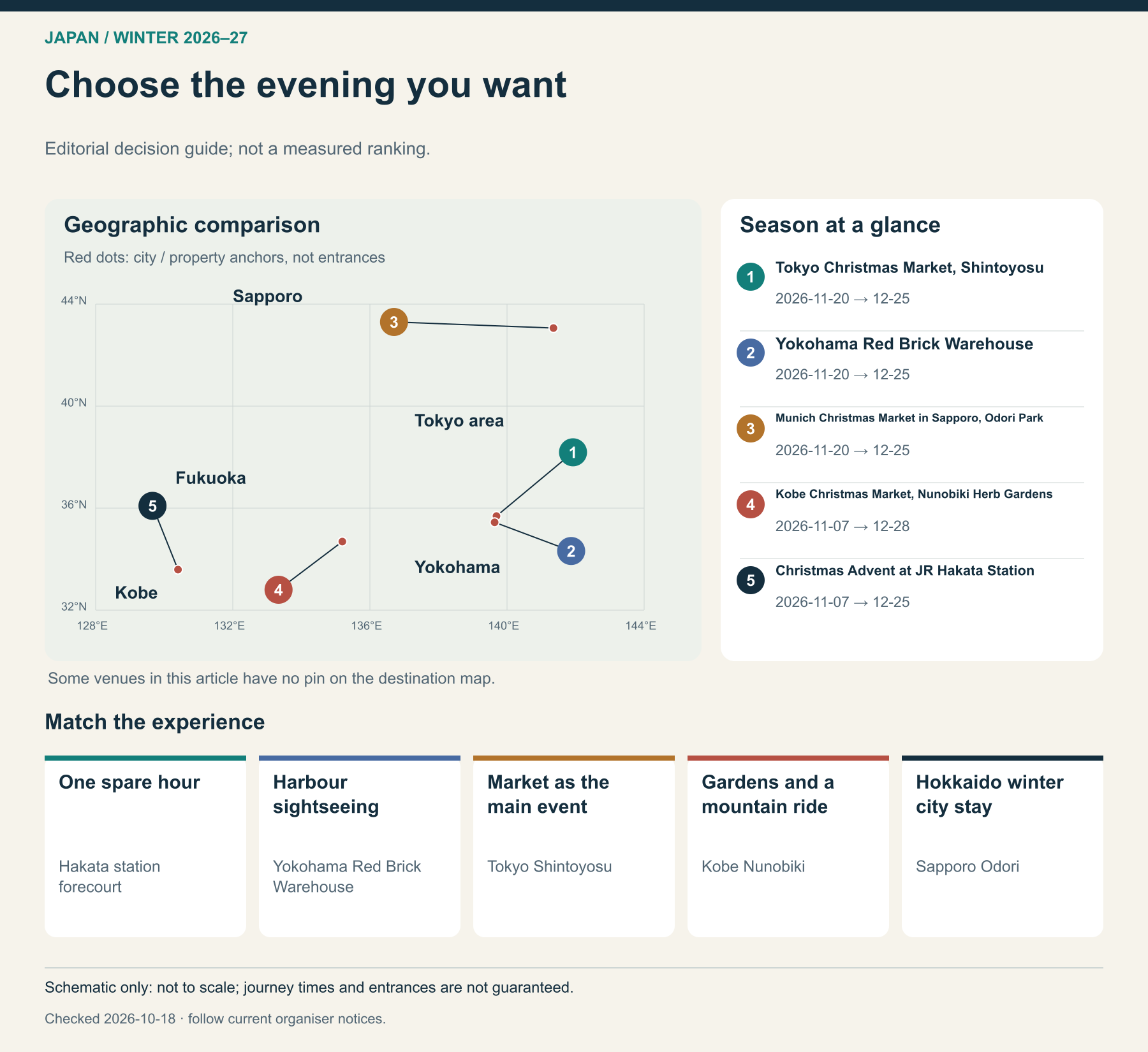
Editorial decision guide; not a measured ranking. Schematic only: not to scale; journey times and entrances are not guaranteed.
Enlarge the diagramRead the planning notes
- One spare hourHakata station forecourt
- Harbour sightseeingYokohama Red Brick Warehouse
- Market as the main eventTokyo Shintoyosu
- Gardens and a mountain rideKobe Nunobiki
- Hokkaido winter city staySapporo Odori
Start with your base and your tolerance for winter weather
| Place | Best fit | Main constraint |
|---|---|---|
| Shintoyosu, Tokyo | A dedicated market evening | Paid entry; exposed waterfront |
| Red Brick Warehouse, Yokohama | Harbour sightseeing plus stalls | Different ticket types and busy approaches |
| Odori Park, Sapporo | A winter city break | Cold, snow or ice can slow walking |
| Nunobiki Herb Gardens, Kobe | Afternoon gardens and mountain views | Ropeway queues and selected late-opening days |
| Hakata Station, Fukuoka | An easy stop during a city stay | Commuter flows and limited space at peak times |
A market is a better addition to a journey than a reason to rush between distant Japanese cities. If you already have Tokyo accommodation, compare Shintoyosu with a separate Yokohama day trip. If your itinerary centres on Kansai, Kobe is the logical choice. Sapporo and Fukuoka make sense within Hokkaido and Kyushu stays. Combining all five would consume several transport days and turn relaxed evening browsing into a timetable exercise.
The selection here balances distinct settings, usable public transport and published 2026 information. It does not measure stall quality or visitor satisfaction, and we have not visited this season’s events. A large attendance figure also says little about how comfortably a family can find a seat. For a first decision, consider your required return time, whether you want crafts or a meal, and how easily someone in your party can stop indoors.
With only an hour, a station-front visit at Hakata is practical. With a whole afternoon, Kobe can combine gardens, the ropeway and evening scenery. Yokohama works well when the market is one part of a harbour day. Shintoyosu is a useful choice when the market itself is the main plan. Sapporo rewards a slow city stay with flexible indoor breaks, rather than a tightly timed airport connection.
The 2026 calendar: check the event, then the individual venue
Shintoyosu and Yokohama run from 20 November to 25 December. Sapporo’s market has the same dates. Kobe runs from 7 November to 28 December, and Hakata from 7 November to 25 December. This makes late November through 25 December the common window for the five selected venues, but their opening hours are not interchangeable.
Tokyo Christmas Market has two 2026 sites. This comparison uses Shintoyosu; the separate Shiba Park market near Onarimon opens on 4 December. An old photograph or a search result mentioning Meiji Jingu Gaien or Hibiya is not a reliable guide to this year’s gate. Read the venue name on the ticket and save its address before setting out.
The market’s closing date is also different from a city’s illumination season. Sapporo has several illumination areas with different end dates. An illuminated street after Christmas does not mean that its food huts are still trading. In Kobe, 28 December remains inside the published market period, but the other four selected markets have already ended. Avoid booking a 26 December market meal based only on a general winter-lights page.
Build a realistic budget before comparing ticket prices
Separate admission, travel, food and keepsakes. A low gate price can be outweighed by a long train journey, while a higher bundled admission may pay for transport that is part of the experience. Decide whether your group wants a full meal or simply one warm drink and a look around; this prevents an entry ticket from becoming a misleading estimate of the total evening.
At Shintoyosu, adult entry is ¥1,000 on weekdays and ¥1,500 on weekends and public holidays through 23 December, then ¥2,000 on 24–25 December. Primary-school children pay ¥500, rising to ¥1,000 on those final two days; younger children enter free. Yokohama lists ordinary entry at ¥500–1,000 depending on date. Priority entry and a premium-mug bundle cost more. Food and shopping are extra, and ticket-sale details were still due in late October when this guide was checked.
Kobe’s Christmas-season return ropeway and garden admission is ¥3,300 for adults and ¥1,650 for children. Compare this with a mountain outing, not simply a fee to browse huts. For Sapporo and Hakata, allow separately for purchases even when browsing the public-space event. Confirm current admission and any optional experience rules through the venue information before travel; an open square does not make food, workshops or transport free.
For paid markets, check cancellation terms, the entry date, child age bands and whether a mug is included in the product you actually selected. Do not assume that a souvenir shown in publicity comes with every ticket. Save the ticket offline and keep a second payment method available. Advance purchase may avoid the sales desk, but it cannot guarantee an empty entrance or a dining seat.
A workable market evening has one anchor and one escape route
Give the market a protected block of time rather than squeezing it between two prepaid activities. Our planning allowance is roughly two to three hours for browsing, one food stop and queues; it is an editorial estimate, not an organizer’s minimum. People travelling with a child, a wheelchair or a slower walker should shorten the route rather than rely on walking faster later.
Arrive with a meal strategy. Browse a short stretch first, identify one preferred stall and check for a place to eat before buying several hot dishes. Split purchases into small rounds so that food does not cool while you search for a table. A nearby indoor dinner booked well after your visit can be a better choice than assuming outdoor stalls will serve as a full restaurant. Bring only what venue rules permit; some markets restrict outside food.
Select one indoor fallback and know how to reach the station without returning through the busiest photo spot. In Yokohama, this means keeping the harbour walk flexible. In Sapporo, it means building the outing around a warm break close to Odori. In Kobe, the fallback must respect the ropeway’s last uphill and downhill services; a mountain venue cannot be treated as a square that you can leave in any direction.
Weekday visits earlier in the season are a reasonable planning preference for visitors who can choose dates, not a promise of low crowds. Weather, school trips, performances and short-notice restrictions can change the pattern. The final weekend and Christmas Eve deserve generous buffers, particularly when a date-specific ticket or a long return journey makes changing plans difficult.
Cold, access and photography: small choices that improve the visit
Dress for standing still outdoors. Gloves that allow you to use a ticket screen, a wind-resistant outer layer and shoes with reliable grip matter more than an elaborate outfit. Sapporo requires particular attention to frozen surfaces; the actual conditions depend on the day. Kobe’s mountain setting and the waterfront at Tokyo or Yokohama can feel different from a sheltered station concourse. Check the short-range forecast and operator notices rather than relying on seasonal photographs.
Do not equate “near a station” with a step-free trip. Check the station’s elevator exit, the event entrance and the path between them. A short staircase exit may be unsuitable even when the advertised walking time is one minute. Strollers, wheelchairs and luggage also need room to turn at stalls. Store large bags before the visit where appropriate, and keep access lanes and tactile paving clear.
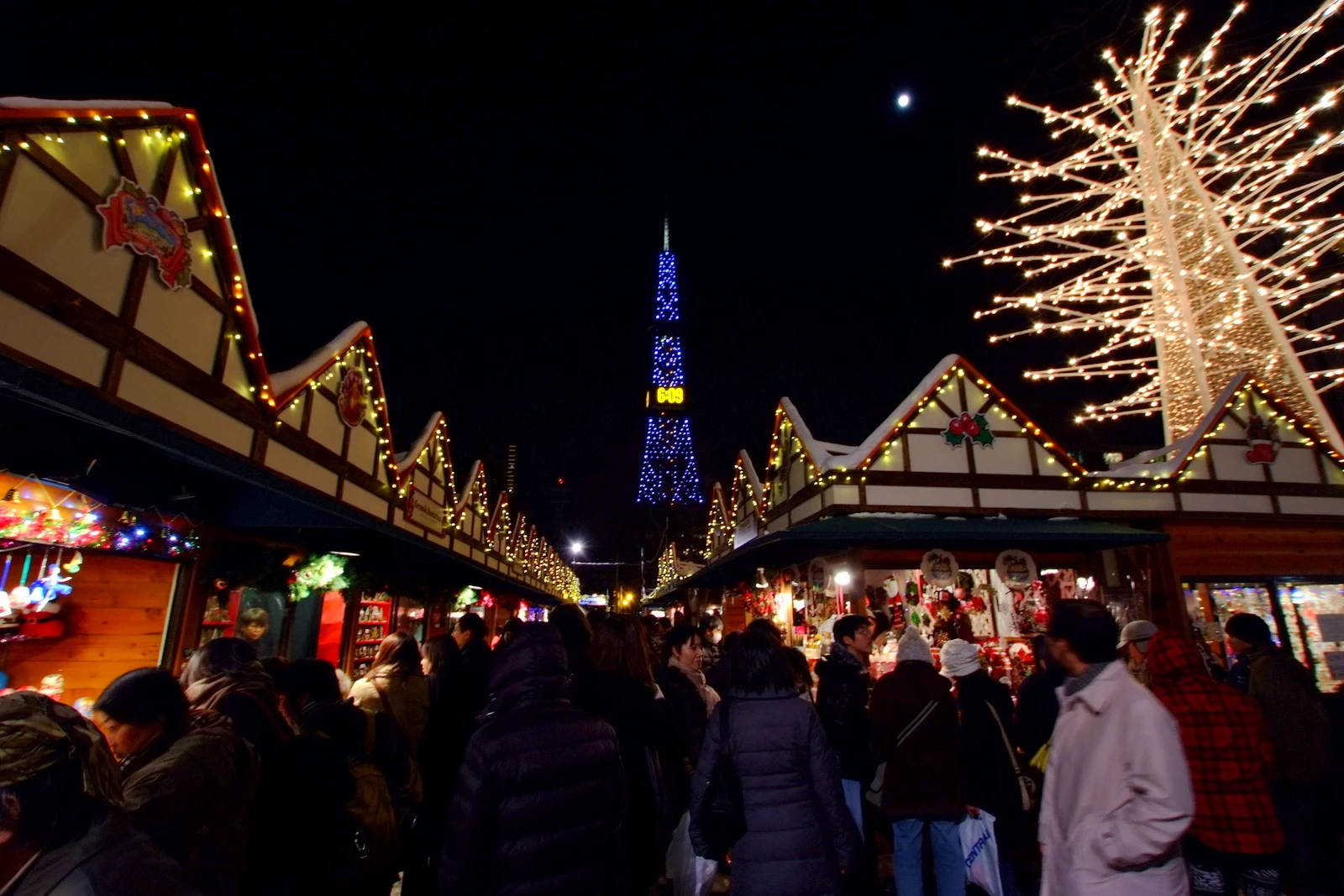
Photograph from the side of the flow, with permission where needed, and let other visitors use the same viewpoint. A tripod can obstruct a narrow aisle; the venue’s own rules take precedence over a travel article. Historic photographs help explain the setting, but stalls, trees and decorations can change each year. Treat any pre-2026 image as a past-season reference, never as a promise of the layout you will find.
Use three practical scenarios to make the final choice
For two adults staying in central Tokyo, first decide whether the main pleasure is food stalls or walking between illuminated streets. If it is the stalls, Shintoyosu is the relevant market choice here; if it is a flexible walk, use the separate Tokyo route guide. Paying for a market does not automatically make it a better backdrop for an evening spent mostly walking elsewhere. Yokohama makes more sense when its harbour is already part of the day, rather than as an extra transfer after a full Tokyo programme.
For a family, work backward from the youngest person’s comfortable return time. A shorter Hakata stop followed by an indoor meal may provide more enjoyment than waiting for a second round of food outside. In Sapporo, choose the outdoor segment according to conditions that evening. In Kobe, compare the whole ropeway outing with everyone’s tolerance for waiting and heights, not just the appearance of the stalls.
For a photographer, separate the subject from the promise. A city waterfront, a mountain garden and a station square are different settings, but historical media cannot reserve an unobstructed view. Keep the essential ticket and return journey independent of a particular photograph, and stop shooting when the available space no longer allows comfortable circulation.
For a market-centred evening on Tokyo’s waterfront
The 2026 Shintoyosu venue is at Toyosu 6-chome 4, with the organizer listing a two-minute walk from Shin-toyosu Station and a four-minute walk from Shijo-mae. There is no event car or bicycle parking. Most days run 11:00–21:30, with last admission at 20:30; opening day starts at 16:00. This makes an early evening visit sensible when you want time for stalls without using the final-entry window as your arrival target.
Choose one waterfront activity before the market, then leave room for the event itself. It is not necessary to add the separate Shiba site on the same night. Shintoyosu is a new 2026 venue, so older Tokyo Christmas Market photographs show the organizer’s previous events, not this waterfront layout. Compare the new venue map and any queue instructions before buying, especially if a particular view or stall is your main reason for going.
For a harbour day that ends with food and lights
.jpg)
.jpg)
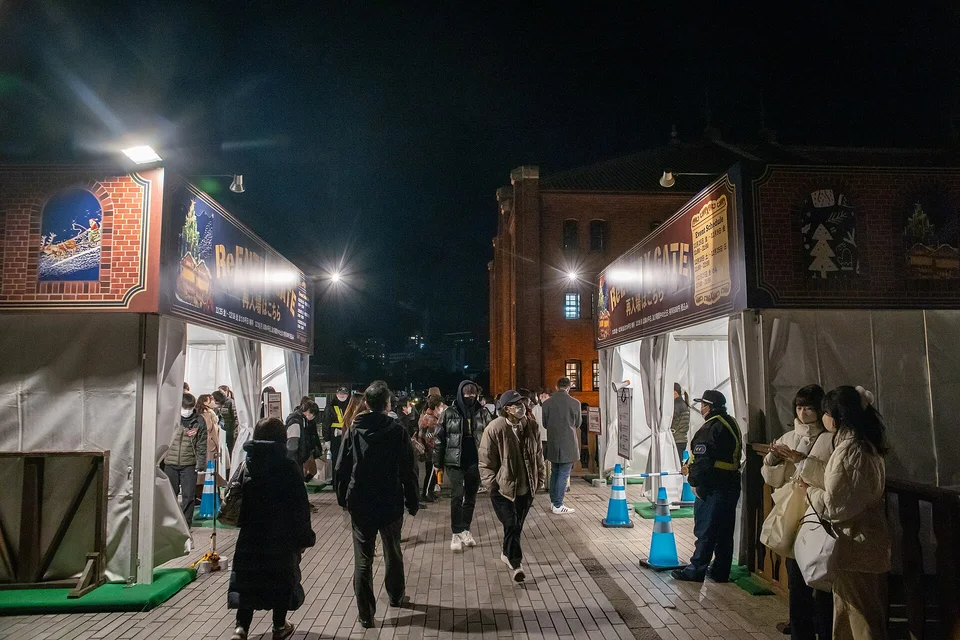
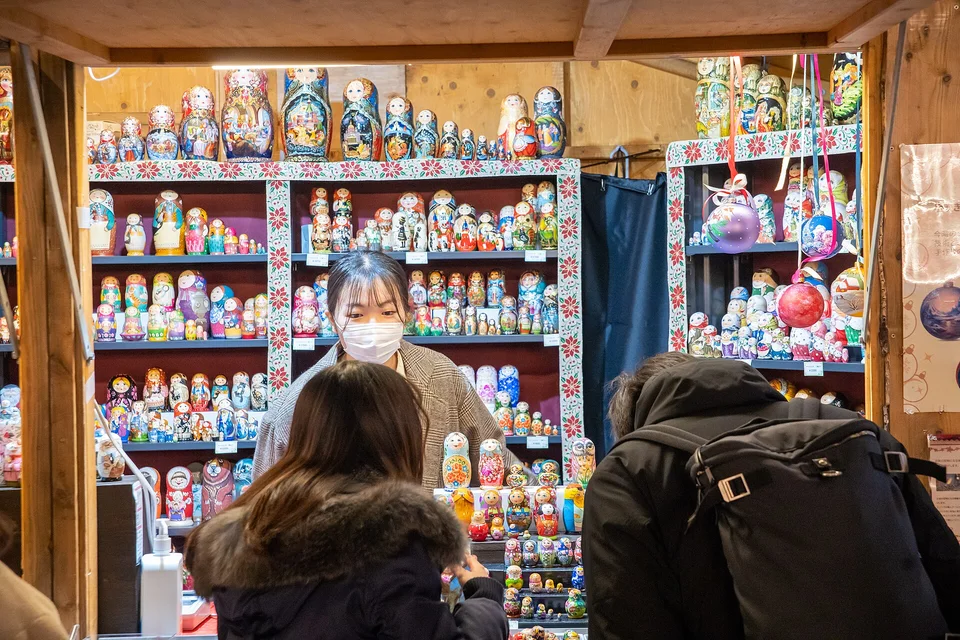
The event runs until 21:00 through 4 December and until 22:00 from 5 December; 20 November opens at 17:00. Some content has its own timetable. Combine an afternoon around the waterfront with the market after dark, then return towards your chosen rail station. Keep the outdoor promenade optional if wind or rain makes the longer circuit uncomfortable.
Ordinary entry, priority entry and the premium-mug product solve different needs. Priority access is not a reservation for a table. Children of primary-school age and younger are free with a guardian; through 4 December the published exemption extends to junior-high-school age. Some areas are free, but that does not make the main market ticket unnecessary. Families should compare the exact date and age rules before choosing a weekend.
For a Hokkaido city stay with short outdoor sessions
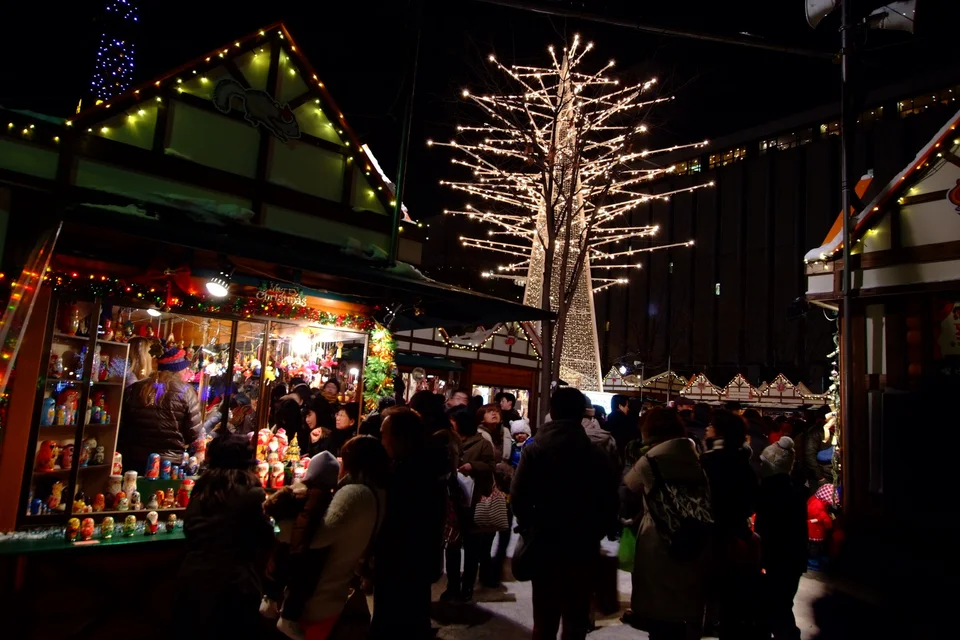

The organizer lists 11:00–21:00 and a 20:45 food last order. Use Odori Park’s central market area as the anchor, with the nearby station and an indoor break shaping the evening. The page’s 2026 overview names blocks 1 and 2 while its detailed map still concentrates on block 2; follow the current site plan rather than treating an old stall number as a meeting point.
Sapporo is the choice for visitors who already want a winter city trip, not for anyone who needs a guaranteed snowy photograph. Snow, slush and ice affect both the experience and the pace of the return walk. Allow more time than a summer map estimate, keep shopping bags manageable and avoid carrying an uncovered hot drink across a slippery route. Nearby lights are a useful extension only while the group remains comfortable.
For gardens, a ropeway ride and mountain scenery
This is an outing above the city rather than a street market beside a station. Begin at the ropeway’s base near Shin-Kobe, enjoy the gardens before dusk and leave time to return from the mountain. Night opening is scheduled on Fridays, Saturdays, Sundays and public holidays, then daily from 11 to 28 December. On other weekdays, the published final uphill departure is 16:45, so a late after-work arrival is unsuitable.
On night-opening dates, final uphill boarding is 20:15 and the published operation ends at 21:00. Online tickets can reduce time at the sales counter but do not remove the boarding queue. Weather can affect a ropeway journey, so check operation before travelling. The garden’s slopes and changing evening access also deserve attention if someone in the group needs a gentler path.
For the easiest addition to a Fukuoka stay
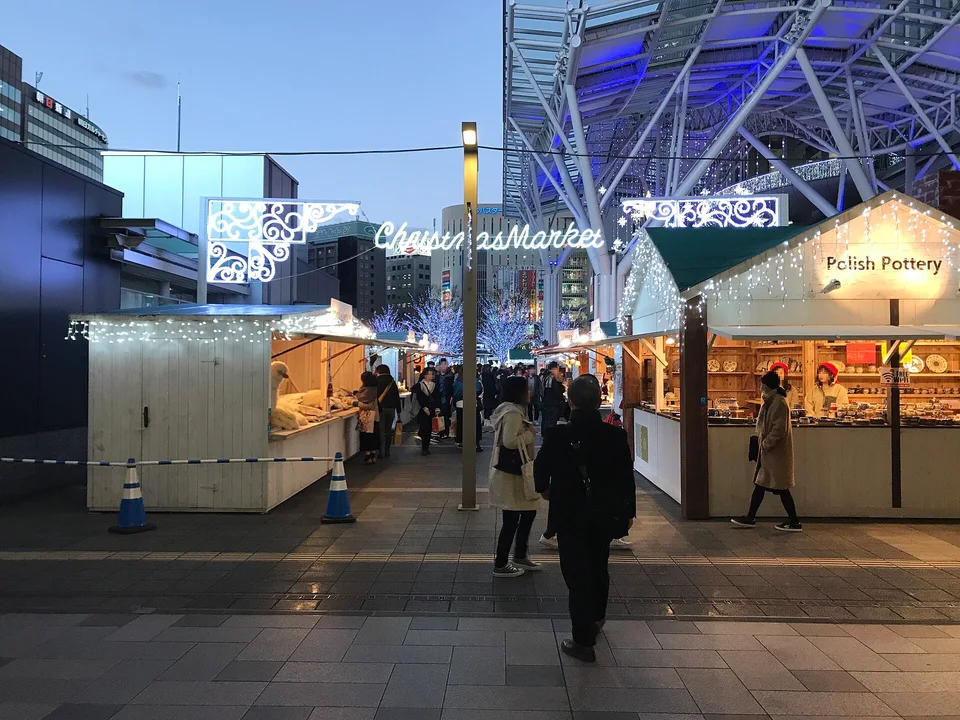

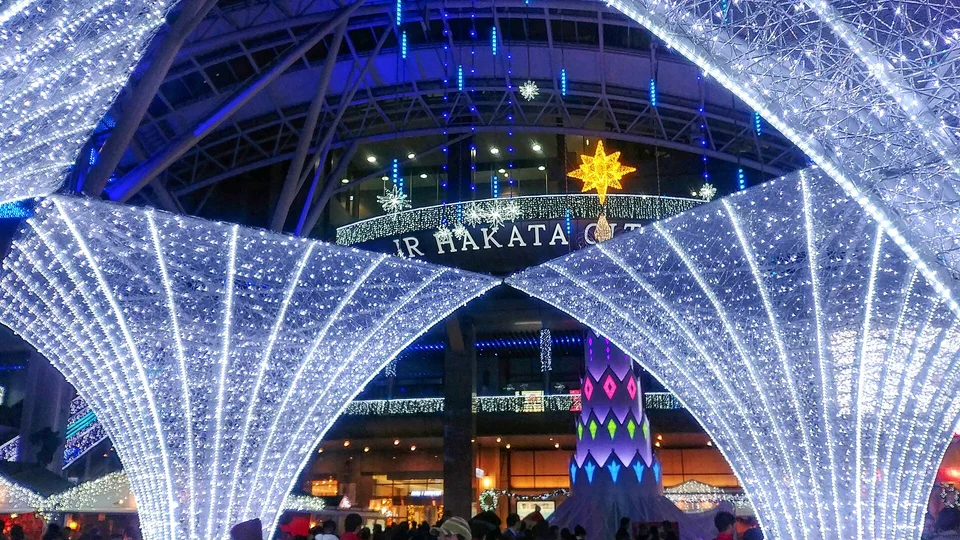

Use the Hakata-side station forecourt, not the opposite Chikushi exit, as your destination. The organizer gives weekday hours of 16:00–23:00 and weekend/public-holiday hours of noon–23:00, with exceptions for opening day and 24–25 December. Last orders are 22:45. The direct station setting works well on a first or last city evening, provided you keep a separate buffer for the train you need.
Christmas Advent spans several Fukuoka locations; this comparison deliberately uses one specific venue. Do not assume the Hakata schedule applies to Tenjin or the Kihinkan square. Enjoy a short browse and a drink, then choose whether to stay for music or move to an indoor meal. Keep wheeled luggage and family meeting points away from station entrances: this is also a working transport hub.
Can I visit all five in one trip?
Yes, but they span Hokkaido, Kanto, Kansai and Kyushu. Choose the market that fits your existing route; the comparison is not a suggested five-stop itinerary.
Which is easiest for a short visit?
Hakata is directly beside its main rail station. In Tokyo, Shintoyosu is close to Yurikamome stations. Ease depends on your accommodation, mobility needs and return connection.
Do I need a reservation?
Check each ticket product. Tokyo and Yokohama have paid entry, while Kobe bundles the ropeway with garden admission. Priority entry, special experiences and food reservations have separate conditions.
Will the markets still be open after Christmas?
Of these five, Kobe is scheduled through 28 December 2026. The other four finish on 25 December. Longer illumination seasons do not extend the markets.
Which is best with children?
Choose the shortest manageable journey and a warm fallback. Compare child admission carefully; Kobe adds a ropeway outing, while Sapporo needs more preparation for winter surfaces. None is automatically suitable for every age or mobility need.
Are the photographs the 2026 layouts?
Only an explicitly dated 2026 image should be read that way. Past-season photographs illustrate the real venue but cannot confirm this year’s stall arrangement, tree or weather.