

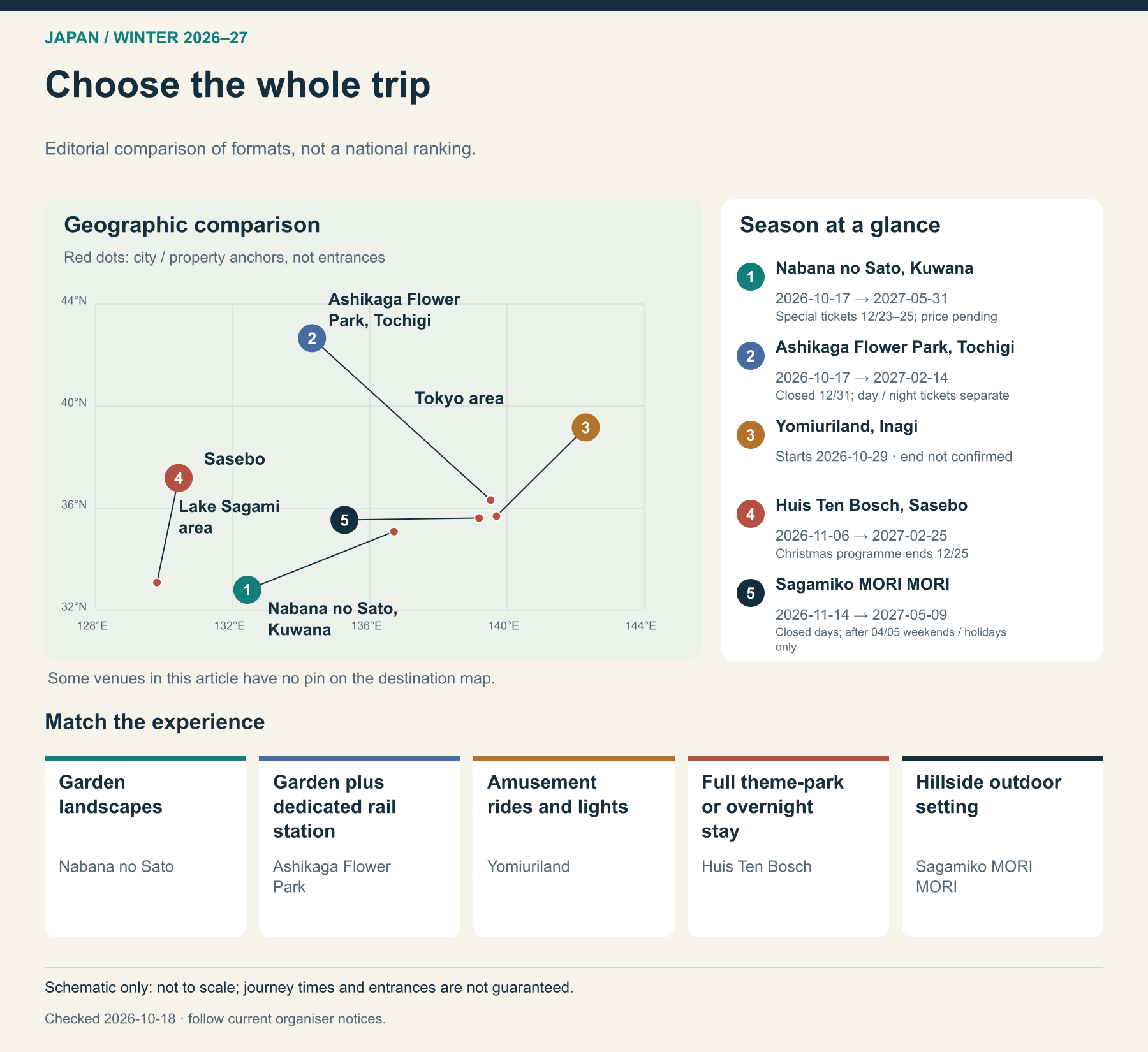
Editorial comparison of formats, not a national ranking. Schematic only: not to scale; journey times and entrances are not guaranteed.
Enlarge the diagramRead the planning notes
- Garden landscapesNabana no Sato
- Garden plus dedicated rail stationAshikaga Flower Park
- Amusement rides and lightsYomiuriland
- Full theme-park or overnight stayHuis Ten Bosch
- Hillside outdoor settingSagamiko MORI MORI
Choose the type of outing before counting lights
| Venue | Main outing | Planning trade-off |
|---|---|---|
| Nabana no Sato | Large illuminated garden landscapes | Regional transport and Christmas special tickets |
| Ashikaga Flower Park | A garden walk near a dedicated rail station | Separate day/night sessions and return trains |
| Yomiuriland | Lights plus amusement rides | Pass exclusions, ride rules and queues |
| Huis Ten Bosch | A full theme-park or overnight stay | Larger travel and admission commitment |
| Sagamiko MORI MORI | Hillside lights and outdoor attractions | Slopes, last-mile transport and calendar closures |
Nabana no Sato and Ashikaga Flower Park suit visitors whose main purpose is to walk through a lit landscape. Yomiuriland suits people who also want amusement rides. Sagamiko combines hillside scenery with a more outdoors-oriented park visit. Huis Ten Bosch is the most natural choice when a full resort or theme-park stay already forms part of a Kyushu trip. These are editorial distinctions about trip structure, not measured ratings of visual quality.
Geography should decide the first cut. Nabana is in Mie, convenient to consider within a Nagoya-area itinerary; Ashikaga, Yomiuriland and Sagamiko belong to different possible excursions from the Tokyo region; Huis Ten Bosch is in Sasebo, Nagasaki Prefecture. They are not five places to combine in one evening, nor interchangeable Tokyo day trips. Compare the journey from your actual hotel rather than from a city name on a map.
If rides do not matter, avoid buying a more expensive product solely because it is labelled a pass. If the children mainly want rides, check their height and age eligibility before assuming a bundle provides good value. If the main goal is a photograph, ask whether the desired view is accessible without a long queue or an extra attraction ticket. The largest bulb count cannot answer these questions.
For older travellers or anyone managing fatigue, a clearly planned short circuit may be more valuable than a full park. Choose two or three features, a warm break and a return deadline. A garden-focused evening and an all-day theme-park visit can both be excellent, but they need different budgets and energy reserves.
An illumination season is longer than Christmas
Nabana no Sato announces 17 October 2026–31 May 2027, with January maintenance closures. Ashikaga announces 17 October–14 February, and closes on 31 December. Sagamiko announces 14 November–9 May, with closing days and weekend/public-holiday-only operation after 5 April. A season range does not mean every date or every attraction is available.
Yomiuriland’s official site confirms the 2026–27 season starts on 29 October. At the time of checking, the sources reviewed did not establish a reliable final date for this guide, so the end date should be taken from the operating calendar when booking. Do not reuse the previous season’s April closing date merely because the event name is unchanged.
Huis Ten Bosch’s current official listings describe The Starlight Million from 6 November to 25 February 2027, while the Miffy Christmas programme is listed for 6 November–25 December. These are separate programme windows. Likewise, Ashikaga describes a Christmas phase in late November–late December and a New Year phase afterwards. Visiting in January can still be a lights trip, but it is not proof that Christmas shows, food or decorations continue unchanged.
For a Christmas-specific visit, check the particular show or installation after choosing the park. For a quieter-feeling winter outing, consider later dates only after confirming the operating calendar and transport; this is a planning option, not a promise of fewer people or a lower fare.
Read what the ticket actually includes
Nabana’s published 2026–27 schedule separates convenience-store and on-site prices. For 21 November–22 December, it lists ¥3,000 in advance at the convenience store and ¥3,200 at the gate, including ¥1,000 in venue vouchers and Begonia Garden admission. The voucher is spending value within its rules, not a cash rebate; do not subtract it from your budget unless you would genuinely use it.
The important exception is 23–25 December. Nabana requires a special date-specific advance ticket and opens from 15:00. The page still marked that special price as under consideration when checked. Ordinary tickets and some usual benefits do not apply. This guide deliberately leaves that price unresolved instead of copying an older Christmas fare.
Ashikaga lists night admission at ¥1,500 for adults and ¥900 for children, with day and night sessions operating separately. A daytime garden ticket should not be assumed to cover the illuminated evening. Yomiuriland lists an After Pass from 15:00 on illumination operating dates from 29 October: adult regular price ¥3,100, official online price ¥2,800 when checked. It includes eligible rides but excludes the Sky-Go-LAND Ferris wheel and other specified attractions.
Huis Ten Bosch and Sagamiko have ticket products and optional attractions whose exact total depends on the visit. Use the official date and age selection rather than a borrowed headline price. Add transport, meals, lockers where needed, and any extra ride or show charge. A hotel package should be checked for which park days and tickets it actually includes; a room beside a park is not automatically an admission package.
The last mile matters more after the lights switch on
Plan the return before you buy admission. Ashikaga Flower Park has a dedicated station on the JR Ryomo Line, which removes a bus transfer but does not remove the need to check train frequency and connections. A short walk to a station can still lead to a long wait. Save at least one earlier useful departure rather than relying on the last possible train.
For Nabana, check the illumination-season bus arrangement and the right connection for your travel date. Nagashima Resort includes several separate facilities; the amusement park, outlet shops and Nabana are not one entrance. For Yomiuriland, compare the rail-plus-gondola or bus approach and allow time for the final connection. A gondola can be part of the experience but also part of the queue.
Sagamiko needs attention to the bus or other last-mile link, the terrain and the return timetable. Huis Ten Bosch has its own rail station, but a long onward journey can still make an overnight stay more practical. These are different transport problems, so a single “easy by train” label would conceal the most important detail.
Driving can suit some groups, but it does not eliminate entrance traffic, parking queues or a tired late-night return. Decide who will drive before ordering alcohol. Choose an overnight stay because it makes the whole trip workable, not because a publicity image suggests you must stay until every light goes out.
A realistic evening leaves room for queues and a warm break
For a lights-focused visit, use roughly two to three hours inside a garden as an initial planning allowance, then adjust to the park, weather and mobility needs. It is not an organizer’s minimum or an on-site measurement. If rides, a sit-down dinner or major shows are central, protect a longer block. A full day of rides followed by late lights can be too much for a small child even when the ticket technically permits it.
Arriving before dusk can help you understand the route and find facilities, but only if your admission product covers that arrival time. Ashikaga’s separate sessions and Nabana’s Christmas special opening make this especially important. Identify toilets, a warm stop and an exit route while there is still useful light. Buy food in manageable amounts rather than carrying several hot items through a crowd.
In a large park, choose a main circuit instead of repeatedly crossing the same area for individual photographs. Read the show timetable once, select one performance and build the walk around it. Do not assume that every evening has fireworks or that a promotional video’s complete sequence happens daily. The current schedule, weather and operational announcements decide what is available.
If a queue consumes the time reserved for the return journey, omit an optional feature. A souvenir shop or extra ride should not force the group into an uncertain late connection. The best itinerary has an explicit point at which everyone heads towards the exit.
Compare terrain and shelter, not just family labels
These are predominantly outdoor experiences. Wear a wind-resistant layer, footwear with grip and something warm enough for waiting. Rain may change the appearance of the lights but also the comfort of the walk. Strong wind can affect rides or aerial transport even if parts of a park remain open. Check operating notices on the day rather than treating a general rain-or-shine statement as a guarantee that every feature runs.
Sagamiko’s hillside layout and Kobe-like assumptions about mountain scenery should not be confused with a level urban pavement. Yomiuriland has different attraction access rules; garden venues can still have slopes, narrow sections or long distances. For wheelchair or stroller use, inspect the actual access map and the route to your chosen features. An accessible entrance alone does not verify every path or ride.
Photos from previous seasons are useful evidence of a real venue’s character, but not of this year’s theme. Avoid expecting spring wisteria in December because Ashikaga is famous for it: the winter experience uses light and garden design, not a guarantee of seasonal flowers. Likewise, a past Nabana theme or Sagamiko collaboration may have changed.
The five places offer different kinds of evening, so the most useful comparison is the one that matches your own trip. A shorter journey and a comfortable return can be worth more than an extra attraction that the group is too tired to enjoy.
Resolve the trade-offs before committing to a date
If the group mainly wants photographs and a relaxed walk, compare the garden-focused choices before paying for rides that nobody plans to use. If children want several attractions, identify those rides first, then check their ticket inclusion and age or height conditions. A broad park pass can still be the wrong product when its exclusions cover the activities that motivated the visit.
If December 24 or 25 is the only possible date, treat ticket availability and the return journey as the first decision. Nabana’s special ticket cannot be replaced by assumptions from the ordinary December price table. At a theme park, check the day’s programme rather than presuming every Christmas event runs each night. Waiting for an unannounced price is preferable to building a nonrefundable plan around last year’s offer.
If the journey needs an overnight stay, compare the entire next morning as well as the illuminated evening. A nearby hotel may reduce a late transfer but introduce a different onward route. The choice should fit the wider trip, not only the attraction’s final light show. This is particularly relevant to Huis Ten Bosch in Sasebo and to any itinerary with an early flight or long-distance train the following day.
For a dedicated garden-light outing from the Nagoya region
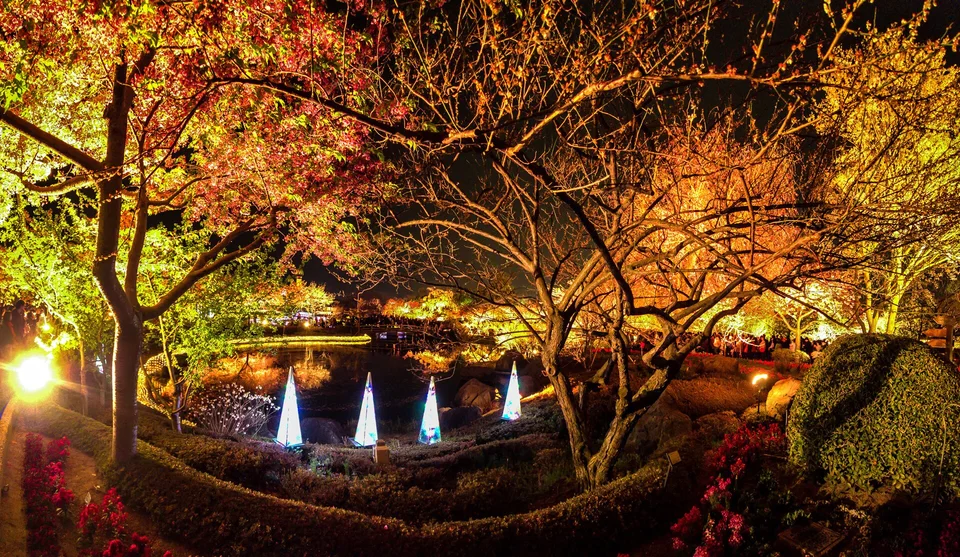
,_Kuwana,_Mie,_Japan,_HDR,_panorama,_night_shoot_-_panoramio.jpg)
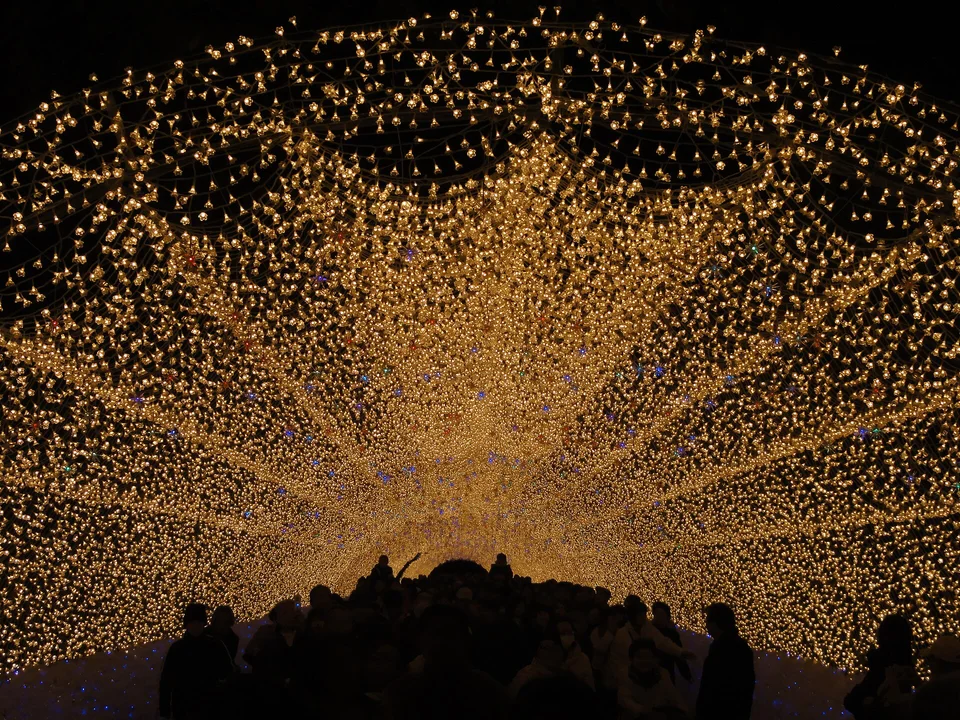

Choose Nabana when illuminated landscape, tunnels and water are the main attraction. Keep this as one evening destination, rather than assuming every Nagashima Resort facility is within a short walk. Use the current seasonal transport page and leave time for the transfer back after the busiest viewing period.
The ticket’s voucher and garden inclusions may help if they match your plans, but they do not make dinner free. The 23–25 December special-ticket rule is the decisive planning constraint. Until the special price is confirmed, a precise Christmas-day total would be misleading.
For a rail-based evening focused on garden scenery
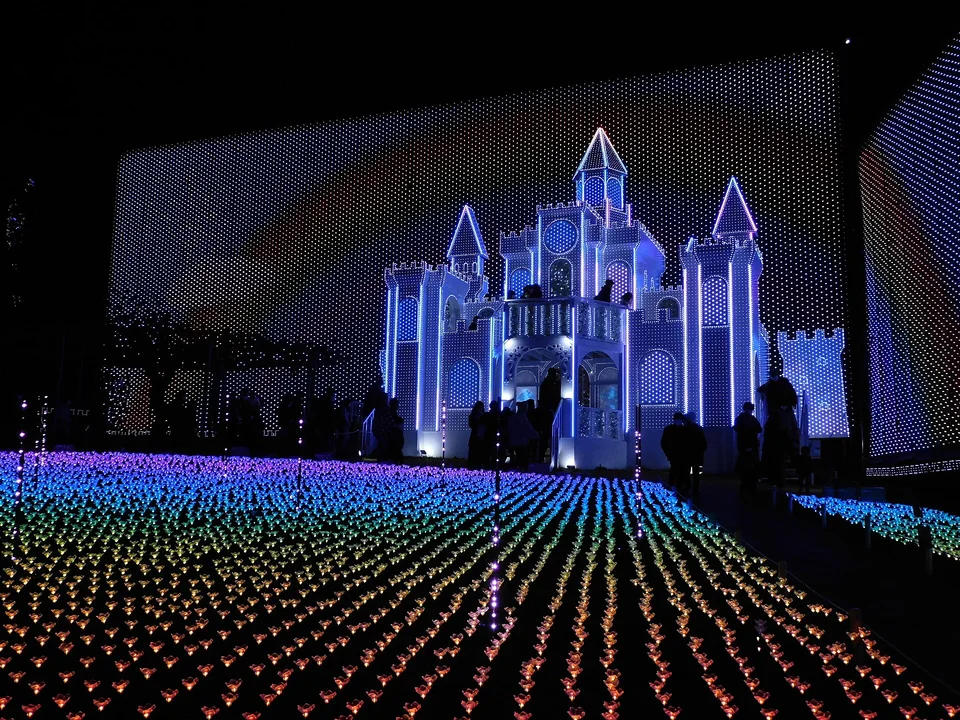

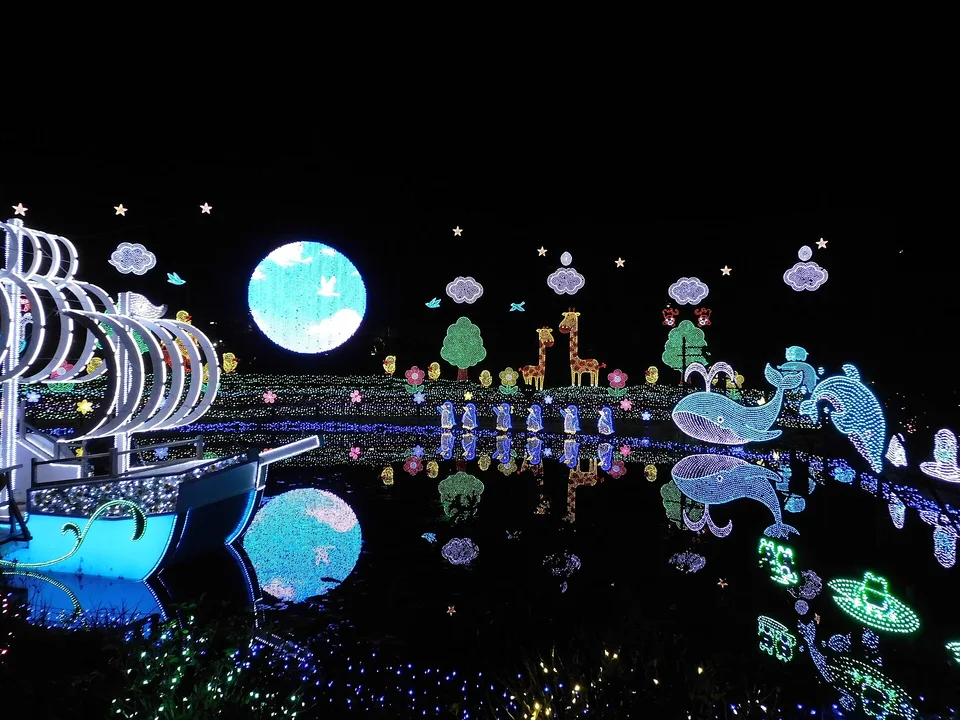

The dedicated JR station makes the final approach straightforward to understand. The park’s published night session starts at 15:30; lighting begins later, around dusk, with a different schedule during the central winter period. Arriving when the night gate opens is not the same as seeing all lights fully illuminated.
Plan the return train as carefully as entry. The garden approach suits visitors who want to walk and look rather than ride attractions, but the path length still matters. Winter light installations should not be presented as photographs of the famous spring flowers, and the 31 December closure rules out a casual New Year’s Eve assumption.
For lights combined with selected amusement rides
Choose Yomiuriland when the group will actually use rides as well as the illuminated setting. The after-15:00 product can make sense for that combination, but compare it with your intended arrival and eligible attractions. Check exclusions before building the evening around the Ferris wheel.
Keep the fountain or another chosen show as one anchor, using the current schedule rather than a past-season video. Gondola, bus and ride queues all draw from the same evening. If rides are the main priority, allow a longer visit instead of squeezing a full amusement-park plan into a short lights walk.
For a theme-park stay with evening entertainment
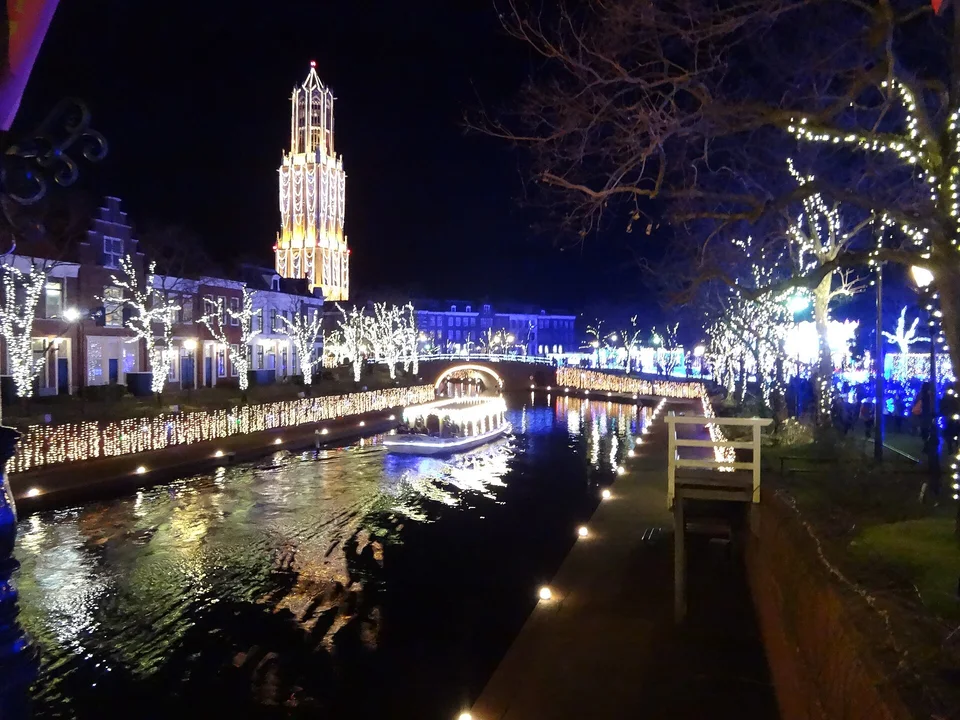
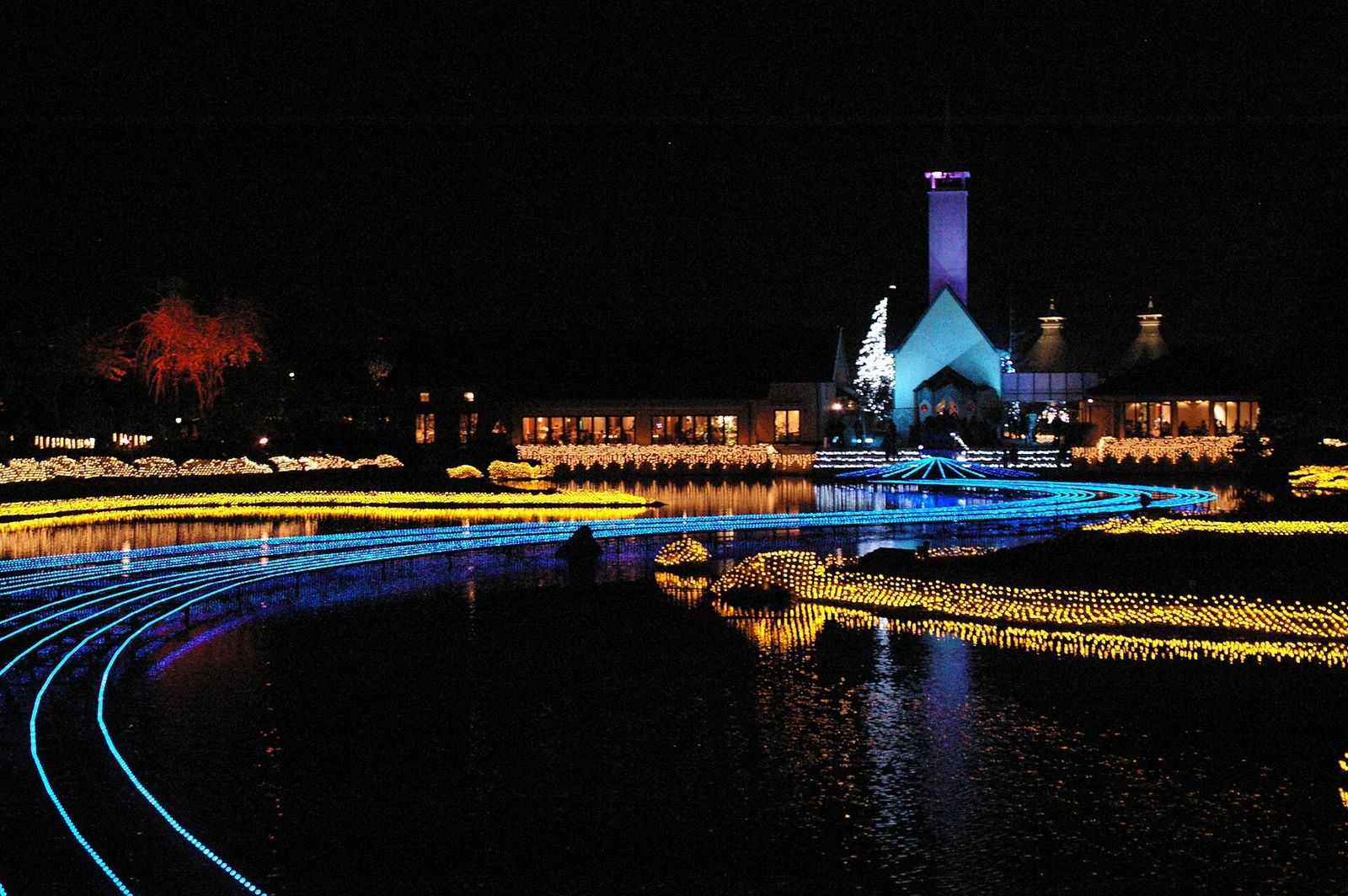
.jpg)
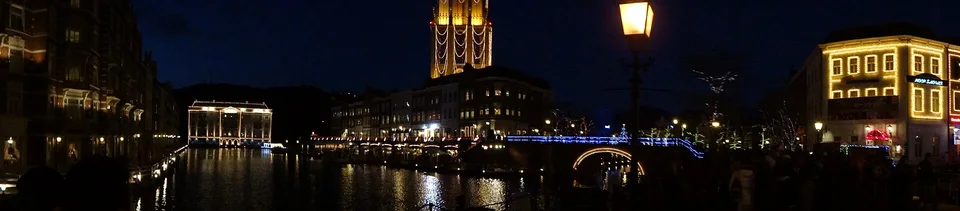

This option fits a Kyushu journey with enough time for a theme park or resort stay. The European-style setting and layered entertainment create a different proposition from a single garden circuit. Compare the whole day’s admission, transport and accommodation rather than just the illumination portion.
Check the specific Christmas programme as well as the broader winter illumination. A late show, an early hotel breakfast or a long rail journey can make staying nearby useful, but no overnight stay is compulsory. Choose the room and ticket package by its written inclusions and dates.
For hillside scenery and an outdoor park evening
Sagamiko uses an undulating setting, so walking effort and attraction access deserve as much attention as the light installations. A family that enjoys outdoor attractions may value this format; a visitor needing a short level circuit should inspect the detailed map before committing.
The season extends into May, with closure days and restricted operation later in spring. That long date range is not a daily-opening promise. Keep the return bus or other transport arrangement explicit, and check the current collaboration and attraction list instead of relying on previous-year imagery.
Which is best without a car?
Ashikaga has a dedicated JR station, but the best choice still depends on your base and return connections. Compare the final transfer and evening timetable for every park.
Are they all Christmas events?
They are winter illumination venues. Christmas-specific shows and decorations can have shorter periods than the overall season.
Can I use an ordinary Nabana ticket on 24 December?
The published 2026 rules require a special date-specific ticket for 23–25 December. Check the final price and product conditions; ordinary admission products are not interchangeable.
Does a Yomiuriland After Pass cover every ride?
No. The official page excludes Sky-Go-LAND and other specified attractions. Check the list, height and age rules before buying.
How much time should I allow?
Start with two to three hours for a lights-focused garden visit, excluding travel, then add time for rides, shows, dinner and queues. This is an editorial allowance rather than a measured minimum.
Can I rely on a photo from last year?
Use it to understand the real setting only. Themes, collaborations, flowers and individual displays may differ, and a photograph does not establish current opening or accessibility.