Palermo, Cefalù and Monreale: architecture shaped by cultural exchange
This property belongs because its nine components preserve a coherent architectural and artistic synthesis associated with the Norman kingdom of Sicily. Seven are in Palermo—the Royal Palace and Palatine Chapel, Zisa Palace, Palermo Cathedral, three churches and Admiral’s Bridge—while the cathedrals of Cefalù and Monreale complete the serial property. Its geography matters: this is a connected cultural record across northern Sicily, not one Palermo monument with two unrelated additions.
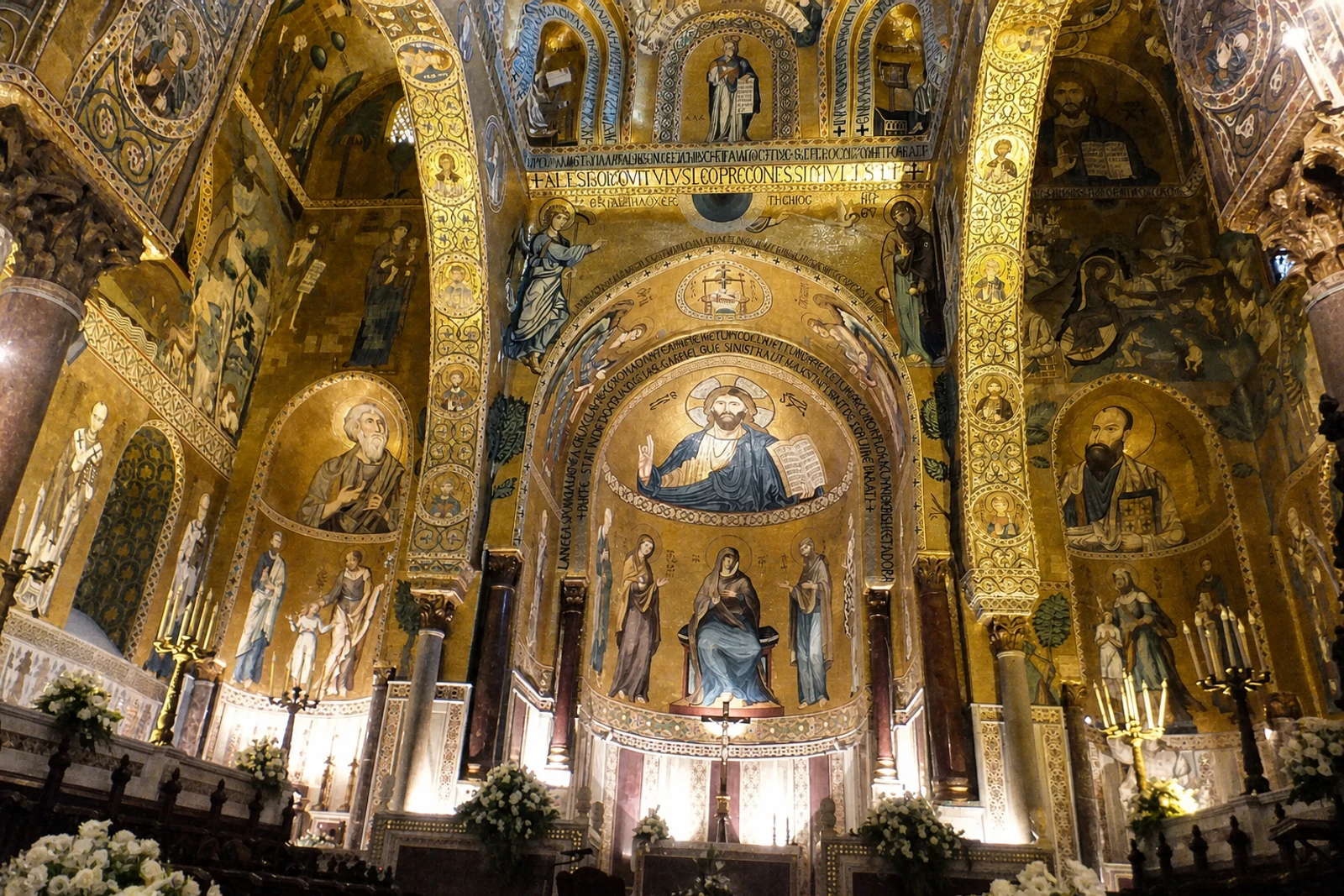
What distinguishes the ensemble is the deliberate re-elaboration of Western, Islamic and Byzantine forms, structures, materials and decorative treatments. UNESCO also identifies evidence of coexistence among Muslim, Byzantine, Latin, Jewish, Lombard and French communities. Visitors should look closely at tesserae mosaics, opus sectile pavements, marquetry, sculpture, paintings and fittings, because the property’s value is expressed through the interaction of architectural space and detailed surface work.
The individual components include civic, religious and engineering works, so the entry should not be reduced to cathedral interiors. The Royal Palace and Palatine Chapel and Zisa represent palatial architecture; the churches and cathedrals reveal different religious settings; Admiral’s Bridge adds infrastructure. The mosaics’ authenticity has been confirmed by specialists in Byzantine mosaics. Protection is shared among governmental and religious owners under Italy’s cultural-heritage framework, with a management plan addressing pressures including tourism, fire, environmental hazards and decay in historic urban centres.