Le Corbusier’s international laboratory of modern architecture
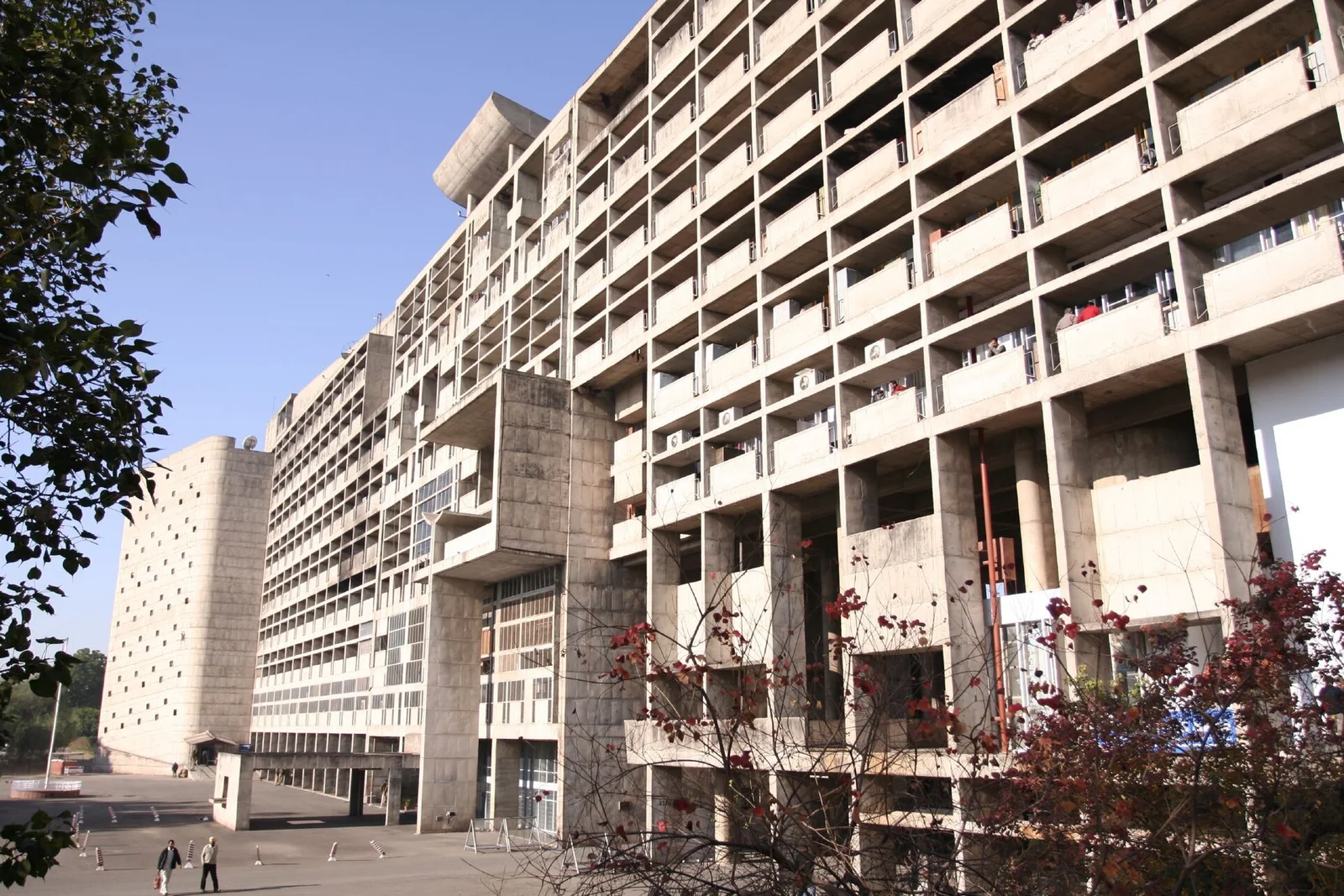
This property belongs on a France UNESCO map, but it is not a single French building. UNESCO records a transboundary serial property of 17 component parts shared by seven countries, inscribed in 2016 under cultural criteria (i)(ii). The French component is the Unité d’habitation in Marseille, while the wider record brings together work produced across half a century and across several continents.
Its significance lies in the way the series turns individual buildings into evidence of an international architectural project. The components addressed twentieth-century questions about new techniques, social needs and a new architectural language. The Unité d’habitation in Marseille is distinguished within that argument as a prototype for housing that balances individual and collective life, rather than as a freestanding monument of decorative design.
Nearby modern buildings may share concrete, geometric forms or large glazed surfaces, but they do not automatically belong to this UNESCO property. The record includes contrasting experiments: Villa Savoye expresses the Five Points of a New Architecture; the Cabanon explores a minimum living cell; the Unité represents standardisation and collective housing; and the Couvent de La Tourette demonstrates the use of pre-stressed reinforced concrete. The French pin should therefore be read as one component of a global architectural series, not as the entire nomination.