Routes of Santiago de Compostela: a dispersed landscape of pilgrimage
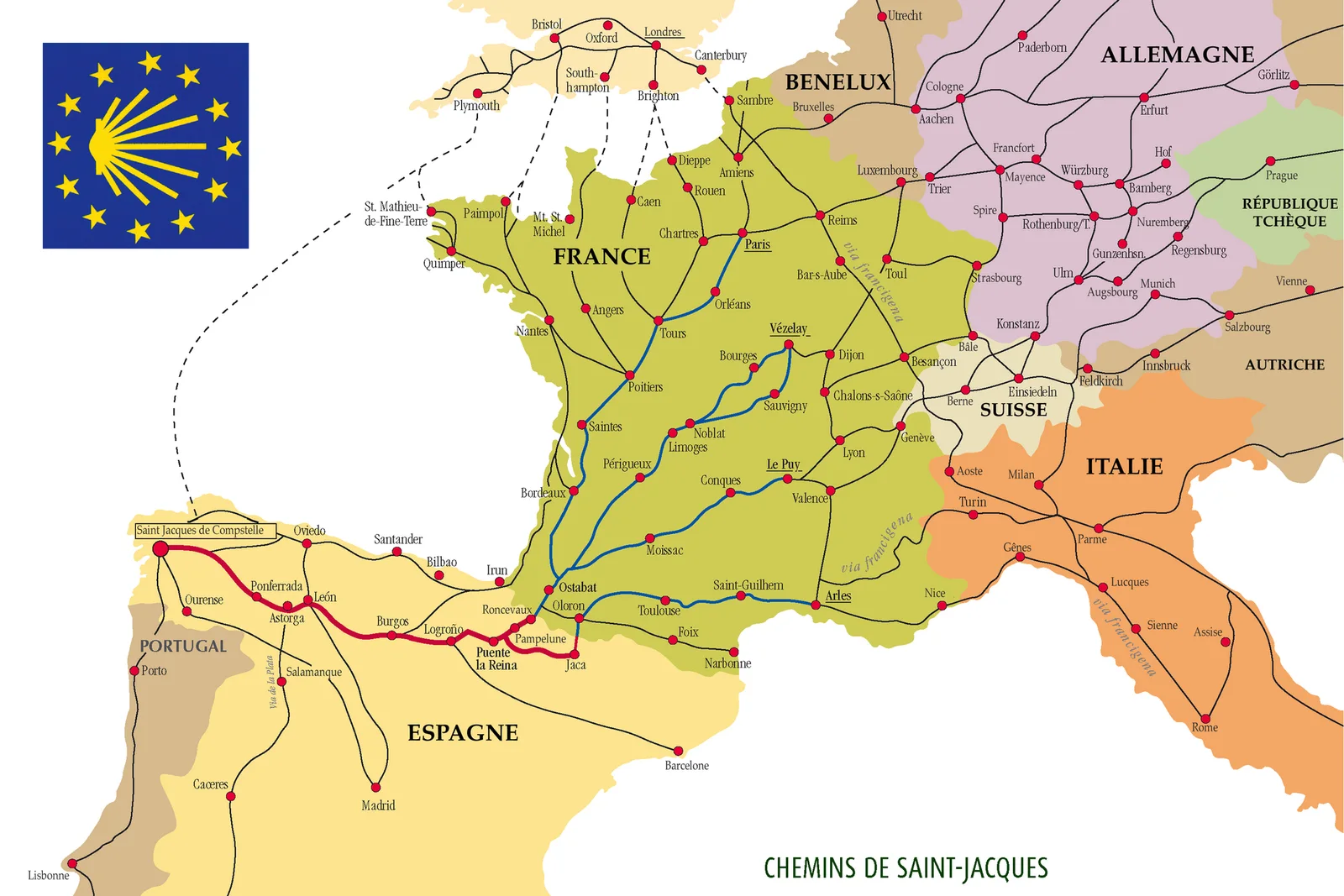
This property belongs because pilgrimage in France is represented through a carefully selected network, not a single road or sanctuary. UNESCO inscribed Routes of Santiago de Compostela in France in 1998 as a serial cultural property under criteria (ii), (iv) and (vi). Four symbolic routes depart from Paris, Vézelay, Le Puy and Arles before crossing the Pyrenees, and the inscription gathers 78 component parts. Its geographical spread is therefore central to the meaning of the record.
The components show both the spiritual and practical dimensions of travel: major churches such as Saint-Sernin in Toulouse and Amiens Cathedral, smaller sanctuaries, hospitals, bridges and roadside crosses. The old pilgrim hospital at Pons and the Pilgrims’ Bridge over the Boralde demonstrate how care, passage and devotion shaped the route. Seven sections of the Chemin du Puy are also included, covering nearly 160 kilometres. This is different from a conventional long-distance itinerary presented as one uninterrupted trail; many listed elements are monuments or ensembles that evoke the wider network. Notice how architecture organised circulation, rest and contemplation, while sculpture and painted decoration preserve associations with Saint James. The majority of the religious buildings remain under their owners’ care and protective heritage measures.