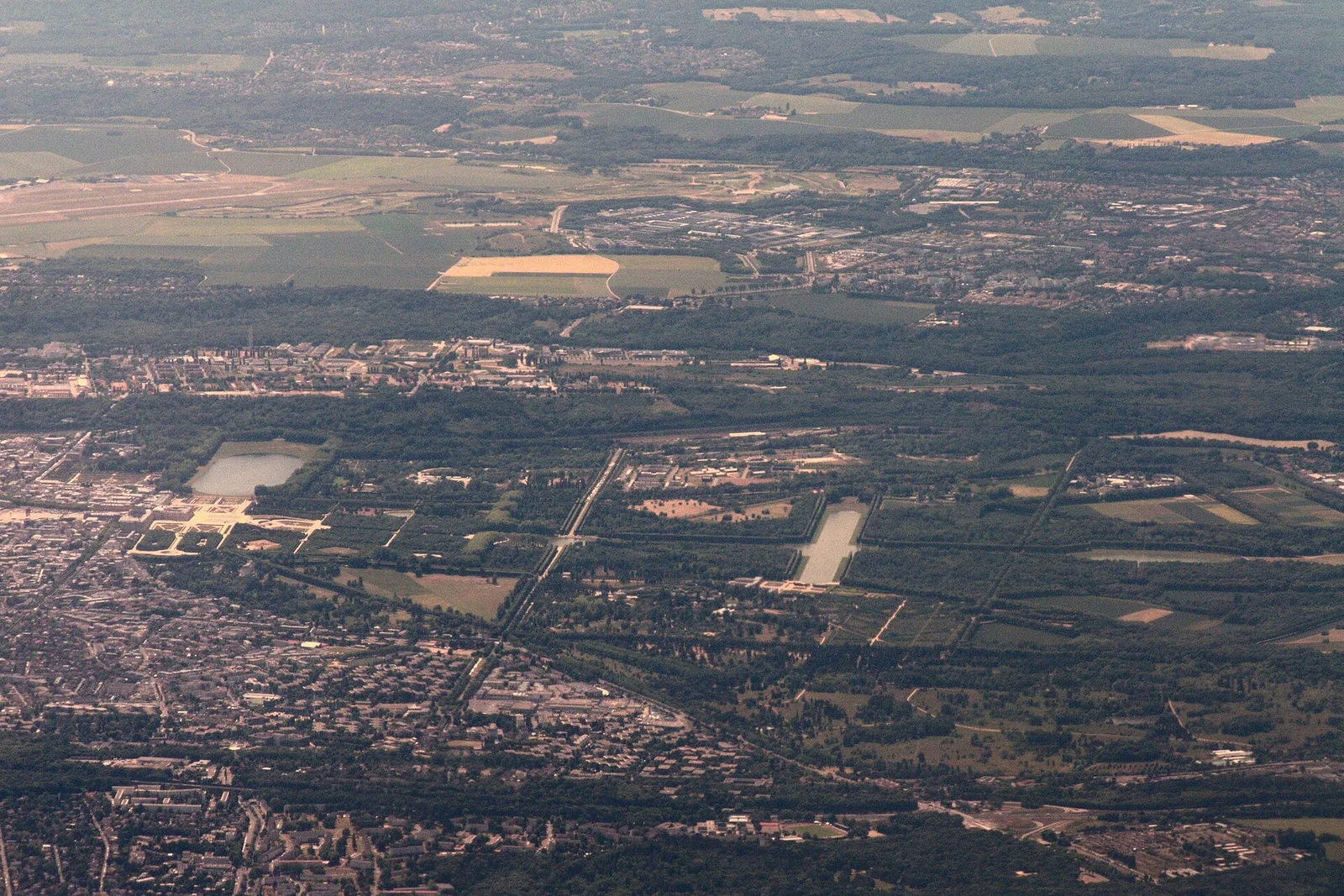
Versailles: the palace, park and machinery of court life
Versailles is the clearest choice for visitors interested in the planned expression of monarchy and the relationship between residence, ceremony and power. It was the principal residence of French kings from Louis XIV to Louis XVI, and several generations of architects, sculptors, painters, decorators and landscape artists shaped it over a century and a half. UNESCO treats the palace and park as a cultural property whose artistic achievement lies in the scale, quality and originality of the whole ensemble.
Unlike Fontainebleau’s irregular, layered complex, Versailles is organised around a strong architectural and landscape composition. The inscribed property includes the palace, the Trianon châteaux and their gardens, together with a narrow band preserving the perspective from the end of the Grand Canal. Notice how the interiors and landscape operate together: the Galerie des Glaces, the Royal Chapel, the Orangerie, Trianon buildings and Le Nôtre’s axial garden system each contribute to the model that influenced royal residences and gardens elsewhere in Europe. Versailles also belonged to court culture as a working environment for music, theatre, decorative arts and scientific presentation. After the Revolution it became a museum, and state-led conservation continues under Historic Monuments protection.