Gwynedd: four castles designed as a defensive network
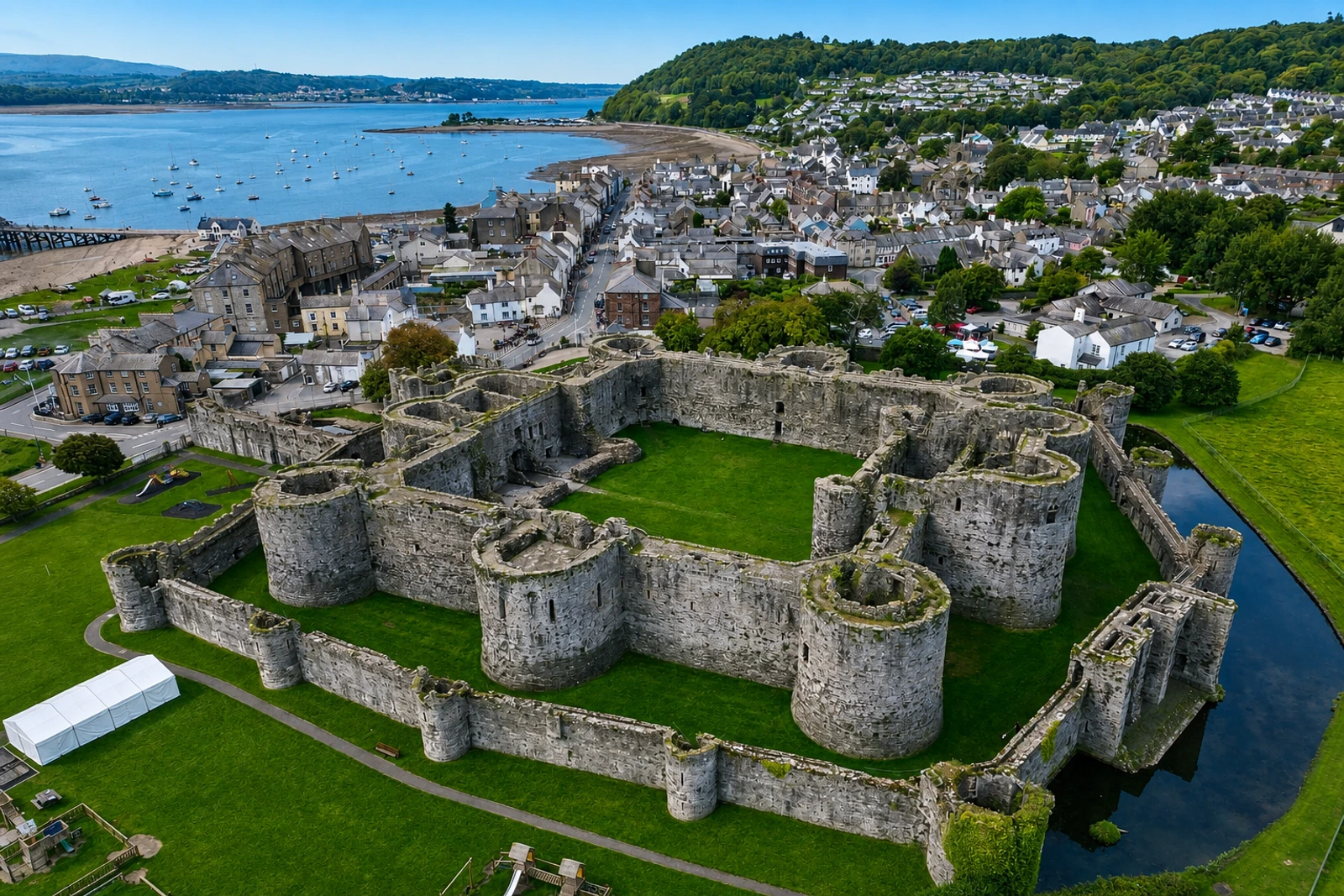
The Gwynedd entry should be chosen by visitors interested in medieval military architecture, but it must be planned as one serial property with four components: Beaumaris, Harlech, Caernarfon and Conwy, including the fortified town walls at Caernarfon and Conwy. Their shared identity comes from the colonisation and defence works undertaken during Edward I’s reign and from the coherent designs associated with James of St George. The property is therefore broader than any one castle’s walls.
Each component offers a different way to read the system. Beaumaris and Harlech combine double-wall concentric structures with highly coordinated central plans, making proportions and masonry especially important. Caernarfon and Conwy retain strong relationships with their fortified townscapes, while the property preserves a wide vocabulary of barbicans, drawbridges, fortified gates, chicanes, redoubts, dungeons, towers and curtain walls. Contemporary technical, social and economic records further distinguish the group from a purely visual castle circuit.
The castles’ plans, materials and component features are largely unaltered, reflecting a conservation approach of minimal intervention, although Caernarfon saw some reconstruction in the late 19th century. The UNESCO boundary includes defensive structures but not the planned settlements or waterfronts, so coastal setting and town relationships remain important beyond the marked cores. Four components require separate journeys. Use Bangor, Llandudno Junction or Harlech as practical rail gateways, allow one to two days, and check Cadw opening, admission and access information.