Chaîne des Puys: reading a continent through landforms
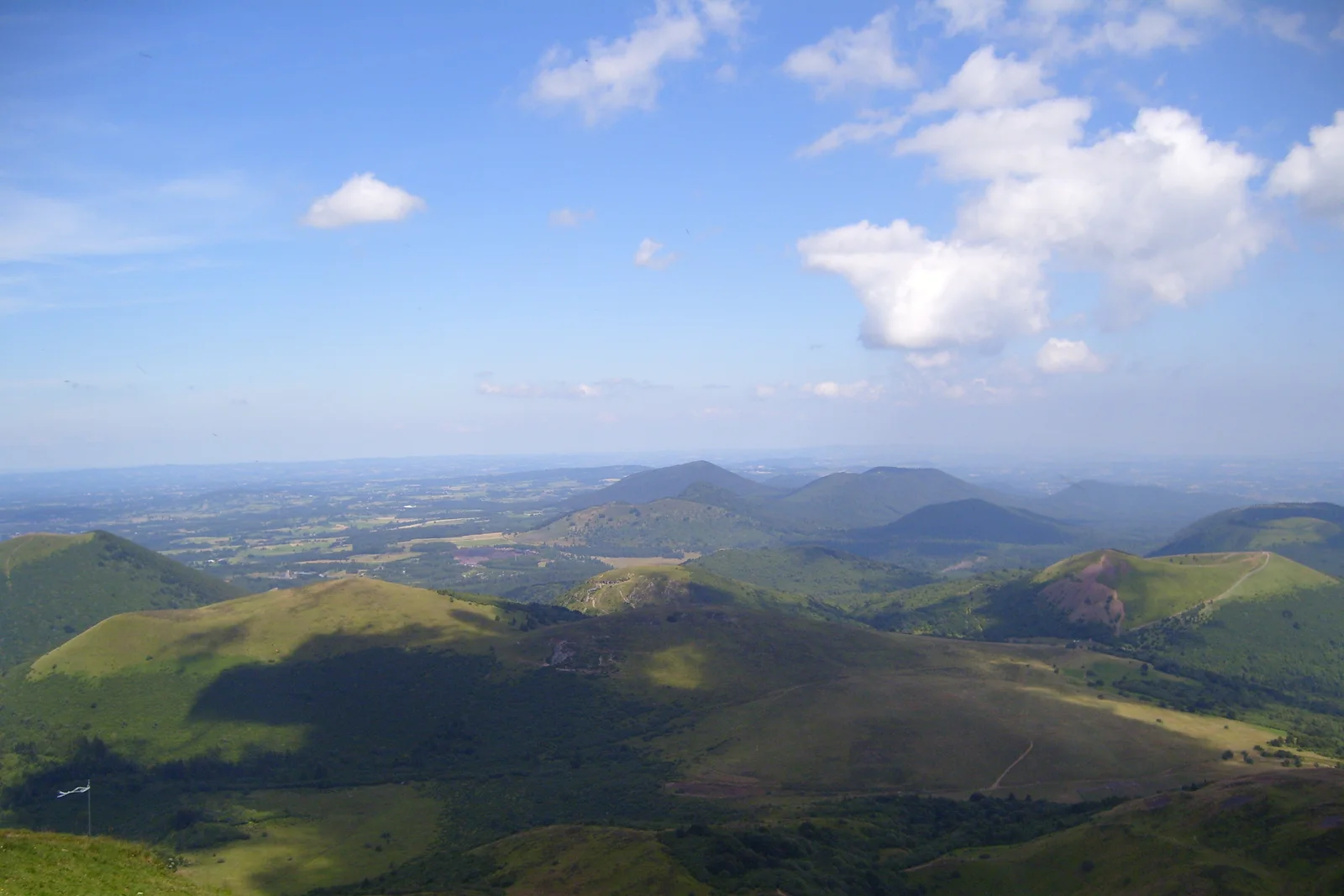
The Chaîne des Puys - Limagne fault tectonic arena belongs because it makes a large geological process legible through a concentrated arrangement of landforms. In central France, the property brings together the long Limagne fault, the aligned volcanoes of the Chaîne des Puys and the inverted relief of the Montagne de la Serre. Together they show how continental crust cracks and collapses, allowing deep magma to rise and producing uplift at the surface.
This is not simply a volcanic landscape or a scenic chain of summits. The UNESCO property is a natural site of 24,223 hectares with a 16,307-hectare buffer zone, and its significance depends on the relationship between several geological features. The fault marks a border between flattened continental basement and an adjoining graben; the volcanic field displays a range of typical rift-zone magmas; and the Montagne de la Serre preserves an older lava flow in inverted topography.
Visitors should look for connections rather than isolated forms. The property’s value lies in the clarity, density and relative proximity of evidence for continental break-up, a stage of plate tectonics with effects visible at both planetary and landscape scales. Its geological features remain fundamentally intact, but protection must maintain their visibility against quarrying, urbanisation, forest encroachment and erosion linked to human action.