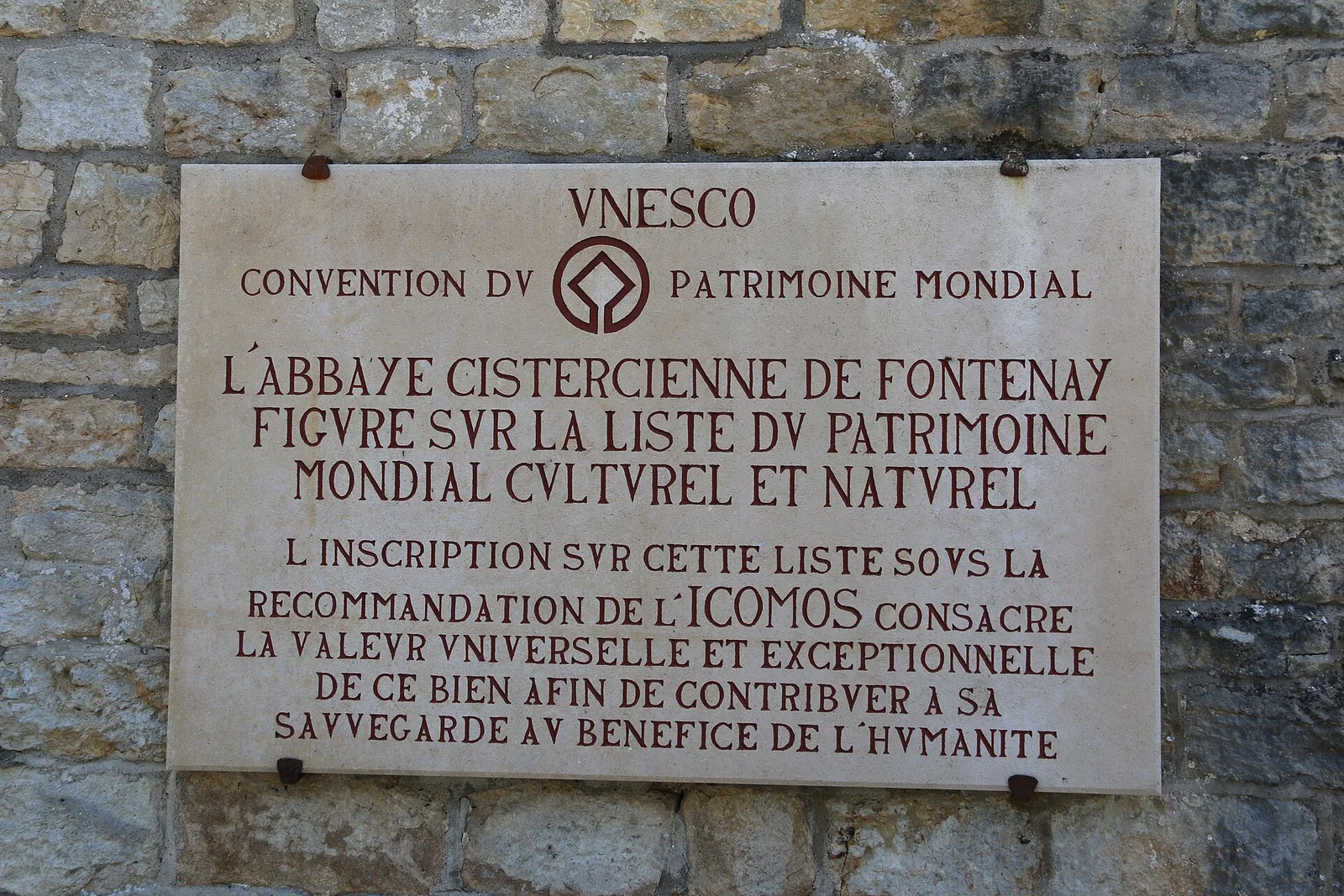
Fontenay Abbey: monastic austerity with an industrial edge
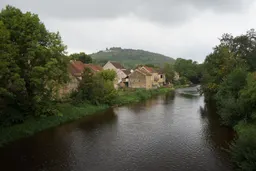
Cistercian Abbey of Fontenay belongs because its surviving buildings make a complete argument about monastic self-sufficiency. Founded by St Bernard in 1119 in a Burgundian valley, the abbey combines church, cloister, chapter house, sleeping quarters, refectory, bakery, guest house and ironworks. The setting near water and agricultural land is inseparable from the way the community organised worship, work and daily life.
It should not be confused with a decorative palace or a cathedral complex. Fontenay’s power comes from restraint: the Romanesque Cistercian church uses a Latin-cross basilica, a blind nave and a transept without a tower. Proportions, wall openings, vaulting and masonry carry the architectural expression. At the same time, the site is not only austere. The end-of-12th-century ironworks demonstrates specialised technical activity and the Cistercians’ role in medieval technological development.
Notice the contrast between monumental simplicity and practical infrastructure. The cloister and chapter house remain intact, while the enclosing wall still contains the buildings needed by a self-sufficient community. The present ensemble also contains layers of change: an Abbot’s Palace was added in the 17th century, the refectory was demolished in the 18th century, and restoration began in 1906 after the abbey had become an industrial establishment. It is private property open to the public and protected as a Historic Monument.