Salt, fire and the Enlightenment model factory
This UNESCO property connects two places and two stages of salt production: the Great Saltworks of Salins-les-Bains and the Royal Saltworks of Arc-et-Senans. It belongs on the map because its significance is both technical and architectural. At Salins, salt was extracted from deep underground brine and evaporated with fire; from 1780 to 1895, the salt water travelled through 21 kilometres of wooden pipes to Arc-et-Senans. The Great Saltworks remained active for at least 1,200 years, until activity stopped in 1962.
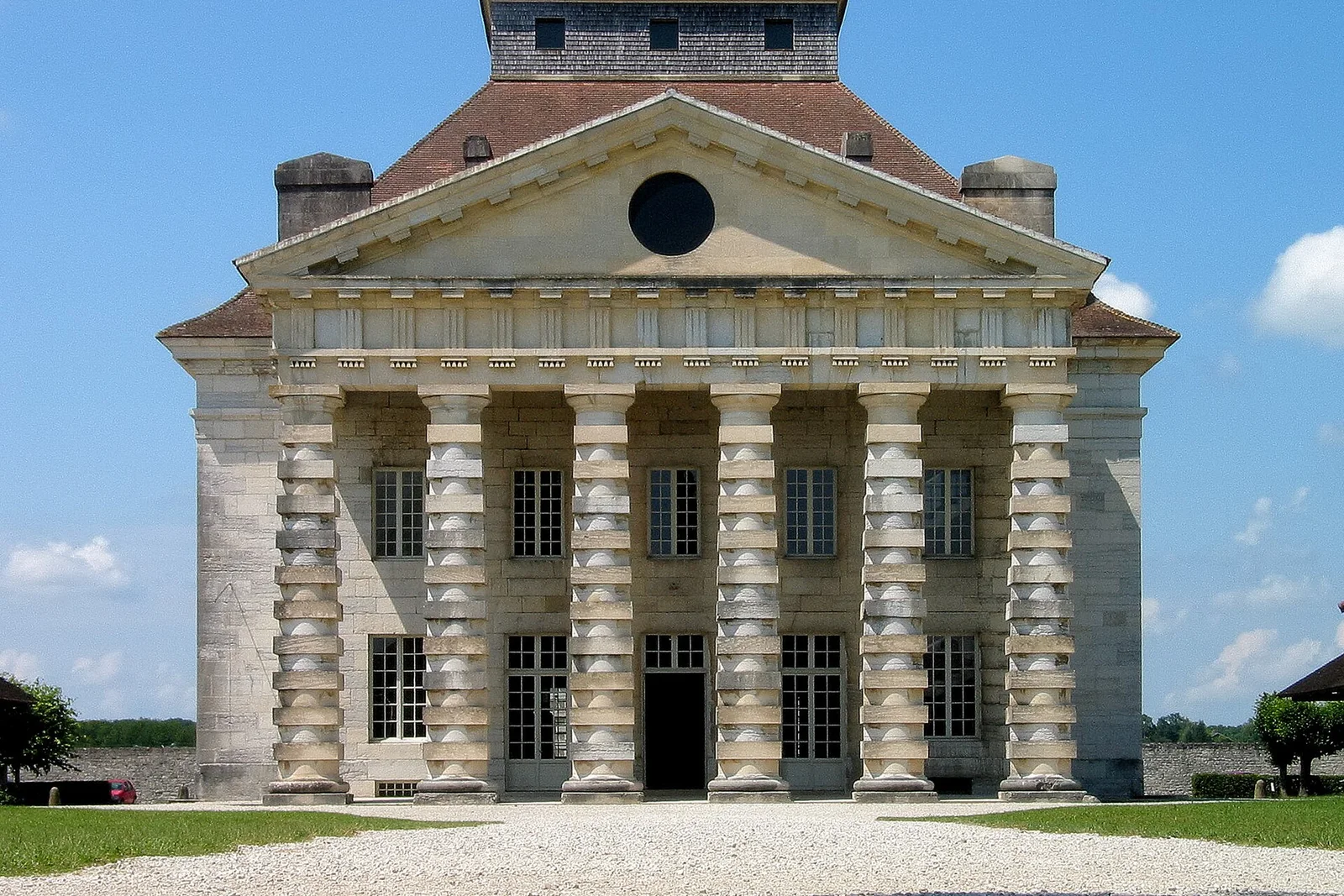
Arc-et-Senans is the distinctive architectural counterpart. Built by Claude-Nicolas Ledoux, with construction beginning in 1775, its vast semicircular complex organised work rationally and hierarchically. It was conceived as the heart of an Ideal City, but that larger project was never realised. The site therefore differs from a preserved industrial plant alone: its value includes the Enlightenment belief that a place of work could receive the architectural care associated with a palace or important religious building.
Look for the contrast between surviving production evidence at Salins and the visionary form of Arc-et-Senans. Salins retains an underground 13th-century gallery, a 19th-century hydraulic pump that still functions, pumping installations and parts of the saline treatment structures. The boiler house conveys the labour of producing salt. The property is serial, so the two sites should not be collapsed into one location. UNESCO also records that modern additions at Salins have respected the authenticity of archaeological remains and residual historic buildings, while acknowledging changes to the surrounding enclosure and urban relationship.