Provins: the town built around medieval exchange
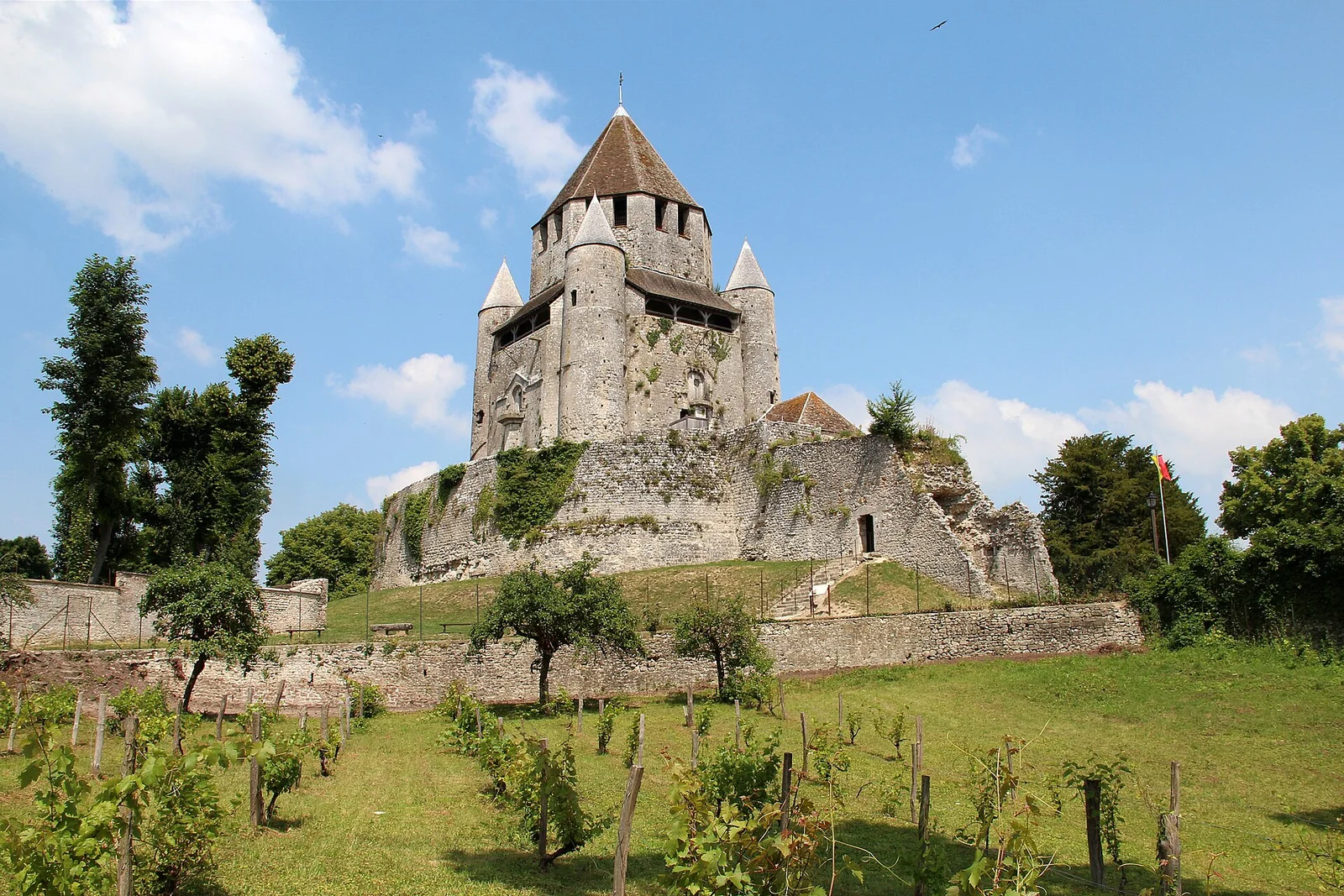
Provins belongs here because its heritage is an urban system created for international trading fairs, not merely a collection of surviving medieval buildings. In Île-de-France’s Seine-et-Marne department, the fortified town developed in the former territory of the Counts of Champagne, where fairs linked northern Europe with the Mediterranean world. UNESCO inscribed it in 2001 as a cultural property under criteria (ii) and (iv). Its significance lies in the relationship between commerce, production and protection.
Look for the practical evidence of that relationship in the town’s structure: merchant houses, vaulted cellars, warehouses, open trading spaces, religious ensembles and defensive works. Around 150 historic houses retain medieval vaulted cellars intended for storing goods, while canals and the water-management system remain part of the preserved urban plan. This makes Provins different from a picturesque walled settlement whose walls are the main attraction. Its upper town still relates to the Plateau Briard plain, and the buffer zone adds a rural element. Protection covers historic buildings and the wider setting, with development and alterations subject to formal controls. The result is a place to read as a functioning fair town in architectural form.