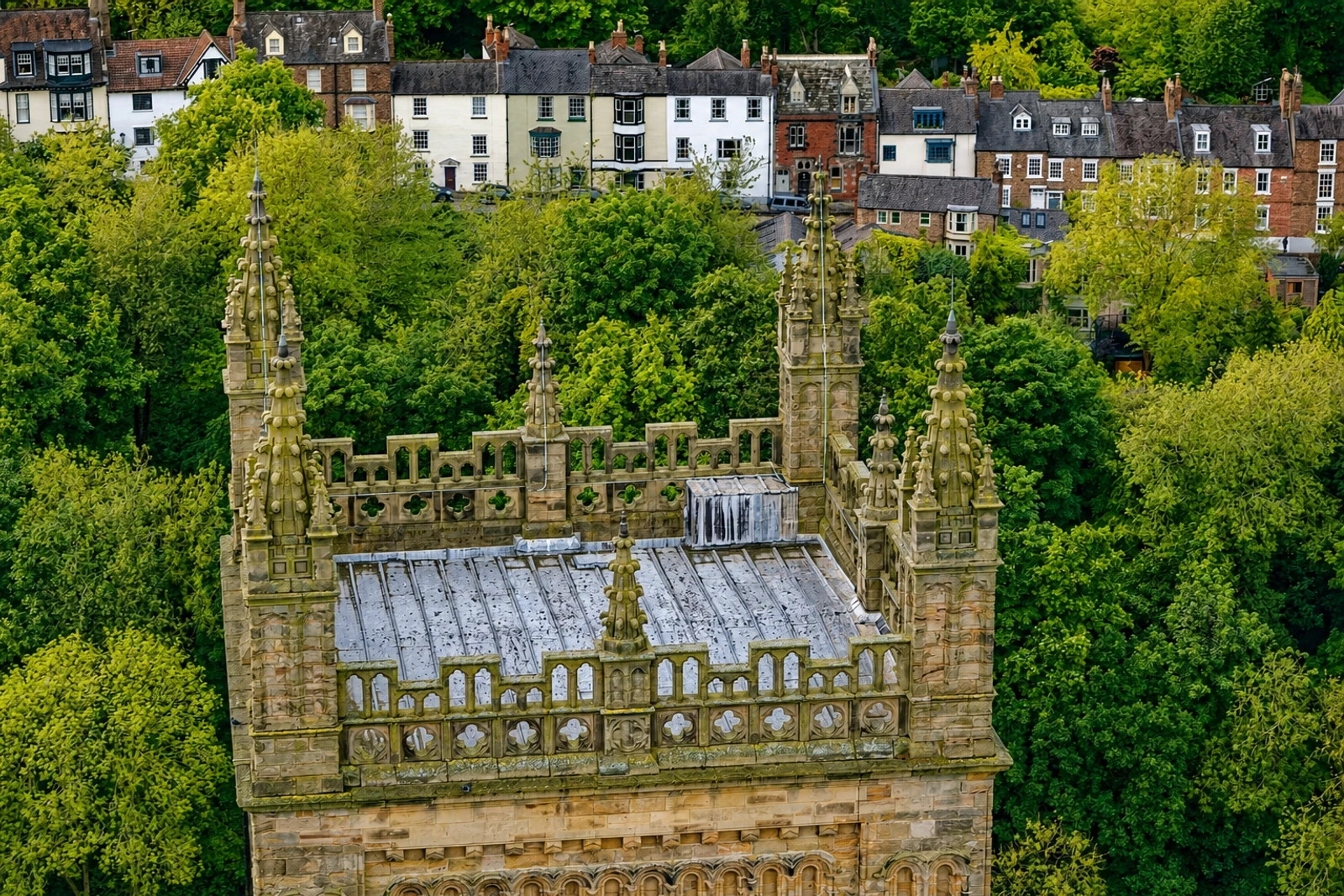
Durham: Norman power on a river peninsula
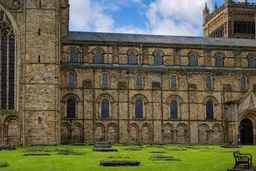
Durham combines two institutions that are often visited separately but belong together in the UNESCO property: a cathedral built to house the relics of St Cuthbert and the Venerable Bede, and a Norman castle that served as the stronghold and residence of Durham’s prince-bishops. The cathedral’s late 11th- and early 12th-century architecture, especially its innovative vaulting, makes it a major example of Norman building and an experimental step towards Gothic forms. The castle supplies the secular counterpart.
The setting is not incidental. Cathedral and castle occupy a peninsula formed by a bend in the River Wear, with steep banks providing a natural defensive line. Palace Green connects the buildings and once accommodated processions and gatherings associated with the prince-bishops. Within the castle precinct, the Bishop’s Court, almshouses and schools reflect civic responsibilities as well as religious authority. The small castle chapel is also significant for the development of 11th-century Romanesque sculpture, distinguishing Durham from a cathedral-only visit.
The property remains in use for worship, learning and residence: the cathedral retains strong community links, while the castle is accessible through its association with the University of Durham. Its physical integrity is well preserved, but the UNESCO boundary excludes the steep river banks and the full extent of the castle precinct. From Durham station, the peninsula is reached by a steep but walkable route. Allow three to five hours, and check cathedral access and castle-tour availability before arrival.