The Forth Bridge: railway engineering on an enormous scale
The Forth Bridge belongs on the map as a working railway structure whose design, materials and scale changed the possibilities of bridge construction. Crossing the Firth of the River Forth, it links Fife to Edinburgh and continues to carry passenger and freight trains. Opened in 1890, it was the earliest great multispan cantilever bridge and remains one of the longest, making operational use an essential part of its identity.
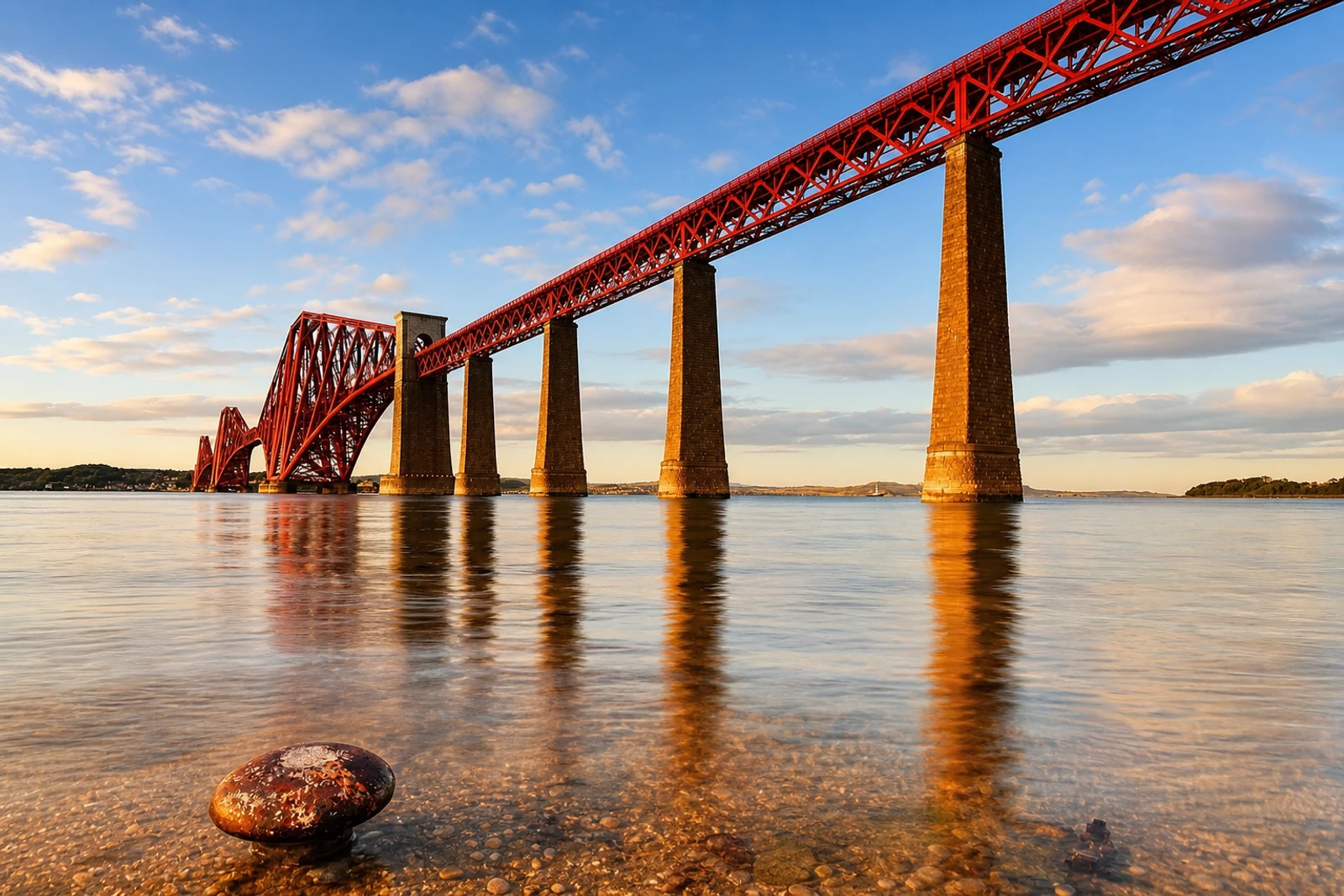
Its form is unusually easy to read from public viewpoints. Three double-cantilever towers rise above granite piers, with projecting arms linked by suspended spans. About 54,000 tons of mild steel plate were rolled and riveted into large tubes for compression, alongside lighter steel spans for tension. The forthright display of these structural elements gives the bridge its industrial aesthetic and distinguishes it from a decorative or commemorative crossing.
The bridge’s significance is also tied to the railway age, when railways came to dominate long-distance land travel. Its form and function remain virtually unaltered, and it has the highest level of statutory protection through Category A listing. Plan for two to three hours using viewpoints on both shores; North Queensferry or Dalmeny are the nearest practical rail gateways. No reservation is needed for public viewpoints, but check local access conditions.