Why this place belongs on the map
This entry belongs because France shares in a much larger archaeological story. Prehistoric Pile Dwellings around the Alps is a transboundary UNESCO property shared by Italy, France, Austria, Slovenia, Switzerland and Germany, with 111 component parts. The remains date from around 5000 to 500 BC and lie under water, beside lakes, along rivers or in wetlands. It is therefore not a single French monument, and a map pin should not be mistaken for the full extent of the property.
Its importance lies in preservation and evidence rather than monumental visibility. Waterlogged conditions protect organic materials, allowing research into agriculture, animal husbandry, metallurgy, settlement layouts and construction over more than four millennia. Dendrochronology can date wooden elements precisely, while finds connected with flint, shells, gold, amber, pottery, dugout canoes, wooden wheels and textiles illuminate movement, technology and domestic life among many cultural groups. This sharply contrasts with the visible masonry of the Pont du Gard or the ceremonial spaces of Nancy. Much of the archaeological record remains buried or underwater, so its setting beside lakes and rivers matters, and museums provide interpretation where the remains cannot be presented in situ. UNESCO notes vulnerabilities linked to lake use, intensified agriculture and development, making monitoring important to the property’s continuing integrity.
Prehistoric Pile Dwellings around the Alps belongs here for travellers interested in archaeological evidence rather than a conventional standing monument. UNESCO treats 111 selected sites as one serial, transboundary cultural property shared by Italy, France, Austria, Slovenia, Switzerland and Germany. The settlements date from around 5000 to 500 B.C. and were built beside lakes, rivers and wetlands. Fifty-six of the component sites are in Switzerland, so the Italian record is part of a larger Alpine phenomenon.
What distinguishes the property is the survival of organic material in waterlogged conditions. Evidence from wooden structures, archaeobotany and archaeozoology illuminates agriculture, animal husbandry, metallurgy and domestic arrangements across more than four millennia. Dendrochronology allows precise dating of wooden architectural elements. Finds also reveal movement and exchange across the Alps, including flint, shells, gold, amber and pottery, as well as dugout canoes, wooden wheels and textiles.
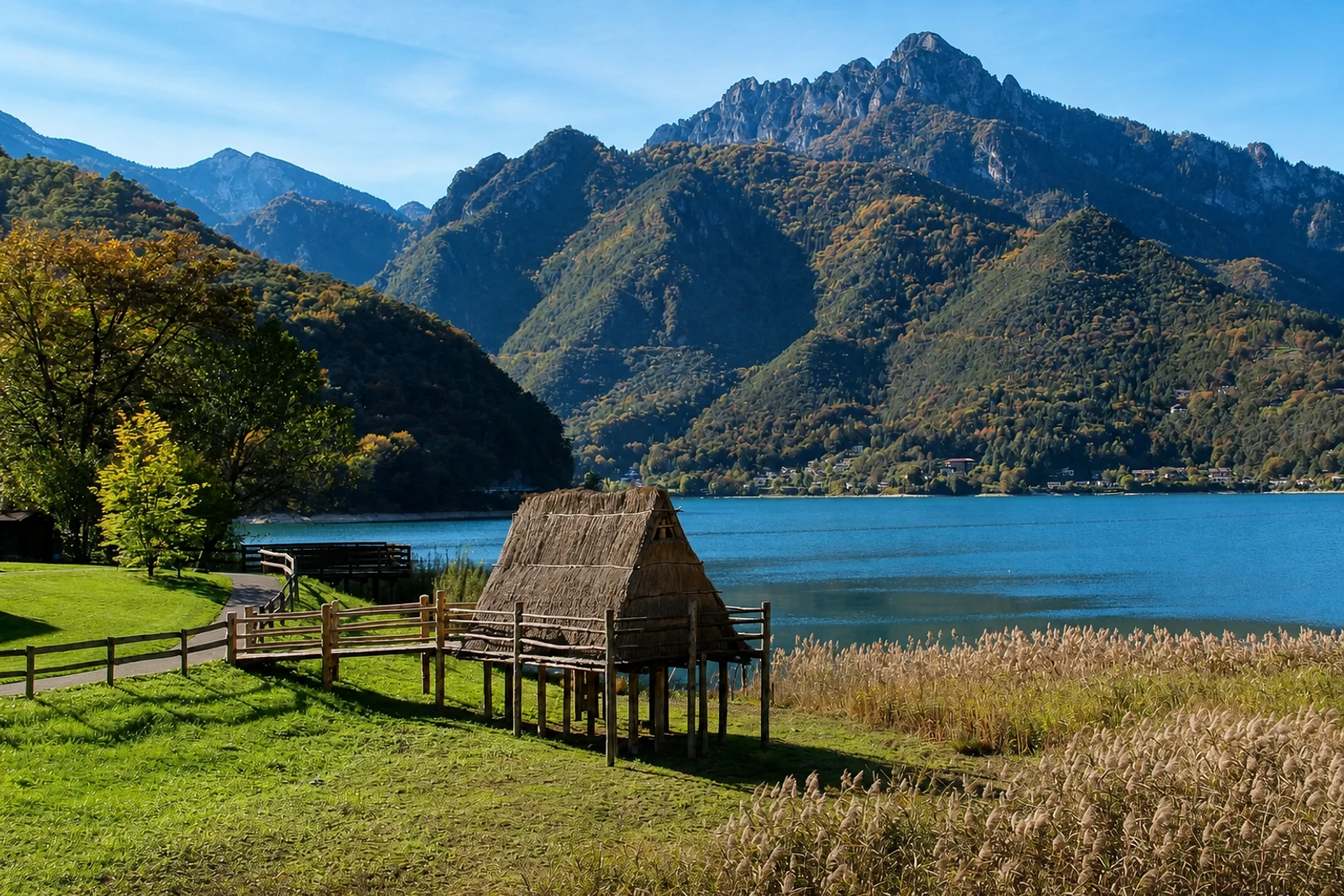
This is easily confused with an open-air reconstruction or a visible lakeside village. Most component sites are hidden underwater or preserved in archaeological strata, and their setting is commonly interpreted through museums. The lake or river shore remains essential because it explains why these communities developed where they did. Urban settings, lake use, intensified agriculture and development can affect the sites, while continued monitoring supports their integrity. Choose this property when the interest lies in how carefully preserved traces reconstruct prehistoric lives, technologies and environmental relationships rather than in dramatic ruins above ground.