Sardinia’s rock-cut houses of the dead
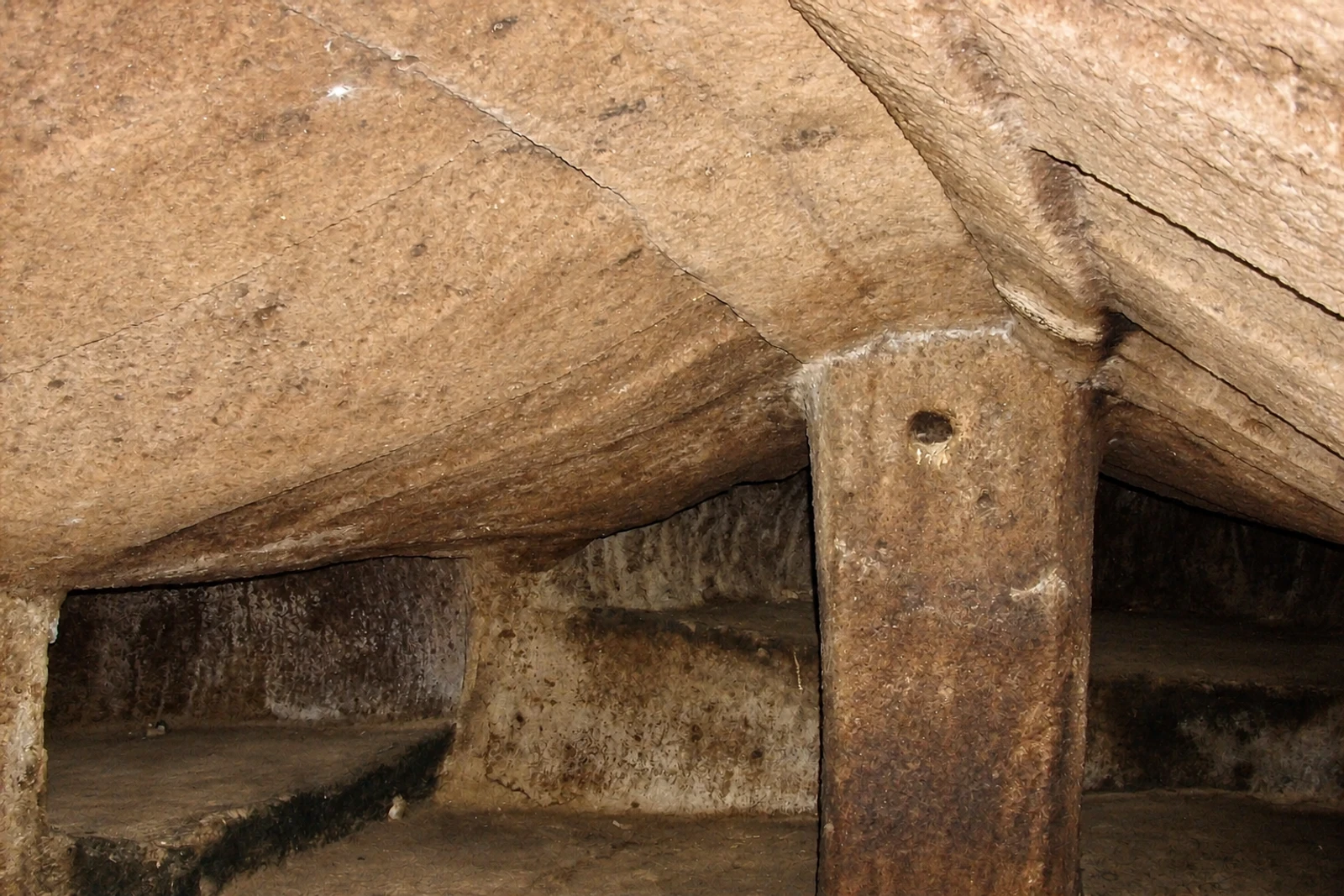
This 18-component cultural property is the map’s key choice for prehistoric funerary architecture. Created in Sardinia between the fifth and third millennia BCE, the domus de janas are hypogean burials and necropolises cut into rock. Their local name, “fairy houses,” should not obscure their documentary role: these structures preserve evidence of the daily life, funerary practices and spiritual beliefs of prehistoric Sardinian communities.
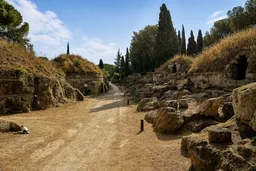
What distinguishes the property from the Etruscan necropolises is both its chronology and its form. Cerveteri and Tarquinia present large cemeteries with tumuli, painted chambers and a city-like funerary plan. The domus de janas instead belong to a prehistoric island-wide phenomenon of subterranean tombs. Complex layouts, symbolic decorations and figurative motifs make the relationship between living communities and the dead visible through carved spaces rather than through later monumental urban planning.
The property’s 18 components sit within a much wider Sardinian pattern: approximately 3,500 hypogea are attested across the island. That broader distribution explains why the UNESCO record is serial rather than centred on one necropolis. It also helps visitors interpret the sites as evidence of social change. Taken together, the tombs testify to communities moving towards more complex forms of social organisation, while representing an extensive manifestation of hypogean funerary architecture in the western Mediterranean.