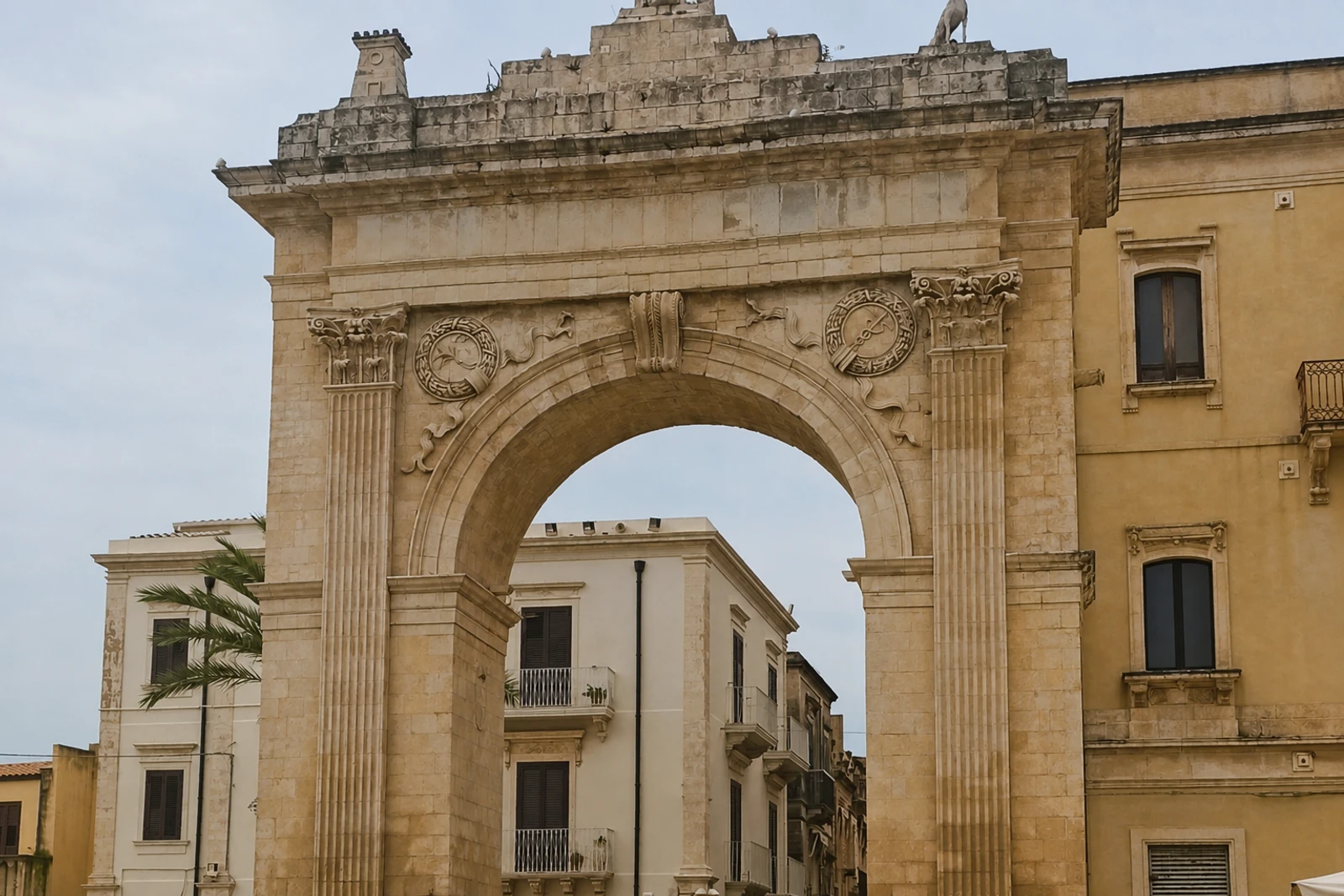
Val di Noto: eight towns rebuilt in late Baroque form
The Late Baroque Towns of the Val di Noto belong because they show reconstruction as a shared architectural and planning achievement. Inscribed in 2002 as a cultural serial property, the designation contains eight components: Caltagirone, Militello Val di Catania, Catania, Modica, Noto, Palazzolo Acreide, Ragusa and Scicli. All were rebuilt on or beside towns affected by the earthquake of 1693, producing a coherent body of late Baroque art and architecture while preserving different urban responses.
The scale of the record is essential. Caltagirone, Noto and Ragusa include entire old towns; Catania and Scicli contain defined urban areas; Modica, Palazzolo Acreide and Militello Val di Catania are represented by isolated monuments in historic centres. The rebuilding strategies also differ: Catania was reconstructed on its original site, Noto on a new one, Ragusa and Palazzolo Acreide gained new centres beside ancient ones, Scicli and Modica moved into adjoining partly urbanised areas, and Caltagirone was repaired.
This is not one uniform Baroque town and not a single monument visited under eight names. Its significance lies in the relationship between shared period and place and varied planning responses to destruction. The almost preserved town plans retain that distinction, while the centres continue to have residential functions and lively communities. Further seismic activity, long-term degradation and the need for restoration and maintenance are important planning boundaries. Most properties are privately owned, with additional responsibilities held by church, state, regional and municipal authorities.