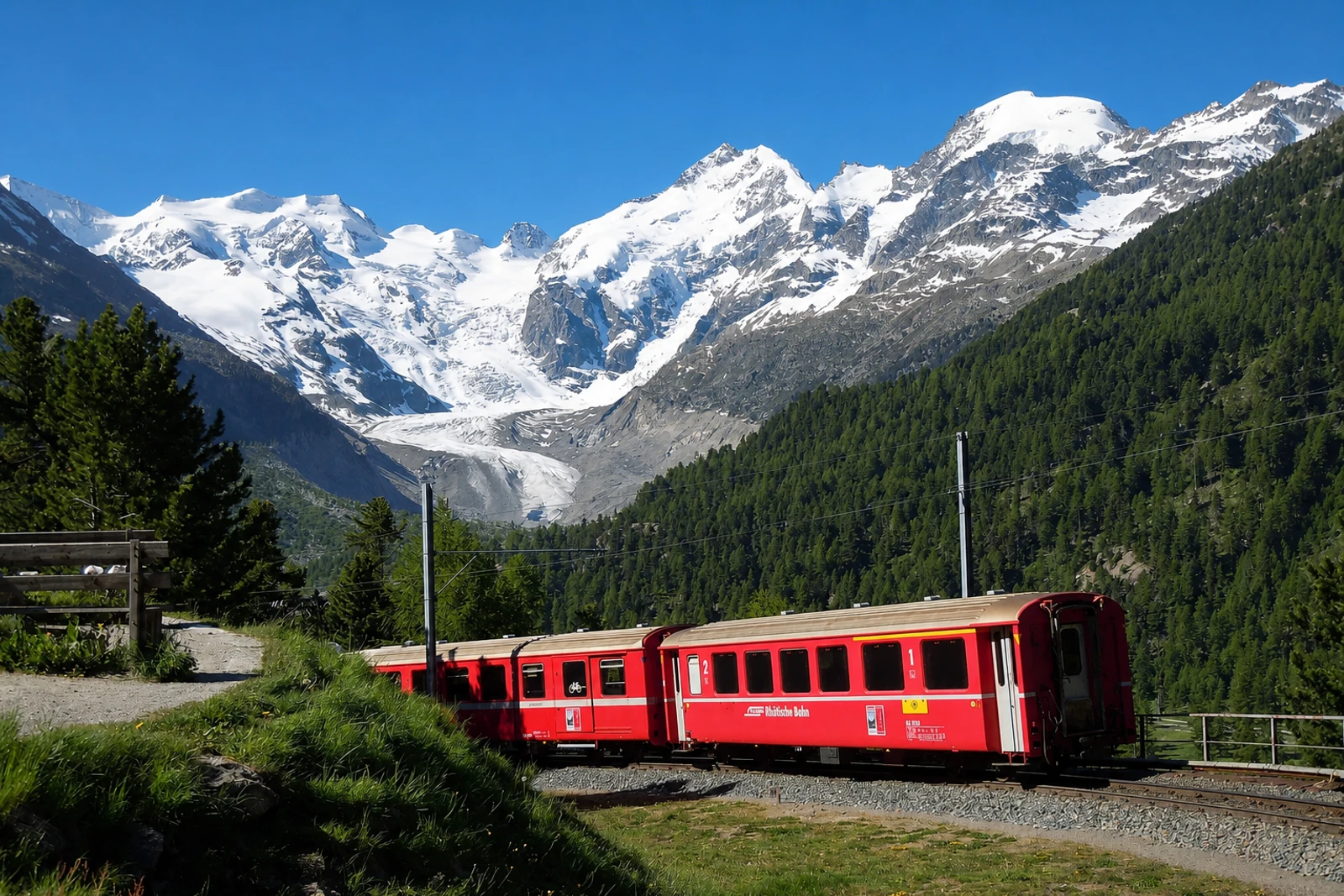
A working Alpine railway shaped as a landscape ensemble
The Rhaetian Railway in the Albula / Bernina Landscapes is the map’s clearest choice for visitors who see infrastructure as heritage. Shared by Italy and Switzerland, the property joins two historic lines crossing the Swiss Alps through two passes. Today they form one transalpine line, but the Albula and Bernina routes remain legible as a carefully designed technical, architectural and environmental ensemble. Its Italian-side reference point is Tirano railway station, while the inscription extends across the wider railway landscape.
The scale and variety of the engineering distinguish it from a historic train journey valued only for scenery. Opened in 1904, the 67-kilometre Albula line includes 42 tunnels and covered galleries and 144 viaducts and bridges. The 61-kilometre Bernina pass line includes 13 tunnels and galleries and 52 viaducts and bridges. Together they show how different technical solutions were used in severe mountain conditions, while stylistic homogeneity keeps the infrastructure visually coherent.
Look for the relationship between construction and terrain: the railway blends with Alpine landscapes rather than standing apart from them. UNESCO also recognises its role in overcoming the isolation of Central Alpine settlements and its lasting effects on mountain life. This is not an abandoned industrial relic. The railway remains in use, and its company continues technical management, maintenance and compatible innovation. Current operating arrangements and presentation should therefore be checked before planning a visit, especially when deciding which section or structure to explore.