Eight thousand years of images carved across Valcamonica
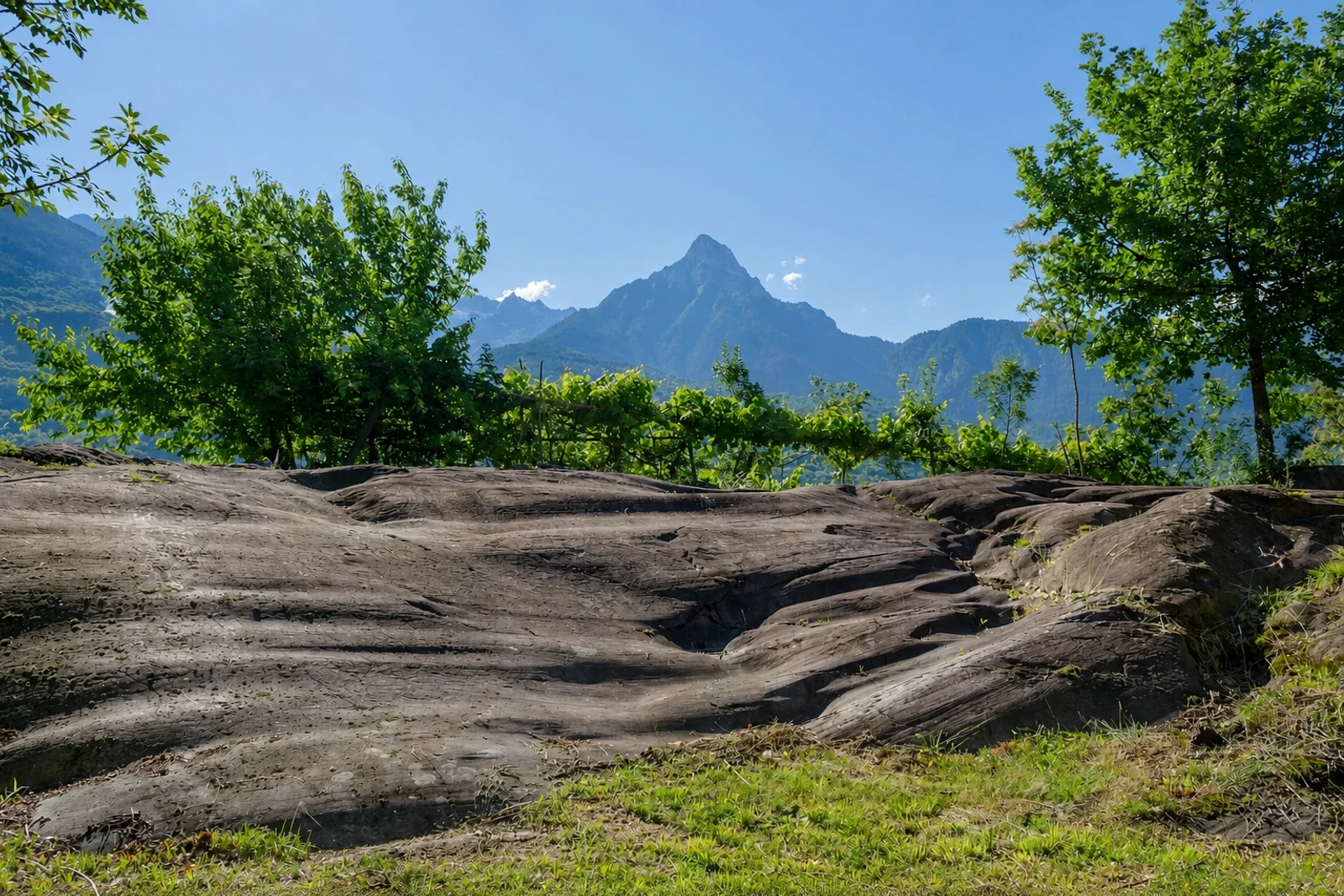
Rock Drawings in Valcamonica belongs on the map because the landscape itself preserves an unusually extensive record of prehistoric expression. In mountainous Lombardy, more than 140,000 symbols and figures are carved into rock across both sides of the valley and more than 180 localities. UNESCO inscribed the property in 1979 as a six-part cultural serial site. Its importance lies in the breadth of the record: the engravings span more than 8,000 years rather than representing one moment or one artistic programme.
The imagery distinguishes Valcamonica from prehistoric sites defined mainly by buildings, burials or tools. Agriculture, deer hunting, duels, navigation, war and magic appear alongside geometric-symbolic forms. Systematic interpretation, typological classification and chronological study make the carvings valuable to prehistory, sociology and ethnology, while their form, iconography and material retain high authenticity. The rock surfaces and visibility of the images are generally described as good, but exposure to atmospheric and climatic factors, woods, pollution and direct human intervention remains relevant.
The property is also a network of protected places, not a single compact archaeological enclosure. Rock Art Parks and national, regional and municipal protections support monitoring, restoration and visitor facilities, with management coordinated alongside local authorities and research institutions. That breadth is worth keeping in mind when choosing a component to visit: the map introduces the UNESCO property, but the precise locality determines the visible motifs and current presentation. Look closely at the relationship between carved surface, valley setting and the long sequence of human activity.