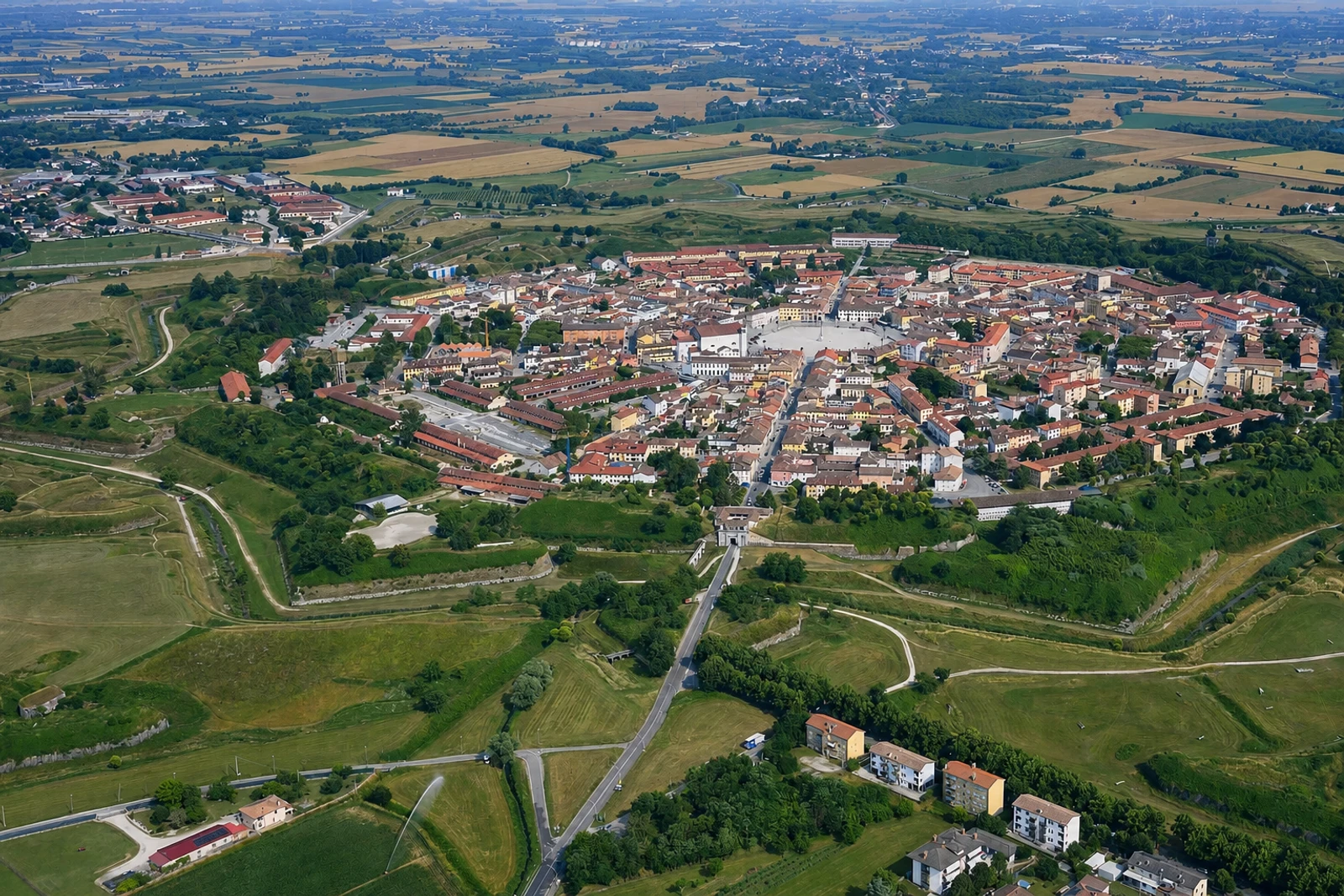
Venetian works of defence: bastions across land and sea
The Venetian Works of Defence belongs as a transnational military network, not as one Italian fortress. Inscribed in 2017 under criteria (iii) and (iv), the serial property contains six components shared by Italy, Croatia and Montenegro, stretching more than 1,000 kilometres from the Lombard region to the eastern Adriatic Coast. Italy contributes three components. The full title’s distinction between Stato da Terra and western Stato da Mar is essential to understanding the system.
The land-based defences protected the Republic of Venice from European powers to the northwest; the maritime system protected Adriatic routes and ports towards the Levant. Together they supported the Serenissima’s expansion and authority through civil, military and urban structures. Their defining technical shift was the alla moderna, or bastioned, system, developed in response to gunpowder and firearms. Earthworks, fortifications, landscape settings and logistical arrangements show how military architecture had to change with fighting methods.
This entry should not be confused with medieval walls alone. Some components include earlier structures, while Napoleonic, Austrian, Ottoman and 20th-century changes reveal later adaptation and damage. The individual sites are generally in good condition, though integrity varies and some face development and tourism pressures. Legal protection operates at national and regional or local levels, while a transnational management plan coordinates the three countries. The map’s Italian pin is therefore a representative component within a connected defensive landscape.