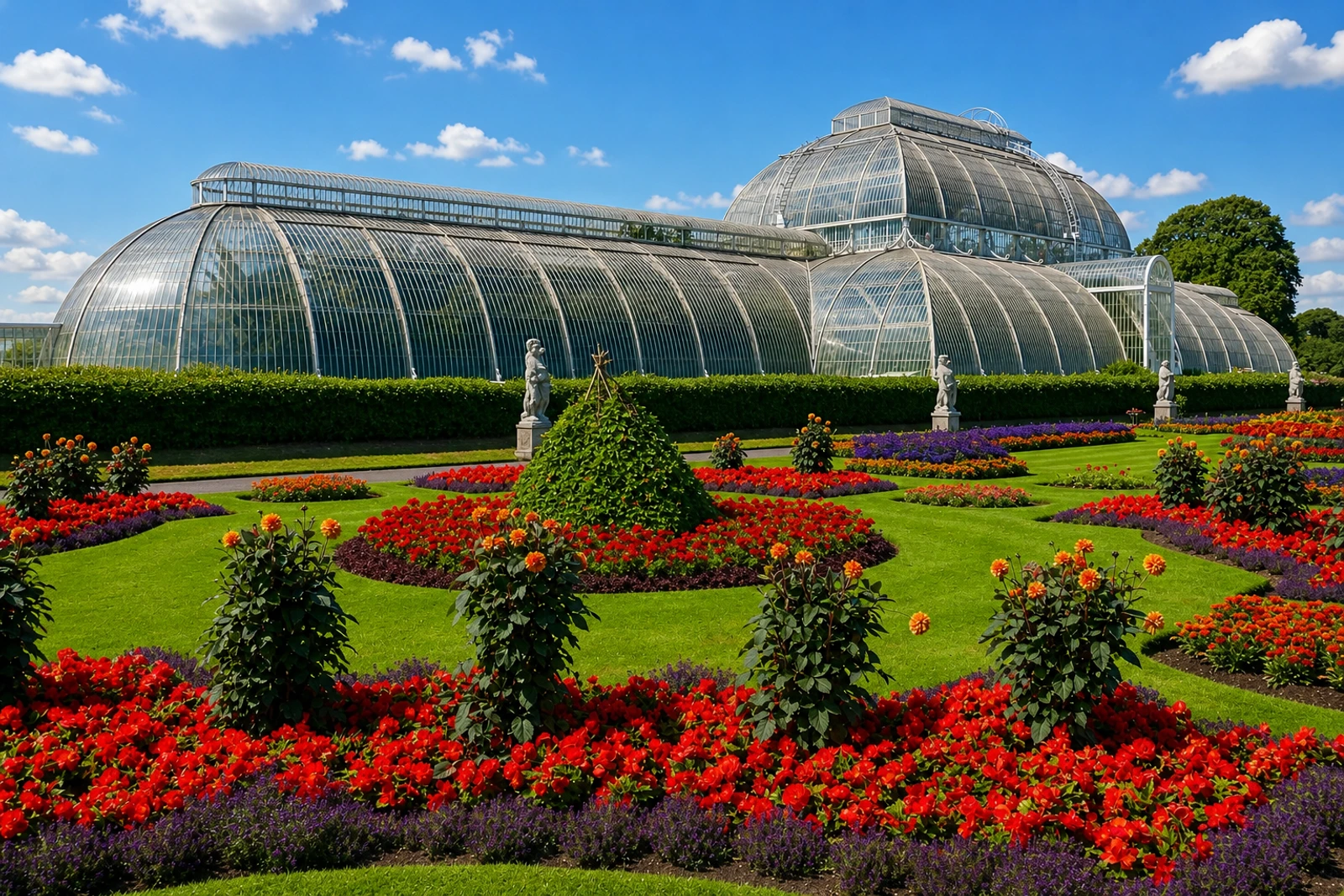
Kew, where garden design meets botanical science
Royal Botanic Gardens, Kew belongs on a UNESCO map because its importance rests on the combination of landscape design, architecture and botanical collections. Created in 1759, the gardens have made a continuing contribution to plant diversity, plant systematics and economic botany. This makes Kew distinct from a purely ornamental garden: conserved plants, living plants and documents are central to the property’s identity and scholarly role.
The landscape contains layers associated with Charles Bridgeman, William Kent, William Chambers, Lancelot “Capability” Brown and William Nesfield. Look for the way the gardens’ history is distributed across the Orangery, Queen Charlotte’s Cottage, ornamental water, the herbarium, vistas, folly temples and the iron-framed Palm House and Temperate House. Those glasshouses became models for conservatories around the world, while the wider garden developed from royal retreat to national botanical garden and modern conservation institution.
Kew’s setting along the south-western reaches of the Thames also matters: views towards Syon Park House, Kew Green and the surrounding cultural landscape form part of the wider context. The map suggests three to five hours, using Kew Gardens as the nearest practical rail gateway, followed by a short walk. An advance garden ticket is recommended, and visitors should check current access for individual buildings and collections.