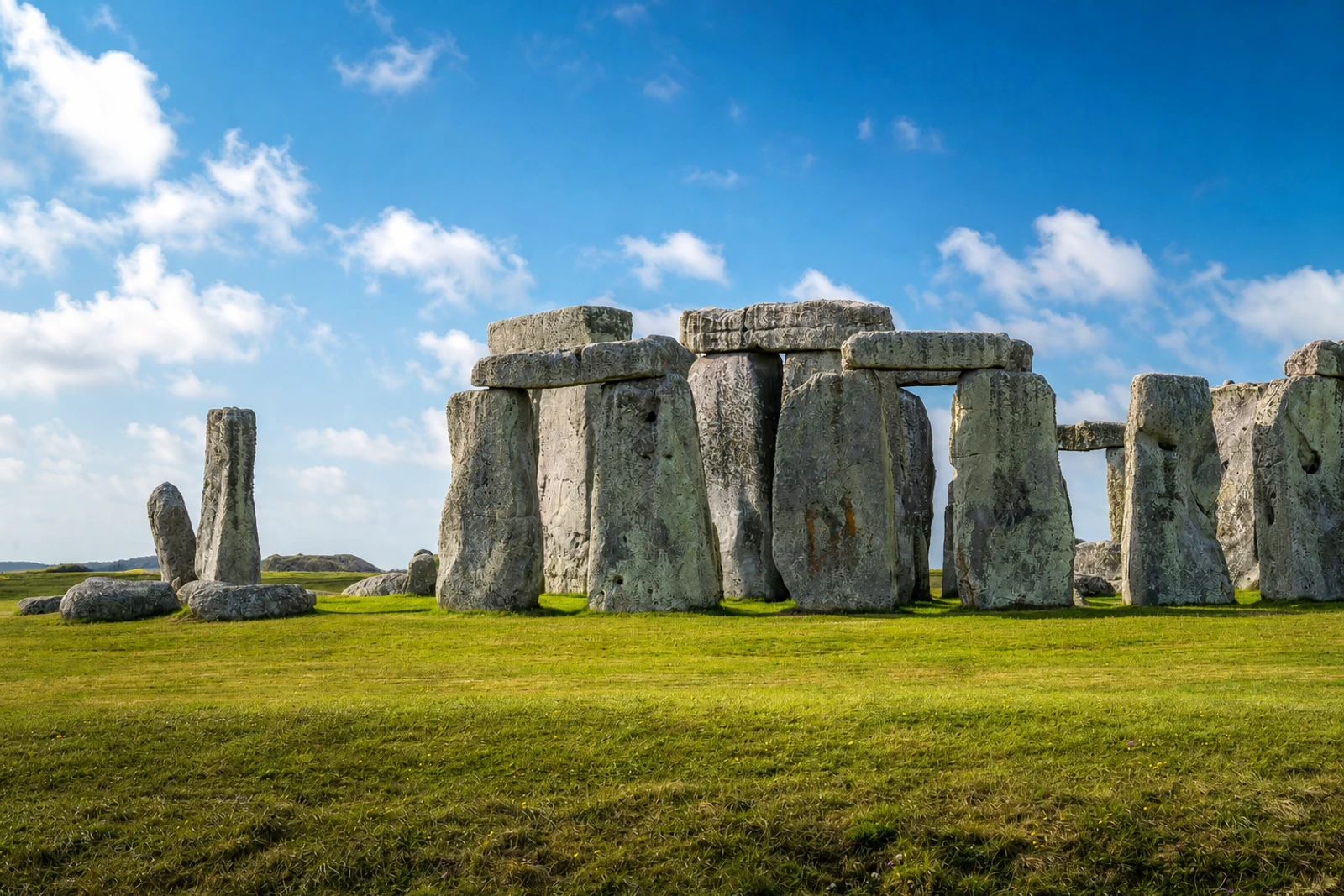
Stonehenge and Avebury: one property, two prehistoric landscapes
Stonehenge, Avebury and Associated Sites is one UNESCO property with two component parts, so the map’s separate visit pins must not be counted as separate World Heritage sites. The property brings together two chalkland areas in Wiltshire, each centred on a major stone circle and henge, with settlements, burial grounds, avenues and other large constructions of earth and stone. Their significance comes from the connected landscapes and around 2,000 years of monument building between circa 3700 and 1600 BC.
Stonehenge is distinguished by architectural precision: concentric planning, shaped stones, horizontal lintels and trilithons, with both Wiltshire Sarsen sandstone and Pembroke Bluestone used in the monument. Its associated landscape includes the Avenue, Cursuses, Durrington Walls, Woodhenge and a dense concentration of burial mounds. Avebury offers a different experience, centred on the largest prehistoric stone circle in the world, with a 1.3-kilometre henge, 180 local standing stones and avenues leading into the wider landscape.
Silbury Hill, the West Kennet Long Barrow, Windmill Hill and the Sanctuary add further dimensions at Avebury. The purpose of Silbury Hill remains obscure, while the astronomical significance of the circles continues to be explored. Plan the components separately: Stonehenge has a tour bus from Salisbury, Avebury needs separate bus planning, and Stonehenge timed entry is strongly recommended. A full day may suit one component or a long combined visit.