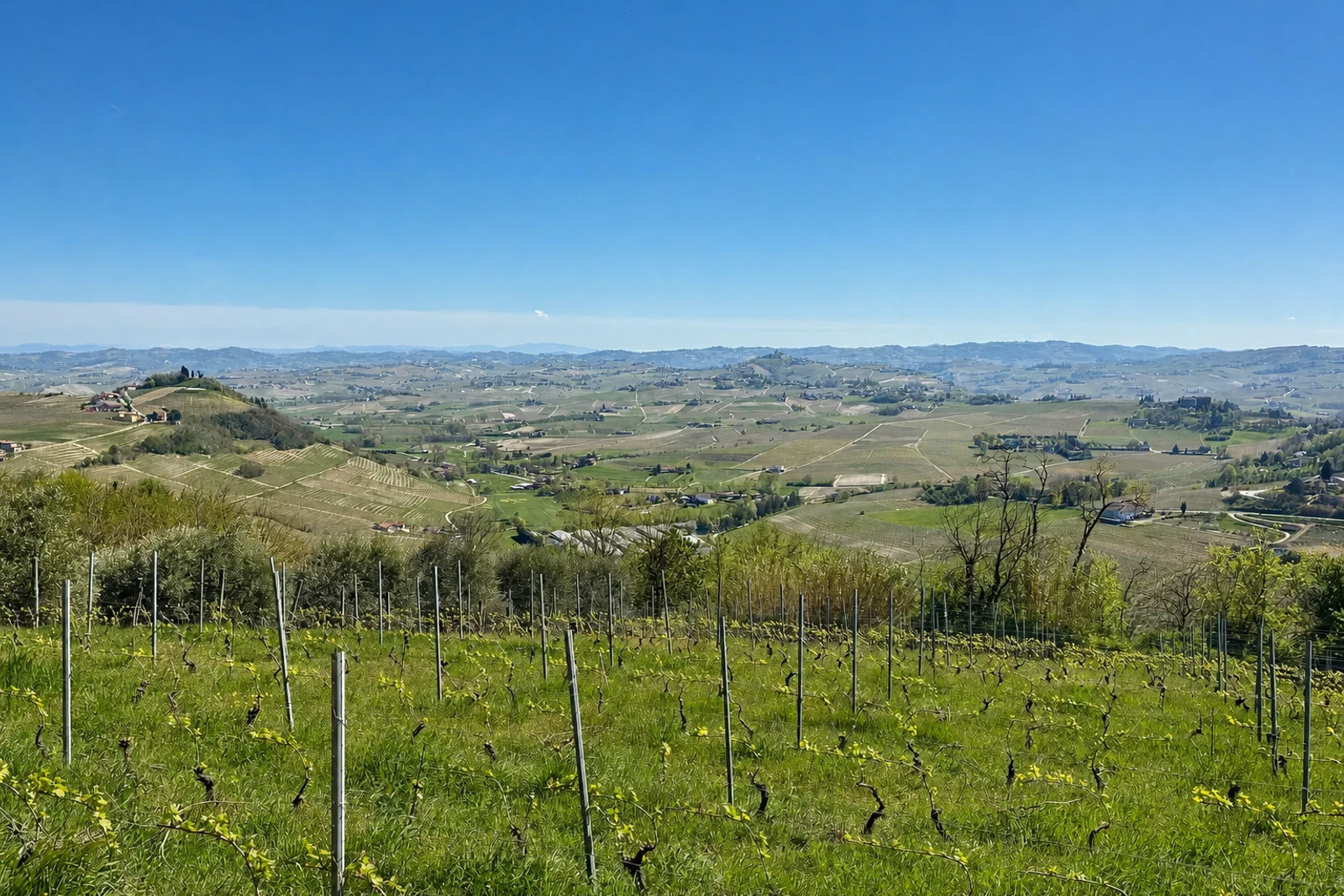
Piedmont’s vineyard landscape: heritage shaped by working hillsides
The Vineyard Landscape of Piedmont: Langhe-Roero and Monferrato belongs because UNESCO recognizes a cultural landscape formed through long-term winegrowing and winemaking, not a single isolated monument. In southern Piedmont, between the Po River and the Ligurian Apennines, the serial property brings together five wine-growing areas and the Castle of Cavour. Its six components express the connection between productive land, built structures, expertise and rural society.
The landscape’s meaning is visible in the way its parts fit together. Diverse soils, often-native grape varieties and adapted winemaking processes are reflected in cultivated hillsides following ancient land divisions. Hilltop villages, castles, Romanesque churches, farms, ciabots, cellars and wine storehouses punctuate the terrain. Vine pollen dating from the 5th century BC, references by Pliny the Elder and Strabo, and wine-related Etruscan and Celtic words in the local dialect provide supplied evidence of a long viticultural tradition.
This property differs from the other entries because continuity is part of its identity. UNESCO describes the use of soils, buildings and social organization through tending, harvesting and vinification as expressions of ongoing practices and expertise. The gently rolling hills and varied panoramas are therefore inseparable from production and settlement. Protection involves the Cultural Heritage and Landscape Code, municipal controls, buffer-zone measures and coordinated management by a municipal association under regional authority. Inscribed in 2014 as a cultural property under criteria (iii) and (v), it should be read as a living relationship between people and their environment, not simply as a scenic viewpoint or a collection of wineries.