Genoa’s Strade Nuove and Rolli palaces
Genoa’s property is for visitors interested in how wealth, topography and public authority shaped an urban quarter. The Strade Nuove and Palazzi dei Rolli date from the late sixteenth and early seventeenth centuries, when the Republic of Genoa was at the height of its financial and seafaring power. Wealthy aristocrats developed a formal district north of the tightly packed medieval streets, with the street design attributed to Galeazzo Alessi.
The defining feature is not simply the presence of grand residences. In 1576, the Senate established a legally based list of Rolli palaces for the official lodging of distinguished guests. Private buildings thus formed a public network for state visits, an arrangement that separates Genoa from Florence’s broader artistic concentration and Ferrara’s city-and-countryside plan. The property represents an urban development project parcelled out by public authority within a unitary framework.
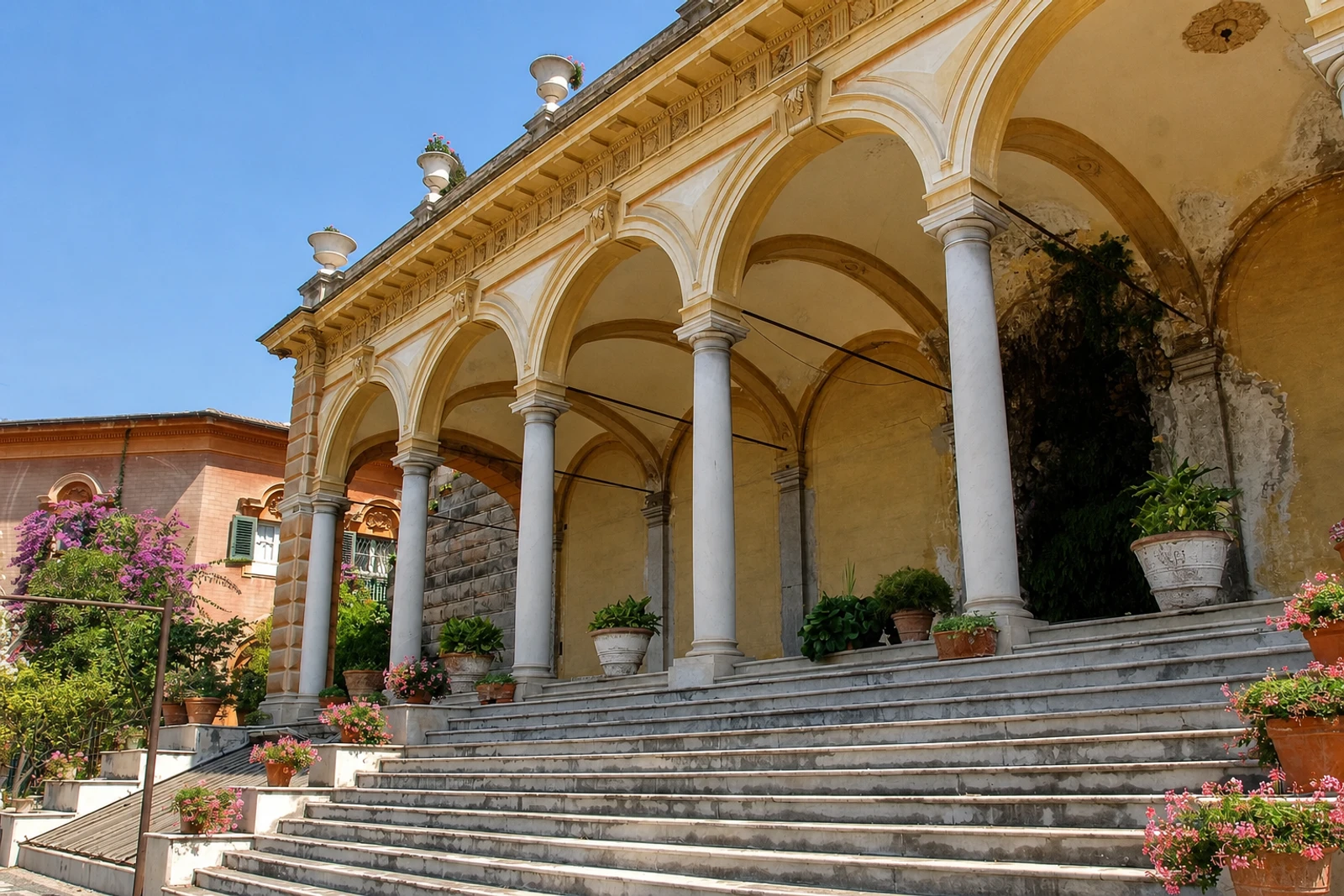
Look for the relationship between common rules and individual responses to Genoa’s terrain. The palaces generally rise three or four storeys and share entrance halls, open staircases, courtyards and loggias overlooking gardens, while differing in their architectural solutions. Stuccos and frescoes belong to the interiors. The 15.77-hectare property remains integrated with the medieval city, and its 98.73-hectare buffer zone covers the historic centre. The record includes medieval houses and newer buildings as well as the Rolli palaces, so the heritage experience is an urban ensemble rather than a single palace visit.