
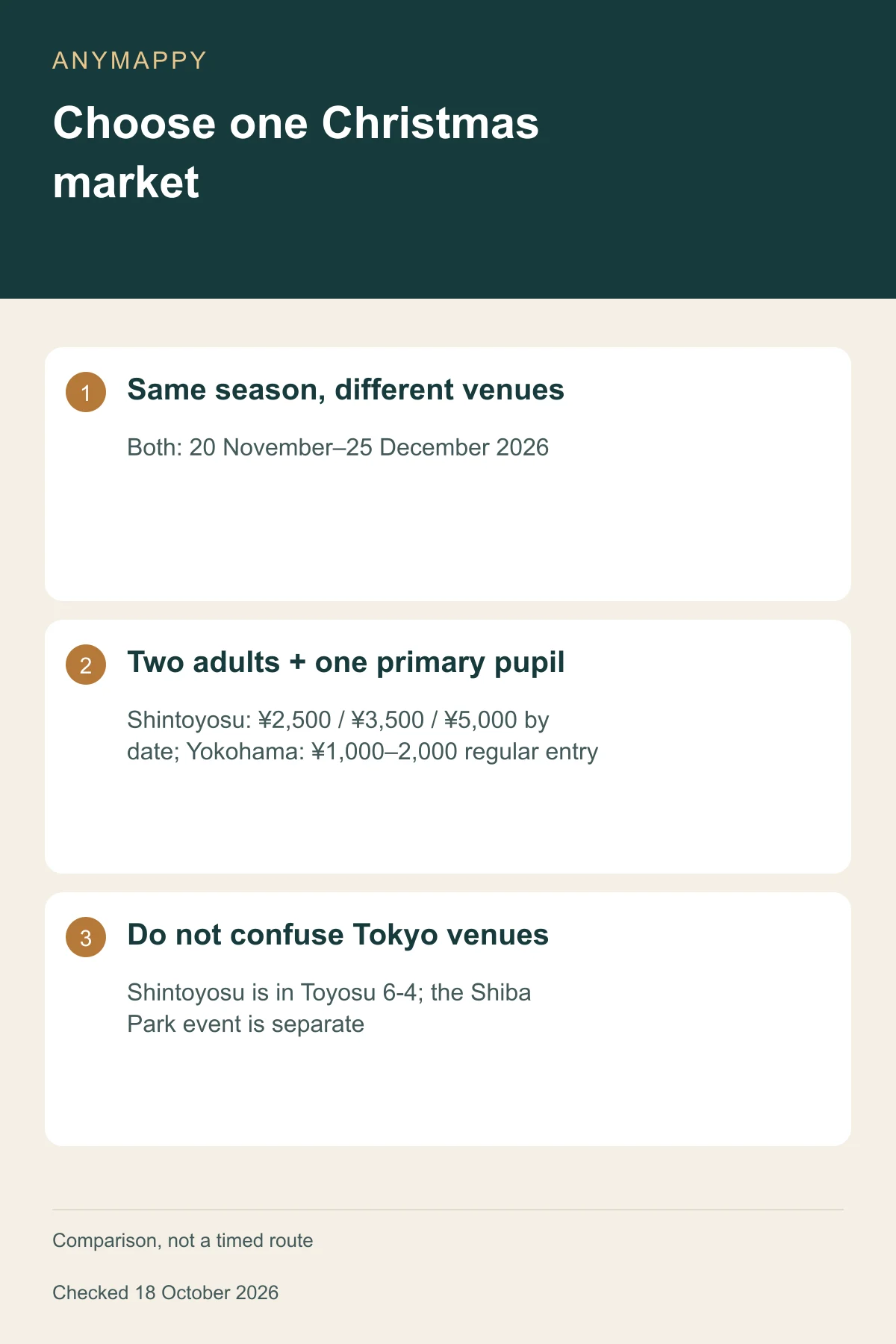
Comparison, not a timed route
Enlarge the diagramRead the planning notes
- Same season, different venuesBoth: 20 November–25 December 2026
- Two adults + one primary pupilShintoyosu: ¥2,500 / ¥3,500 / ¥5,000 by date; Yokohama: ¥1,000–2,000 regular entry
- Do not confuse Tokyo venuesShintoyosu is in Toyosu 6-4; the Shiba Park event is separate
Choose one evening, not a collection of markets
Start with the return journey. If your day already revolves around Tokyo's bay area, Shintoyosu can make a coherent final stop. If you want to spend an afternoon around Yokohama's waterfront and finish among the red-brick warehouses, choose Yokohama. Neither is automatically the best option for everyone staying somewhere in Greater Tokyo. The route back to your own accommodation matters more than the broad city name.
Choose a main purpose next: food, a particular setting, shopping or time with children. Those aims lead to different arrival times and spending decisions. A visitor hoping to browse slowly should not arrive shortly before last entry; somebody who wants only a brief festive view may prefer a free-area outing instead of paying for a full market visit. Check exactly what a free area includes before making that substitution.
We recommend one paid market per evening. Crossing between Tokyo and Yokohama adds travel, another entrance process and a second set of queues. There is no benefit in paying twice if both visits become rushed. Keep a second market for another day only if it offers something the group genuinely wants, rather than treating a two-venue checklist as the measure of a successful trip.
Confirm the exact venue before buying
| Decision | Shintoyosu | Yokohama Red Brick |
|---|---|---|
| Dates | 20 November–25 December | 20 November–25 December |
| Regular adult entry | ¥1,000 weekdays / ¥1,500 weekends and holidays to 23 December; ¥2,000 on 24–25 December | ¥500–1,000; date-specific sales details pending |
| Primary-school children | ¥500 to 23 December; ¥1,000 on 24–25 December | Free with guardian |
| Hours | Normally 11:00–21:30; last entry 20:30; opening day from 16:00 | Opening day 17:00–21:00; then 11:00–21:00 to 4 December, 11:00–22:00 from 5 December |
“Tokyo Christmas Market” is not a reliable destination label by itself in 2026. The organizer lists Shintoyosu and, separately, Shiba Park near Onarimon. Shintoyosu runs from 20 November to 25 December; Shiba Park begins on 4 December. An older photograph or guide referring to Hibiya or Meiji Jingu Gaien does not establish this year's venue. Even the current landing page retains some old access text, so use the specific venue page.
For this comparison, Tokyo means the Shintoyosu event in Toyosu 6-chome. It is not a market at the foot of Tokyo Tower, and Tokyo Tower's map marker should not be used as its entrance. Yokohama means Christmas Market at Yokohama Red Brick Warehouse, rather than every Christmas event in Minato Mirai. Save the full event name and address alongside the booking.
The AnyMappy Japan Christmas map has separate reviewed stops for Shintoyosu and Yokohama Red Brick Warehouse. Use those points for orientation and follow the organizer's entrance instructions on the day. A map anchor is not a promise about which gate will be in use, wheelchair access or the shortest pedestrian route. Keeping the event identity precise prevents a much larger inconvenience than a small difference in admission price.
Dates and late-arrival limits change the decision
Both main events are announced for 20 November–25 December 2026. Opening day is exceptional: Shintoyosu starts at 16:00 and Yokohama at 17:00. On ordinary days Shintoyosu opens at 11:00 and closes at 21:30, with last entry at 20:30 and last orders at 21:00. Arriving before closing is therefore not the same as arriving in time to enter or eat.
Yokohama's announced hours change during the season. After opening day, it runs 11:00–21:00 through 4 December, then 11:00–22:00 from 5 December through Christmas Day. Specific areas can have different schedules. A late December visit may offer a later evening, but that does not remove the need to check admission restrictions and food-service deadlines.
For an after-work outing, calculate backwards from the time you can realistically reach the venue, not from the moment you leave work. Include the station exit, walking and any entrance wait. If that leaves little time for your main purpose, choose another date or a shorter free-area walk. We do not predict exact queue lengths, and a reservation should not be presented as a guarantee of immediate entry.
Compare the whole group's admission
Shintoyosu's official schedule lists adults, including junior-high students, at ¥1,000 on weekdays and ¥1,500 on weekends and holidays through 23 December. Primary-school children cost ¥500 and younger children enter free. On 24 and 25 December, adults cost ¥2,000 and primary-school children ¥1,000. These are Japanese school-stage categories; check with the organizer if a child's overseas school year makes eligibility unclear.
Yokohama advertises standard admission of ¥500–¥1,000, depending on the date. Primary-school children and younger enter free with a guardian, and through 4 December the free category also includes junior-high students. Full ticket-sale details are scheduled for late October. Do not assign the lowest advertised price to your chosen December Saturday before that date-specific information is available.
For two adults and one primary-school child, Shintoyosu admission is ¥2,500 on an ordinary weekday, ¥3,500 on an ordinary weekend or holiday, and ¥5,000 on Christmas Eve or Christmas Day. Yokohama standard admission for the same family falls within ¥1,000–¥2,000 at the published adult range, subject to the actual date. These are admission-only calculations: food, purchases and transport are separate. A longer or more expensive journey can outweigh a saving at the gate.
A priority ticket is a different product
Yokohama lists priority admission at ¥2,000–¥2,500 and a priority option with a premium mug at ¥4,500–¥5,000. These should not be placed in the same column as an ordinary admission ticket and described as if all products contain the same benefits. Decide whether priority access or the particular mug is something you want before comparing the bill.
A higher-priced entrance product should not be interpreted as a reserved dining table or a promise that food stalls will have no queues. Check the product's exact terms. Likewise, a mug shown in a photograph does not prove that every ticket includes it. Purchase through the current operator-linked sales page and read the stated inclusions for that venue and date.
Set a separate food and shopping budget. Admission is only the first part of a market evening, and a group can spend quite differently depending on whether it shares a snack, eats a full meal or buys gifts. It is more useful to decide those priorities in advance than to invent a universal “cost per visit.” A lower entrance fee does not make every possible outing cheaper, and a premium option is not a requirement for enjoying the setting.
Access and children: plan the practical edges
For Shintoyosu, the organizer gives approximately two minutes on foot from Shintoyosu Station and four from Shijo-mae Station. It provides no event parking or bicycle parking. Those short station-to-venue walks do not describe the journey from your hotel, and they do not establish a step-free route. Check the transport route and station facilities appropriate to your group before choosing a ticket time.
For Yokohama, use the Red Brick Warehouse's official access information and the exact waterfront destination. “Yokohama Station” and “Yokohama Red Brick Warehouse” are not interchangeable arrival points. If your plan includes another waterfront stop, arrange the afternoon geographically rather than repeatedly returning to the same station or shopping district.
With children, agree a manageable visit length and a warm break. A stroller, extra bags and a tired child make repeated transfers more consequential. Check current facilities and access conditions instead of assuming an outdoor market operates like an indoor shopping centre. A named meeting point and an easy way to leave can matter more than seeing every stall. Do not promise empty paths, guaranteed seats or unrestricted stroller access without specific confirmation.
Weather and photographs need their own expectations
These are outdoor waterfront evenings. Bring clothing appropriate to the forecast and allow an indoor break outside the market if needed. Yokohama states that the event operates in rain but can close in severe weather. Check the organizer's latest notice and your ticket's applicable conditions before travelling; a general rain policy is not a guarantee that every forecast is comfortable or that every area stays open.
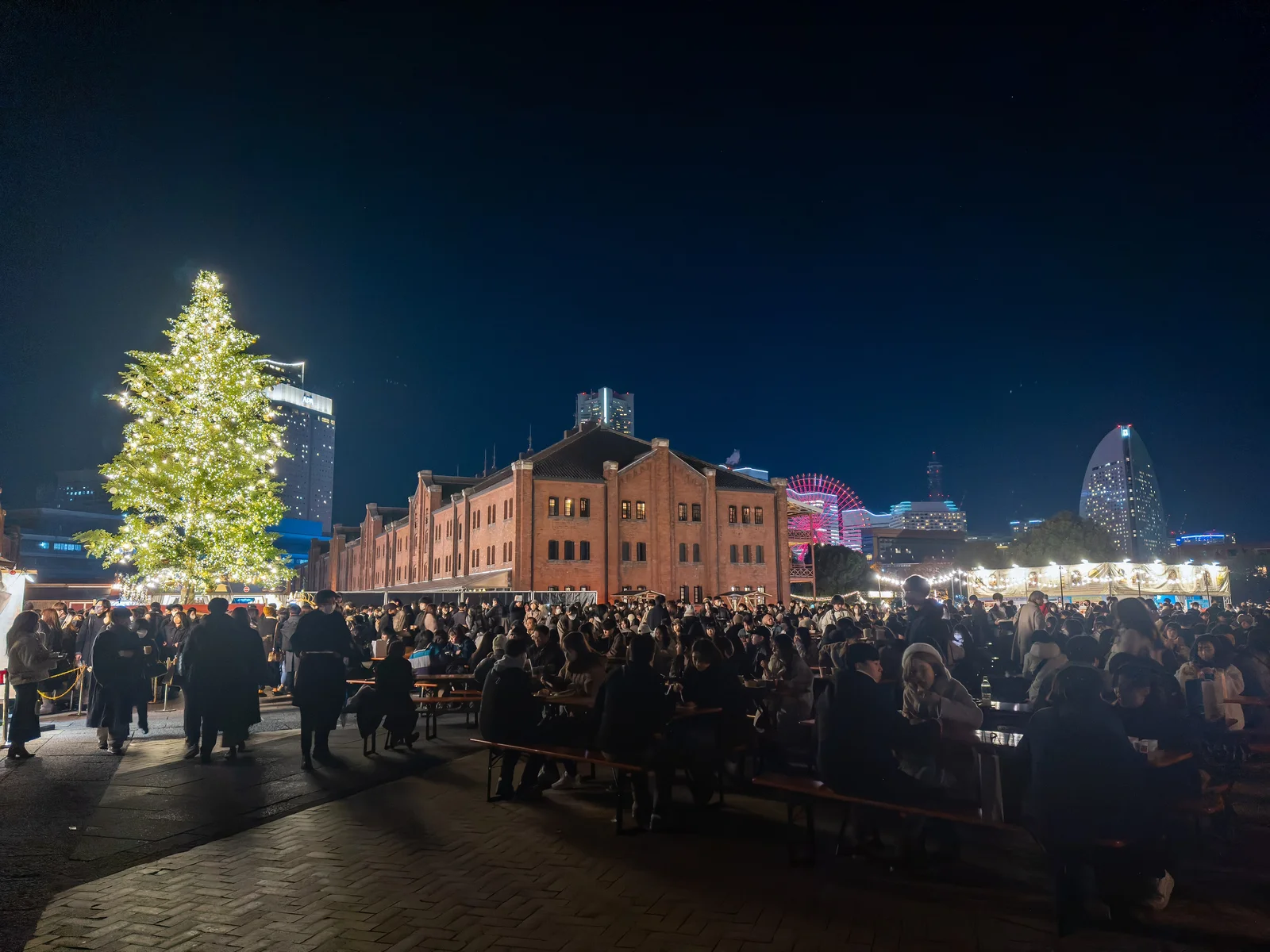
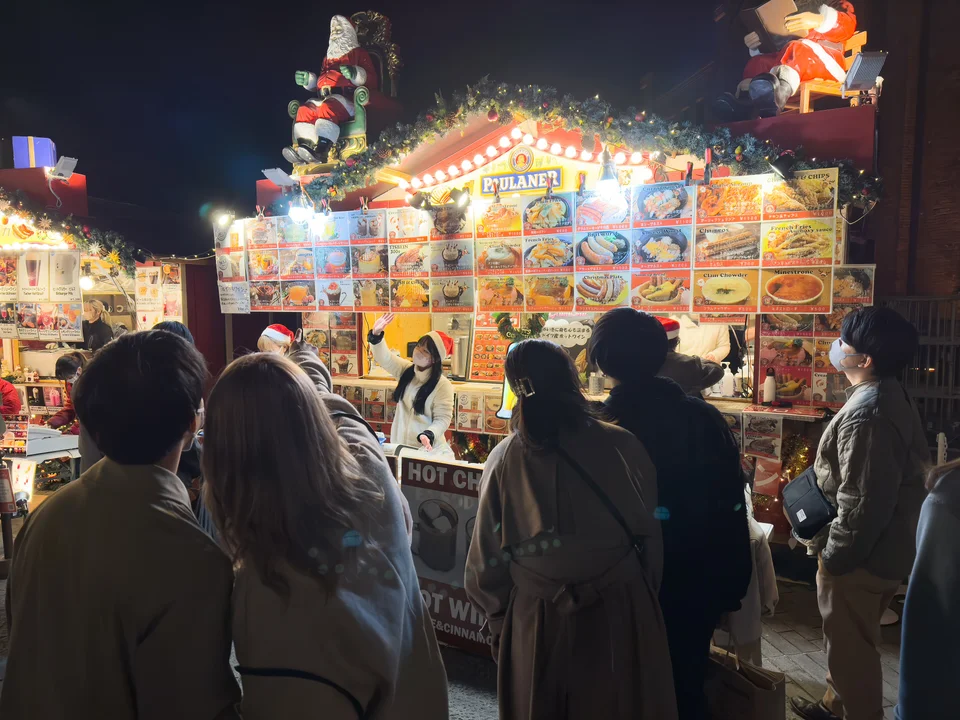
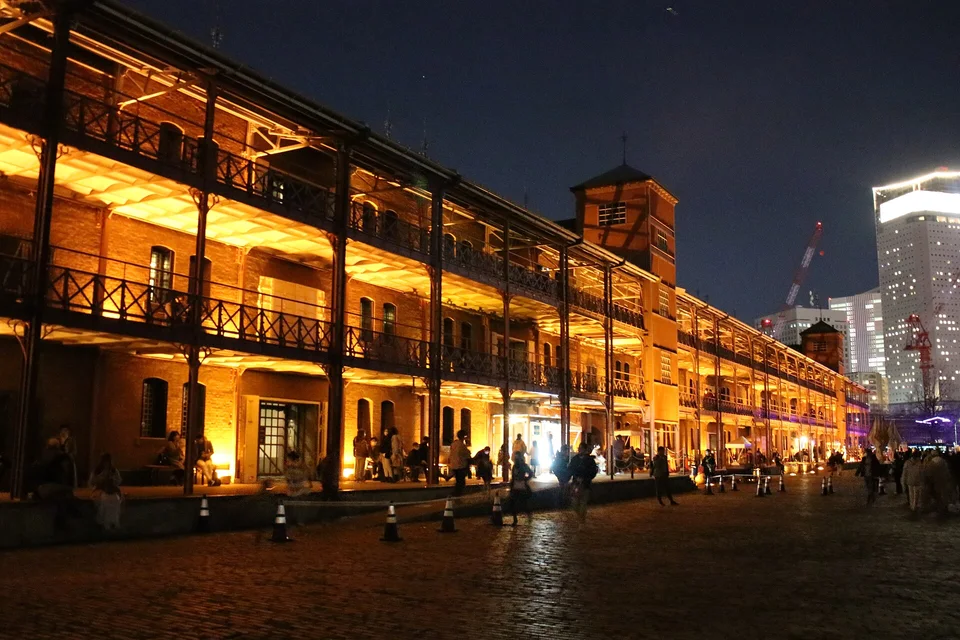
Images in advance guides often show earlier seasons. An archived Yokohama photograph or official recap is useful for understanding the warehouse setting, but it is not evidence of the exact 2026 layout. Shintoyosu is a new venue for this event, so a photograph from an older Tokyo site must not be presented as its current grounds. This article identifies historical material and keeps future appearance separate from confirmed dates.
For photographs, pause in places that do not obstruct entrances or other visitors. Follow venue instructions about commercial filming and social-media use. Buying a ticket does not give priority over other people in the frame. If photography is your main reason for going, allow a flexible visit rather than relying on one staged promotional image as a promise of your own view.
A decision you can actually use
Choose Shintoyosu when the Tokyo bay-area location fits your day and the published ticket schedule suits your group. Choose Yokohama when the red-brick waterfront is the main attraction, the child-admission rules are useful or you want a broader Yokohama afternoon. Wait for the date-specific Yokohama sales information if that detail is essential to your decision. Neither venue needs to become a whole regional itinerary.
Before payment, check five things: the exact venue, the date and arrival window, the whole party's age categories, the product's inclusions and the return journey. Then keep one optional activity rather than another mandatory reservation. For a wider choice across Japan, use AnyMappy's five-market comparison; for a Tokyo evening focused on lights rather than a paid market, use its free Christmas walks. The right plan leaves enough room to enjoy the place you selected.
Which market is cheaper for a family?
At the published admission ranges, Yokohama's child rules can reduce the gate total, especially for primary-school children. The selected date, ticket product and transport still matter. Compare the whole party, not just the lowest adult headline price.
Is Shintoyosu the market beside Tokyo Tower?
No. Shintoyosu and Shiba Park are separate Tokyo Christmas Market venues. Shiba Park is near Onarimon; Shintoyosu is in the Toyosu bay area. Check the full venue name before opening directions or buying a ticket.
Can we visit both in one evening?
It is a possible personal plan, but we recommend one main market because intercity travel and two entrance processes reduce relaxed visiting time. A second evening or a nearby optional walk is usually easier to adapt to your group.
Does a free area include the main Yokohama market?
Do not assume so. The organizer distinguishes some free areas from paid admission products. Check the current event map and the particular space you want to enter before deciding that no ticket is necessary.
Are the 2026 ticket details fully released?
The official pages already publish the main dates and price categories. Yokohama says detailed ticket-sale information will follow in late October. This guide records that limit rather than treating an unannounced date-specific ticket as available.
Photo & video credits
- Christmas tree and Yokohama Red Brick Warehouse. Archival photo from 2022; past layout, not the confirmed 2026 display.Dick Thomas Johnson / Wikimedia Commons · WebP resize · CC BY 2.0Original source
- Food stall at Yokohama Christmas market. Archival photo from 2022; past layout, not the confirmed 2026 display.Dick Thomas Johnson / Wikimedia Commons · WebP resize · CC BY 2.0Original source
- Illuminated exterior and balconies of Yokohama Red Brick Warehouse at night. Archival photograph from 2021 for orientation around the warehouses; market stalls are not shown.Suicasmo / Wikimedia Commons · WebP resize · CC BY-SA 4.0Original source
- Choose one Christmas marketAnyMappy editorial · Original AnyMappy planning diagramOriginal source
- Christmas Market in 横浜赤レンガ倉庫 プロモーション動画横浜赤レンガ倉庫公式 · YouTube