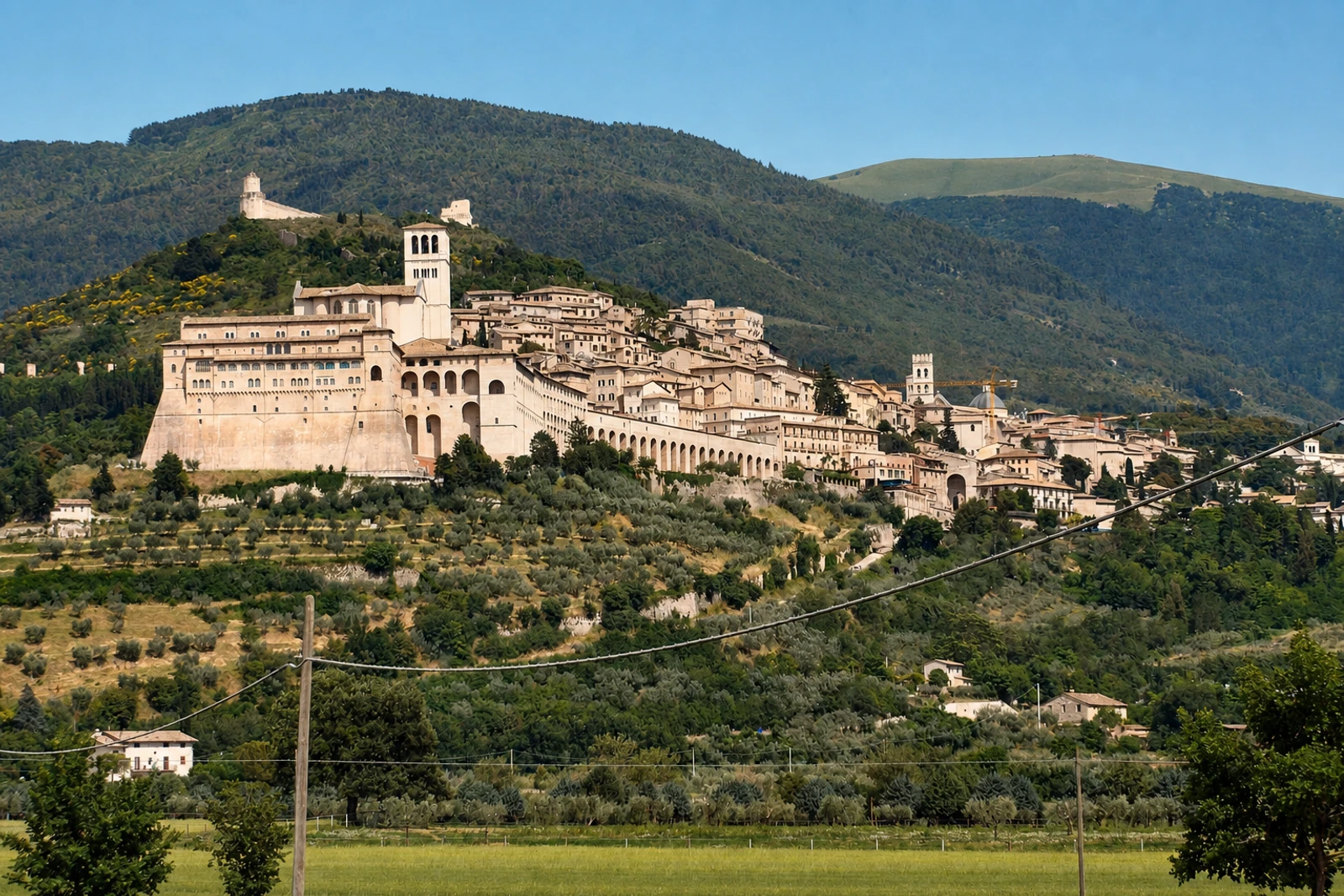
Assisi: a Franciscan city-sanctuary layered over Roman foundations
Assisi belongs because UNESCO recognises a city, its basilica, surrounding sanctuaries and cultural landscape as one Franciscan heritage property. The hill town is the birthplace of Saint Francis and remains closely associated with the Franciscan Order, but its significance is not limited to religious pilgrimage. Assisi preserves historical layers from an Umbrian-Roman settlement through the medieval period and later urban development, making it different from a single church or isolated medieval monument.
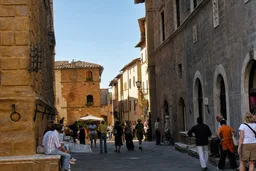
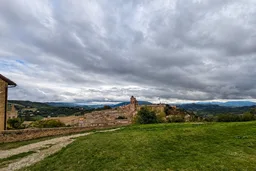
The historic centre follows the terraced Roman town and extends between the Basilica of San Francesco and the Basilica of Santa Chiara, with Rocca Maggiore at the summit. Beyond the walls, the property includes the Carceri Hermitage, Saint Damian, Rivotorto and the Basilica of Santa Maria degli Angeli in the plain. These components show why the entry is serial and extensive: the Franciscan story is expressed through relationships between urban fabric, religious ensembles, communication systems, traditional land use and the surrounding landscape.
The Basilica of San Francesco supplies an exceptional artistic focus through works associated with Cimabue, Pietro Lorenzetti, Simone Martini and Giotto. Yet the property’s distinction also lies in continuity: the present town grew on Roman foundations, medieval defences incorporated ancient structures, and the Roman road system and land divisions continue beyond the walls in adapted form. Authenticity remains high, while earthquakes and tourism are identified pressures. Plan with respect for the living religious setting and the separate character of sites beyond the historic centre.