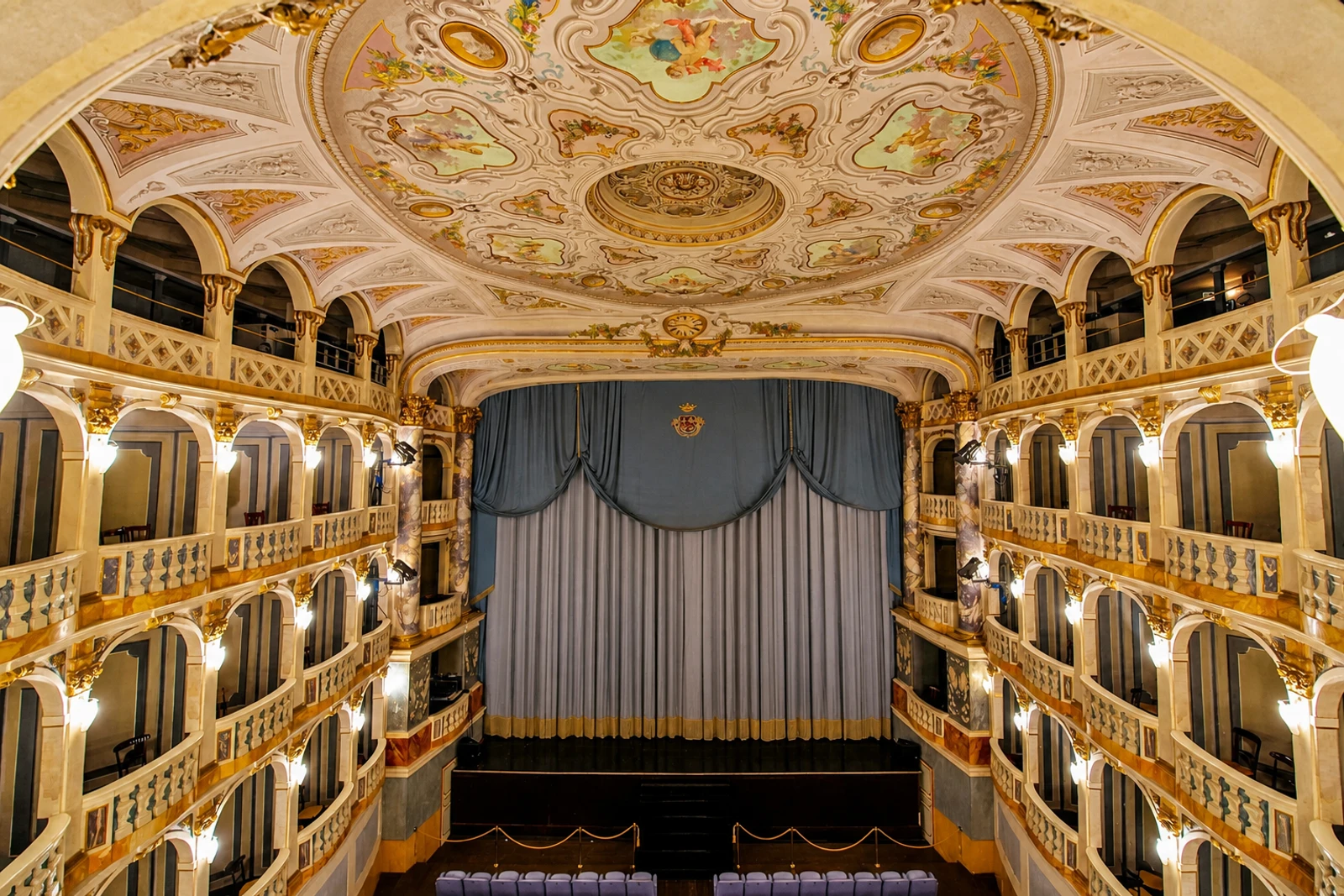
Central Italy’s condominio theatres: civic culture built collectively
The system of Italian-style condominio theatres belongs because its heritage is both architectural and organisational. Inscribed in 2026 under criterion (iii), this serial property brings together ten theatres across Emilia-Romagna, Marche and Umbria. They were built between the mid-18th and late 19th centuries in small and medium-sized towns, making the entry different from a single famous opera house or a theatre valued only for an individual architect.
The word condominio identifies the central idea: collective ownership supported by public-private financing. Municipalities and private citizens collaborated to construct performance spaces, creating a cultural network and new representational settings for the emerging bourgeoisie. The theatres’ position at the heart of historic town centres also matters. Performances and public events made them civic meeting places where public opinion was formed, extending their role beyond entertainment.
The physical details reward close comparison between components. Neoclassical architecture with Late Baroque influences appears in tiered boxes, stalls, foyers, ridotti and auditoriums designed for acoustics and visibility. Historic stage machinery records the practical technology of performance as well as its public image. Use this map entry when the question is how towns funded, designed and inhabited cultural institutions—not when looking for a single monumental building. Its ten components express a shared system whose meaning depends on the relationship between theatre, town and community.