Bath: Roman foundations beneath a Georgian city
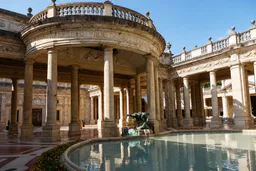
Bath is the strongest choice on this map for seeing how different eras can remain legible within one urban landscape. The Romans founded Aquae Sulis around natural hot springs, building a temple and baths complex whose remains illuminate Roman social and religious life. In the Middle Ages, Bath became an important wool centre; in the 18th century it developed into an elegant spa city. The Roman core is therefore not a detached archaeological stop but the foundation of the city’s continuing identity.
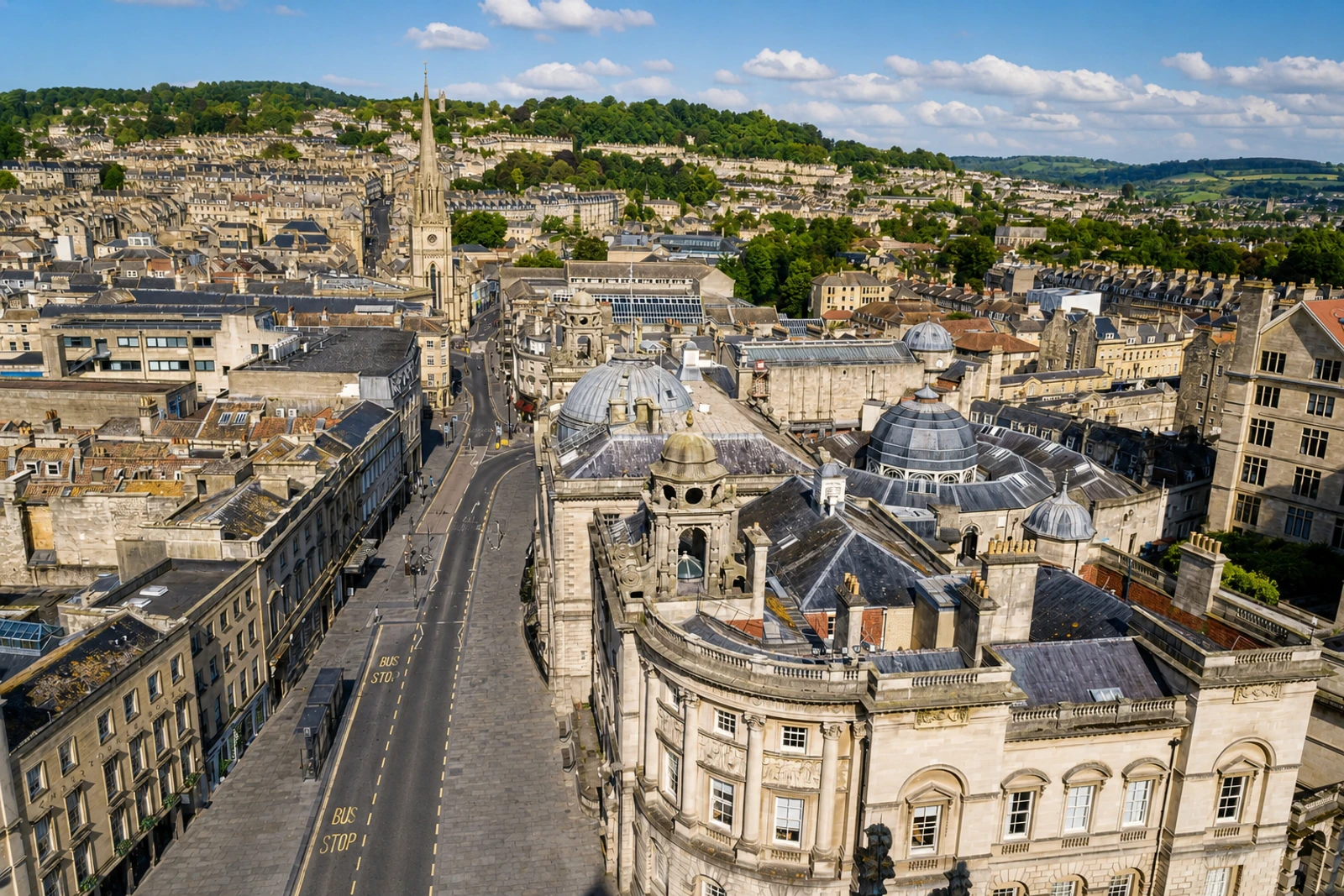
The Georgian transformation distinguishes Bath from a conventional Roman site. John Wood Senior, Ralph Allen and Richard “Beau” Nash helped create ambitions for a beautiful spa city, while architects including the John Woods, Robert Adam, Thomas Baldwin and John Palmer applied Palladian ideas to streets, squares and buildings. The Assembly Rooms and Pump Room relate to Queen Square, the Circus and Royal Crescent; crescents and terraces extend across the hills and green valley. The city’s form, not only its façades, is the essential thing to notice.
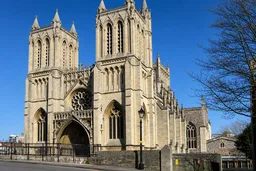
The medieval Abbey Church stands beside the Roman temple and baths, making Bath’s continuous development visible in a compact modern setting. Roman archaeology and Georgian plan form remain substantially preserved, though large-scale development and transport pressures can affect views and the garden-city character. Bath Spa is the nearest practical rail gateway, and the centre is easily explored on foot. Allow a full day. Prebook the Roman Baths and major attractions, and check current admission arrangements.