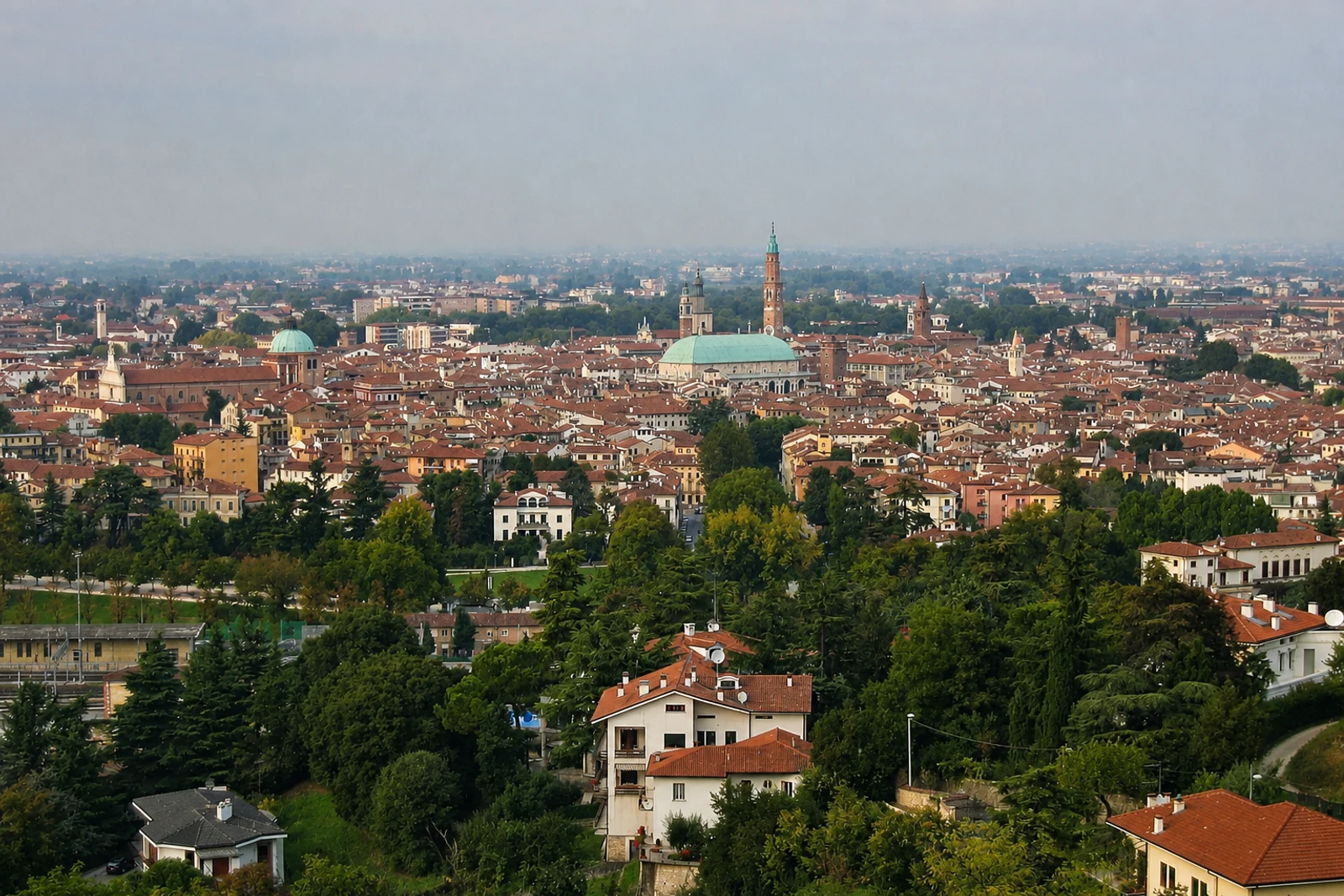
Vicenza and the Veneto: Palladio in city and countryside
Vicenza belongs on this map because the UNESCO property connects an historic city with Palladian villas distributed across the Veneto. It is a serial cultural property with 25 component parts, not one villa or one compact urban district. Founded in the 2nd century BCE, Vicenza prospered under Venetian rule and acquired its distinctive architectural identity through Andrea Palladio’s study and reinterpretation of classical Roman architecture.
Within the city, Palladio’s palazzi were fitted into the medieval urban texture. Their continuous street façades combine Veneto Gothic forms with articulated classicism, so Vicenza should not be mistaken for a city built wholly according to one later style. Palladio’s buildings sit within an urban fabric that reaches back to antiquity and forward to Neoclassicism. The city retains many original Palladian buildings and is therefore central to understanding the humanist idea behind the property.
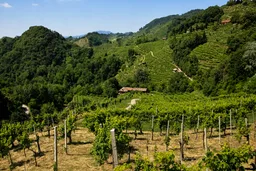
The villas extend that architectural language into rural settings, where Palladio experimented with varied versions of the type. Their house-temples, monumental staircases, columned loggias, porticos and sometimes towers express both land management and aristocratic self-representation. This urban-rural relationship is the key distinction from a purely city-based heritage entry. The property was inscribed in 1994 and extended in 1996 to include additional villas; UNESCO classifies it under criteria (i) and (ii). Palladio’s designs influenced architecture and urban design in Europe and North America through Palladianism. The villas remain well preserved, while development and changing agricultural contexts have affected surrounding relationships, so the mapped property should be understood as a network of components rather than a single sightseeing zone.