Ravenna’s eight monuments of mosaic and empire
This property belongs on the map as a connected group of eight buildings, not as one cathedral or one mosaic collection. Together they document Ravenna’s role as the seat of the Roman Empire in the fifth century, an Ostrogothic capital and later the centre of Byzantine Italy. Built in the fifth and sixth centuries, the monuments bring religious and funerary architecture into one serial record.
The strongest distinction is between the buildings’ artistic and political evidence. The Mausoleum of Galla Placidia is small, with mosaics set against a dark blue background and a Western Roman architectural character. The Neonian Baptistery combines inlaid marble, stuccos and multicoloured cupola mosaics. The Arian Baptistery preserves imagery of Christ’s baptism and details reflecting Arian principles, while Sant’Apollinare Nuovo, built as Theodoric’s Palatine chapel, joins Roman-style mosaics with Byzantine influence.
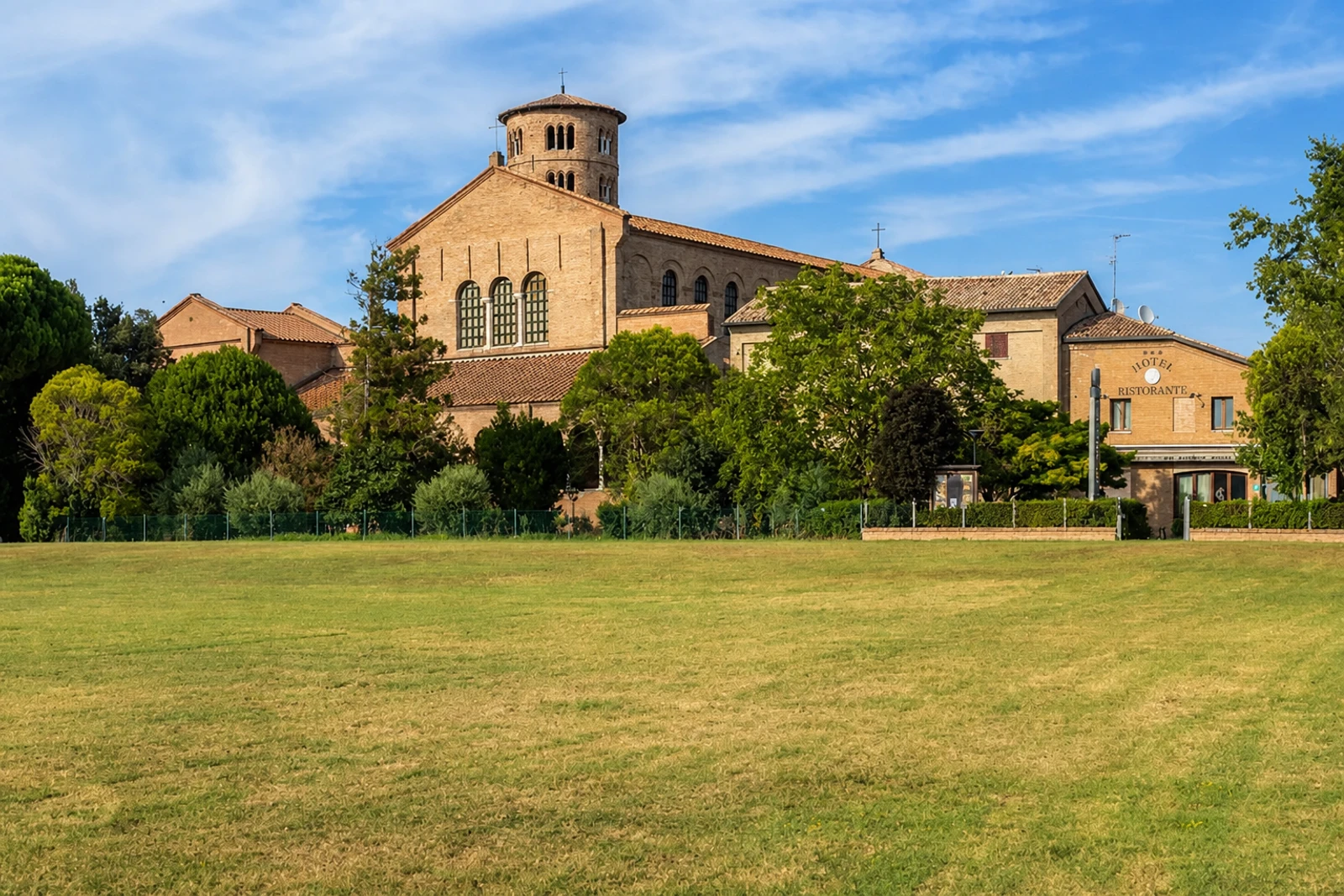
San Vitale represents the meeting of Western and Eastern traditions in the time of Justinian. The Mausoleum of Theodoric is distinguished instead by its large Istrian stone blocks and central space, and is the only surviving tomb of a barbarian king from this period. The Archiepiscopal Chapel is the only orthodox monument built during Theodoric’s reign. Sant’Apollinare in Classe, five kilometres from Ravenna, adds spacious interiors, marbles, mosaics and a cylindrical bell tower. Together, the eight monuments preserve artistic contacts that a single building could not show.