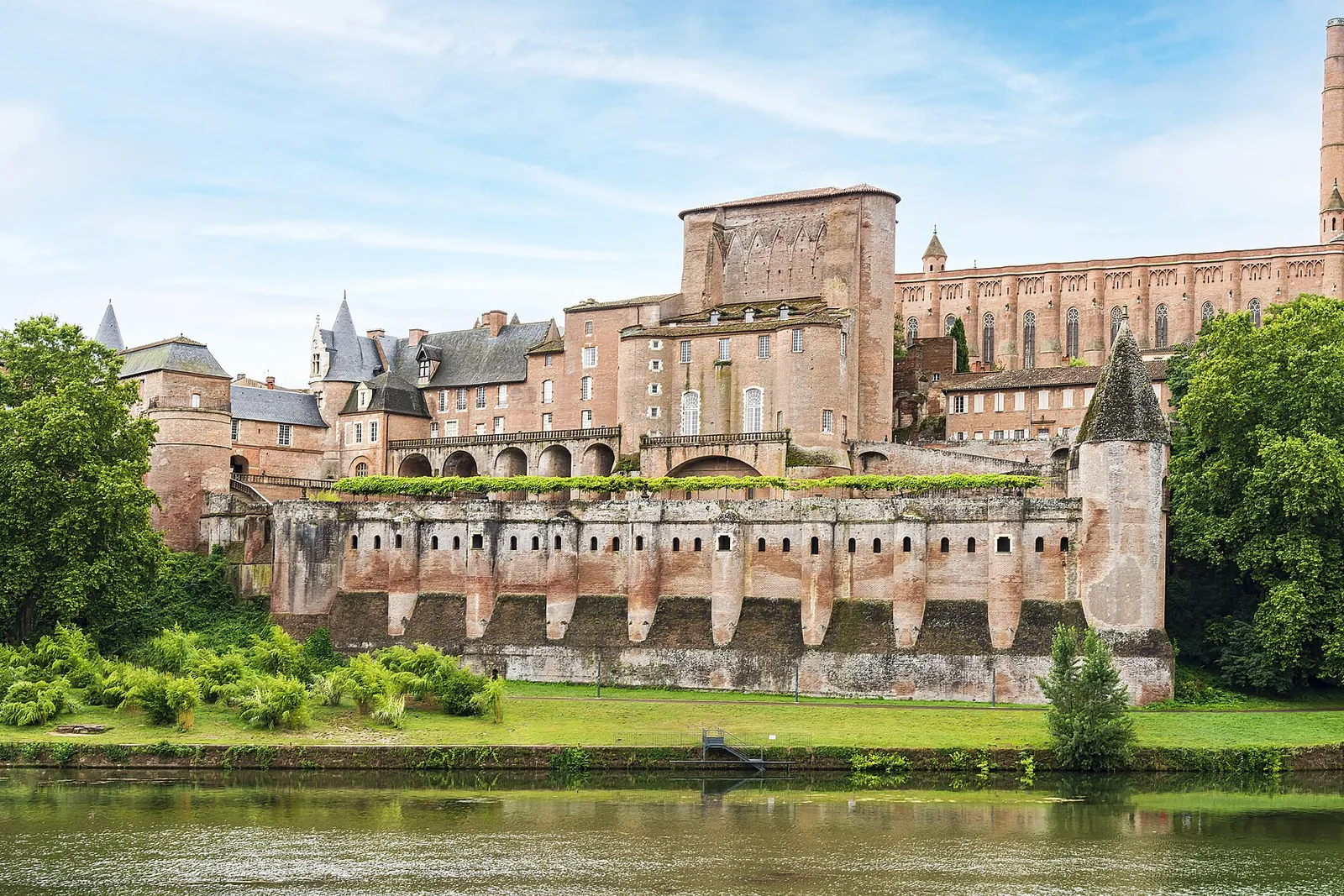
Albi’s red-brick episcopal city on the Tarn
The Episcopal City of Albi belongs on this map because UNESCO recognises a complete medieval architectural and urban ensemble, not simply Sainte-Cécile Cathedral. On the banks of the Tarn in south-west France, the Old Bridge, the Saint-Salvi quarter and its church testify to the city’s initial development in the 10th and 11th centuries. After the Albigensian Crusade, the city became a powerful episcopal centre structured around the cathedral and the bishop’s Palais de la Berbie.
Its defining visual quality is the enduring use of local fired brick, with characteristic red and orange tones creating coherence between monuments and residential quarters. Sainte-Cécile is a fortified cathedral in a southern French Gothic style, with systematic internal painted decoration, a choir and late Gothic statuary added in the 15th and 16th centuries. The adjoining Palais de la Berbie overlooks the river, while surrounding quarters retain their medieval relationship to the monumental core.
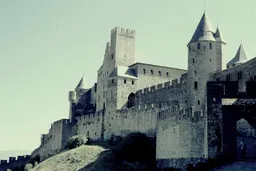
Albi is therefore different from Avignon’s papal concentration and Carcassonne’s double-walled fortress. Its significance lies in how defensive and spiritual purposes are expressed through a largely homogeneous cityscape. UNESCO notes that the historic zone corresponds to the Renaissance boundaries of the city, while limited later redevelopment does not undermine the overall coherence. Notice the brick’s colour variations and the way bridge, quarter, church, cathedral and episcopal palace read as one connected urban ensemble.