Carcassonne’s double-walled medieval fortress and restored image
The Historic Fortified City of Carcassonne belongs because its castle, streets, houses, cathedral and enormous defensive system remain legible as an urban fortress. The city stands on a rocky outcrop above the Aude, on the historic communication axis linking the Atlantic and Mediterranean. Fortifications existed on the hill from the pre-Roman period, while the present defensive arrangement was developed mainly in the 13th century. This is a city enclosed by a system, not merely a castle with a wall.
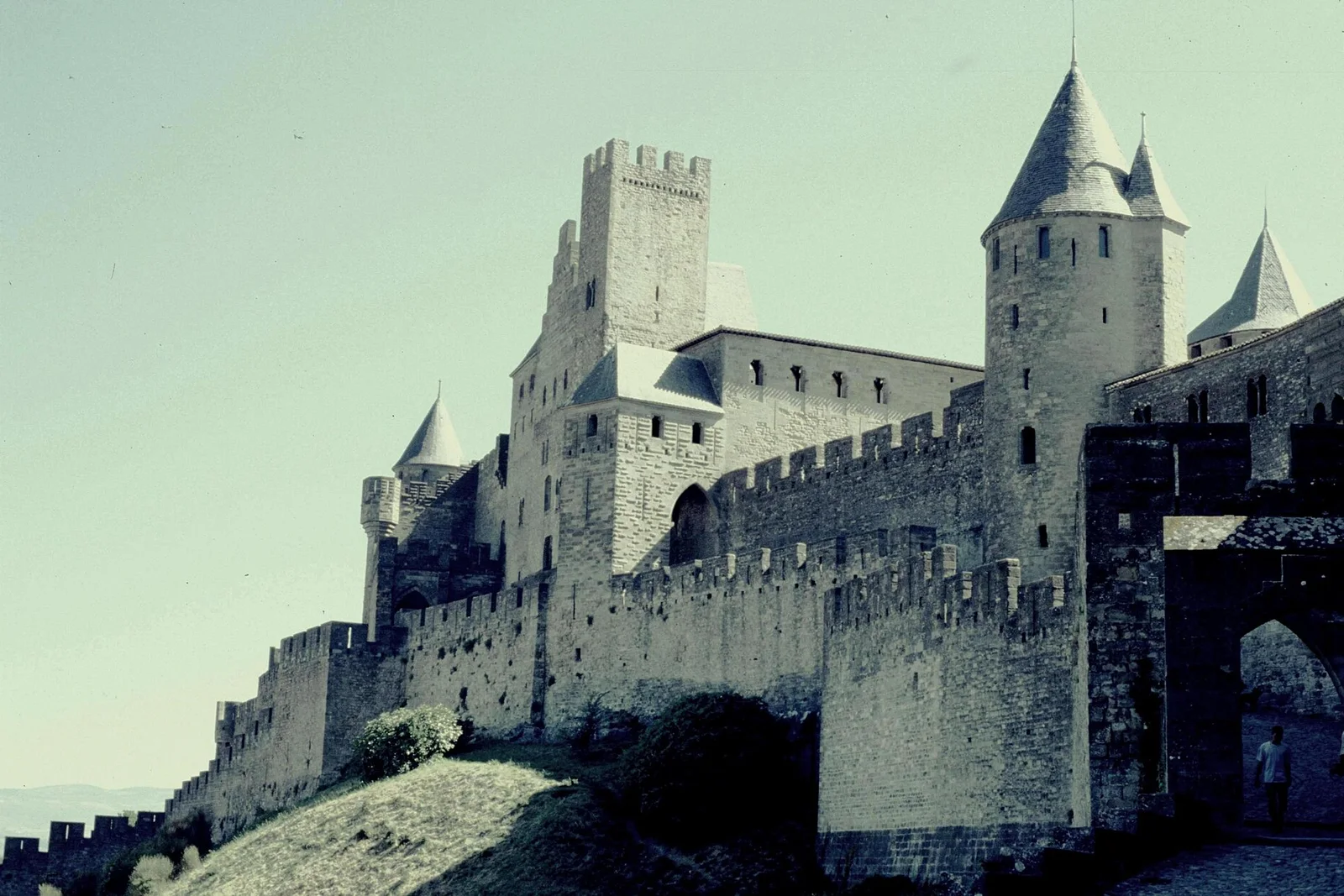
Its most distinctive feature is the double enclosure. The inner ramparts contain 26 circular towers and overlap clearly visible Roman defences for two-thirds of their length. The outer ramparts contain 19 round towers, including three barbicans; moats surround the enclosure, and the Porte Narbonnaise and Porte de l’Aude are particularly elaborate. Inside, the 12th-century count’s castle occupies the western part of the Roman ramparts, while the basilica of Saints Nazaire and Celse contributes Gothic character without flying buttresses.
Carcassonne must also be read through conservation history. Eugène Viollet-le-Duc led a restoration campaign from 1853 to 1879, making the city important to the development of modern conservation science. Most ramparts and towers retain substantial elements of Late Roman fabric, but UNESCO explicitly distinguishes medieval authenticity from the effects of 19th-century restoration, especially to roofs and crowning. Compared with Vauban’s serial military system, Carcassonne is one historic fortified city; compared with Avignon, its central visual argument is enclosure and defence.