Florence, the coherent Renaissance city
Florence belongs for the density and coherence of its urban and artistic record. Built on an Etruscan settlement and the Roman colony of Florentia, the city rose to economic and cultural pre-eminence under the Medici in the fifteenth and sixteenth centuries. The UNESCO property covers 505 hectares within the remains of the fourteenth-century walls, bringing the Roman quadrilateral, medieval streets and Renaissance city into one historic centre.
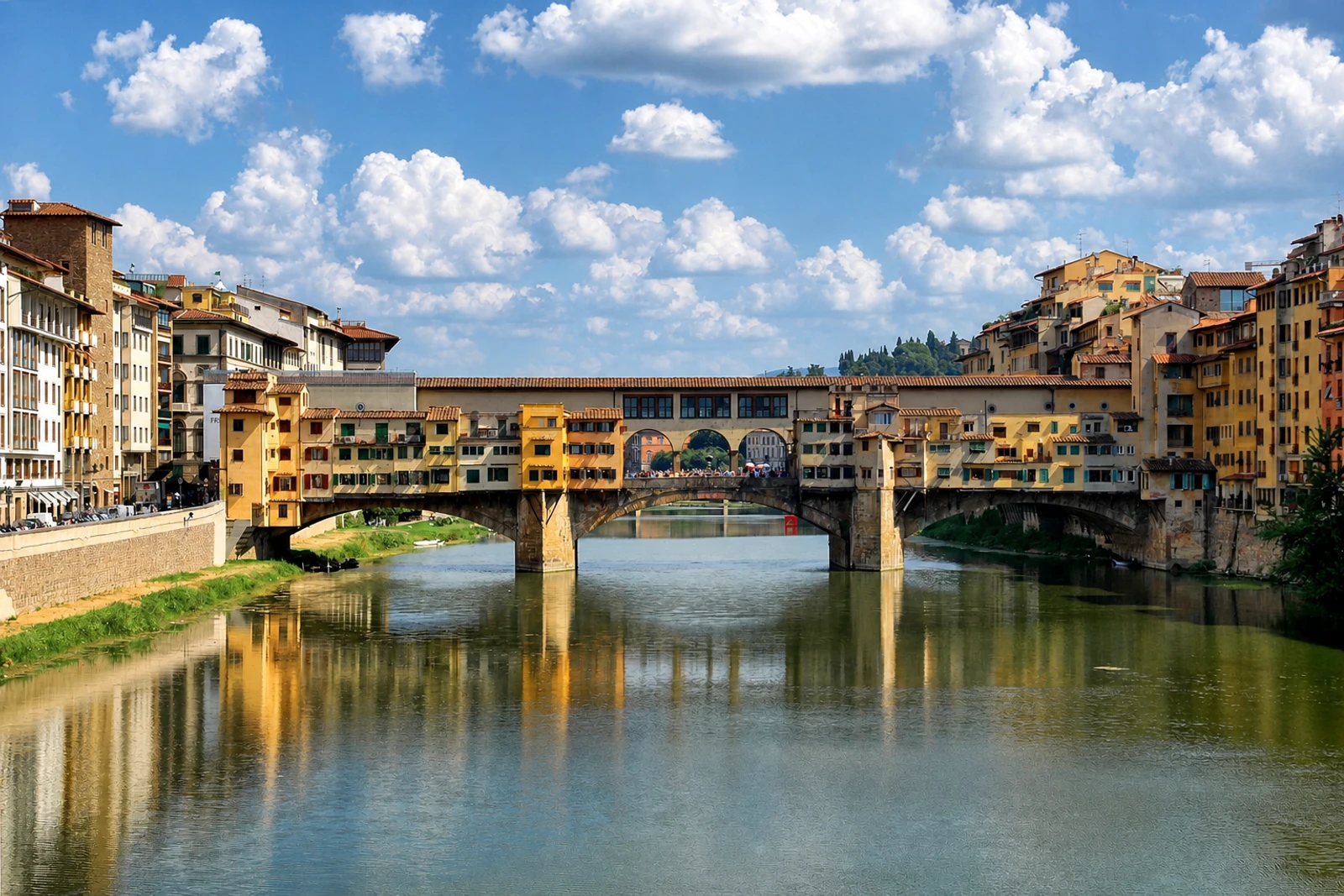
Its distinction from Ferrara and Genoa is the breadth of artistic activity embedded across a whole urban environment. Santa Maria del Fiore, the Baptistery and Giotto’s Campanile stand alongside Santa Croce, Santa Maria Novella, San Lorenzo, Santo Spirito, San Miniato, the Convent of San Marco, Palazzo Vecchio, the Uffizi, Palazzo Pitti and the Boboli Gardens. Bridges such as Ponte Vecchio and Ponte Santa Trinita connect the banks of the Arno, while gates, towers, fortified palaces, lodges and fountains preserve the city’s merchant past.
Notice how the property combines individual masterpieces with urban continuity. The works associated with Giotto, Brunelleschi, Botticelli, Michelangelo, Leonardo da Vinci and Fra Angelico sit within streets and buildings that express Florence’s social and economic history. The surrounding hills retain Tuscan features and frame the centre, but the record also identifies boundaries to responsible planning: traffic air pollution, a decreasing number of residents, mass tourism and flood risk all affect the heritage environment.