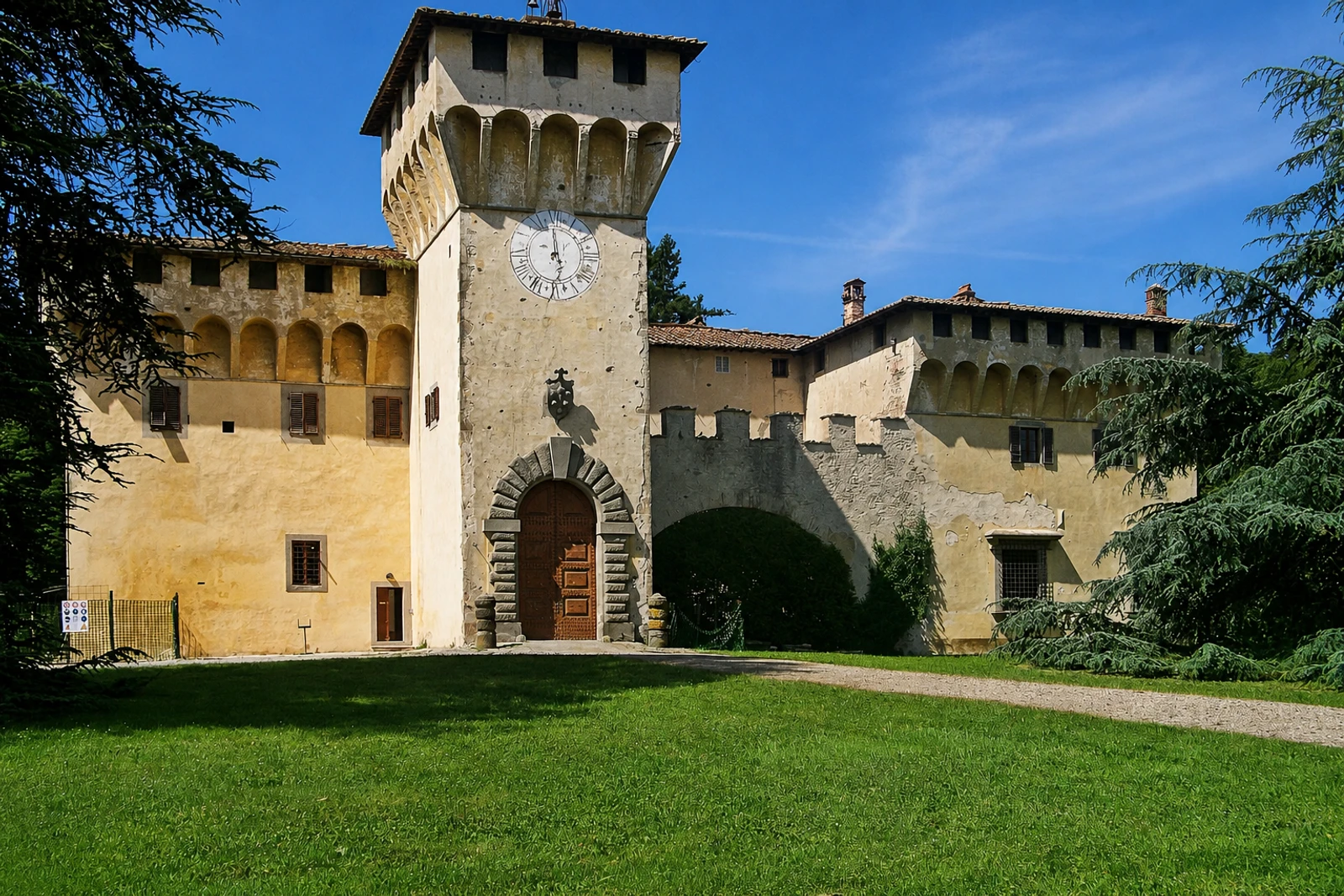
Medici villas and gardens: Renaissance residence in the Tuscan landscape
Medici Villas and Gardens in Tuscany belongs because its heritage value is distributed across twelve villas with gardens and two additional pleasure gardens. Inscribed in 2013 under cultural criteria (ii) and (iv), the serial property extends across the Tuscan countryside and areas near Florence. Its subject is not a single palace but a system of residences, gardens and rural settings shaped by Medici patronage between the 15th and 17th centuries.
These villas introduced a princely residence distinct from both the farms owned by wealthy Florentines and the military character of baronial castles. Their intended relationship with nature made room for leisure, the arts and knowledge. Gardens were not decorative additions detached from their surroundings; their organisation alongside the rural environment helped form a new appreciation of landscape associated with Humanism and the Renaissance.
The key distinction from Mantua and Sabbioneta is therefore setting and function. Mantua and Sabbioneta demonstrate urban planning in two forms, whereas the Medici ensemble explores aristocratic residence as an integrated architectural and landscape idea. Over almost three centuries, the Medici developed changing architectural and decorative forms, and the villas and gardens became models for residences across Italy and modern Europe. Individual sites have their own management arrangements, and some have undergone changes of use or modern development. Check current arrangements for each component rather than assuming that the fourteen parts operate as one venue.