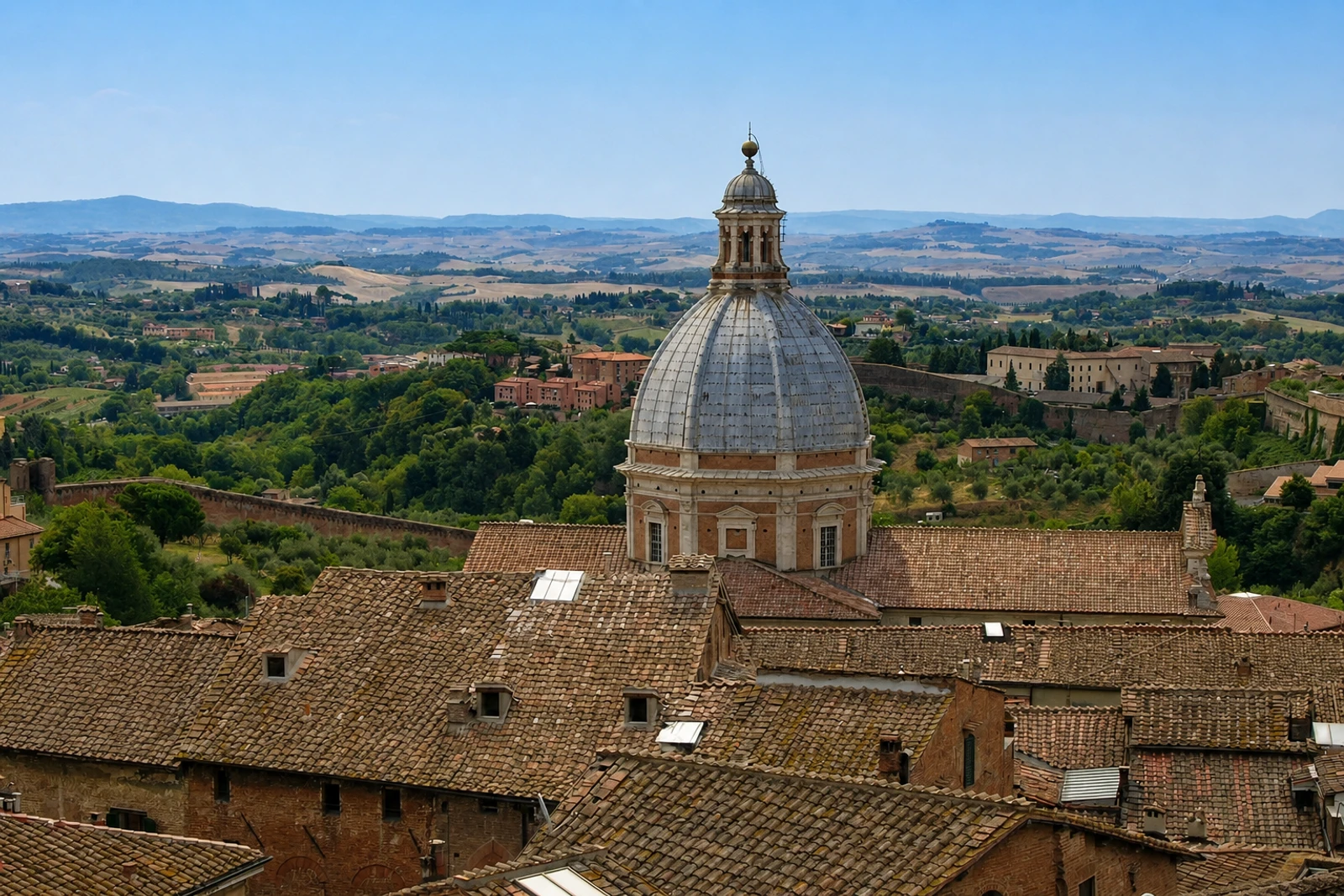
Siena: Gothic order around Piazza del Campo
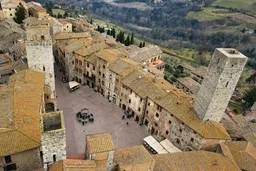
Siena belongs for the unity of its medieval city plan, architecture and surrounding cultural landscape. Inscribed in 1995 as a cultural property, the historic centre developed on three hills whose major streets form a Y-shaped plan, meeting in the valley that became Piazza del Campo. The city’s Gothic appearance, acquired between the 12th and 15th centuries, remained the preferred language even when important buildings were renovated in later centuries.
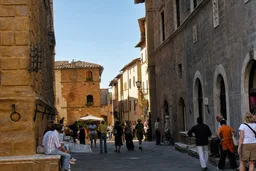
The property is a substantial urban ensemble rather than a single square. A fortified wall about seven kilometres long surrounds the 170-hectare site, following the hills and retaining bastions, towers and gates. Within it are towerhouses, palaces, churches, religious structures, fountains supplied by an extensive system of original tunnels, roads and green spaces. The Sienese arch, introduced from the East during the Crusades, is a useful detail for recognising the city’s architectural character and later influence.
Siena is easily confused with San Gimignano because both are Tuscan medieval properties, but their emphasis differs. San Gimignano preserves the compact, tower-dominated appearance of a feudal town; Siena is a larger, deliberately integrated city whose buildings were designed to form a whole with its landscape. UNESCO also identifies present pressures: environmental pollution, intense tourism during part of the year and the progressive abandonment of the historic core. Those conditions are part of understanding the property, not reasons to reduce it to a static medieval image.